Wintek Posted 1 hour ago Posted 1 hour ago This is the second installment of the special dialogue "The Meaning of 'Living'"—a conversation between Ryojun Shionuma (Head Priest of Jigen-ji Temple in Sendai, Miyagi Prefecture, and a Dai-Ajari—a master of the highest rank in the Omuro school of Shingon Buddhism) and professional figure skater Yuzuru Hanyu—following the enthusiastic response to their first discussion in the October 2024 issue. What are their current mindsets and perspectives as they converse once more? Beyond the profound exchange born of their mutual respect, the feature includes handwritten Q&A responses from Hanyu and insights into the life and prayers for global peace of Dai-Ajari Shionuma; every word resonates deeply. More information: https://www.kateigaho.com/magazine/latest/182584 Regular & digital (Kindle): https://amzn.asia/d/07RHWg8V Premium Light: https://amzn.asia/d/025hulc4
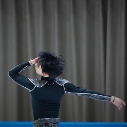
Wintek Posted 1 hour ago Author Posted 1 hour ago *Machine translation from Japanese to English, inaccuracies exist* [P. 220-231] Special Dialogue, Once Again Ryōjun Shionuma (Dai Ajari) + Yuzuru Hanyu (Professional Figure Skater) Living Within the Flow The special dialogue, "The Meaning of 'Living,'" between Dai Ajari Ryōjun Shionuma, chief priest of Jigenji Temple in Sendai, Miyagi Prefecture, and professional figure skater Yuzuru Hanyu, first appeared in the October 2024 issue. In response to the many readers who said, "We want to hear more from the two of them," we are pleased to present this second installment. Where do these two now find themselves, and what is in their hearts, as they meet once again?Along with the profound exchanges that can only arise between two people who deeply respect one another, this feature also includes answers to a Q&A personally written by Hanyu, as well as a look at Dai Ajari Shionuma's lifelong prayers for peace throughout the world. Once again, every word resonates. Spoiler Photo caption Following the previous visit in which Yuzuru Hanyu came to Jigenji Temple, this time Dai Ajari Ryōjun Shionuma visited Hanyu's training base. The Dai Ajari first appeared wearing his monk's robes, but the session unfolded into photographs that made everyone think, "We've never seen these two like this before!" Now, more than ever, we want to hear their words again. Words of rare beauty, woven from lives lived with sincerity One who teaches the Buddha's compassion to the world Ryōjun Shionuma, Dai Ajari Ryōjun Shionuma Born March 15, 1968, in Sendai, Miyagi Prefecture. Chief priest of Fukujuzan Jigenji Temple. Ordained at Kinpusenji Temple on Mount Yoshino in 1987. Completed the One-Hundred-Day Ōmine Kaihōgyō in 1991 and the One-Thousand-Day Ōmine Kaihōgyō in 1999, becoming only the second person in the 1,300-year history of Kinpusenji to complete it. He has also completed the Shimugyō and the Hassenmai Daigomaku rites, and continues to share his teachings through radio and YouTube. After the dialogue, Dai Ajari couldn't help but applaud when Hanyu demonstrated a full-out run-through of one of his programs. "It's my first time watching your practice. This really is the best seat in the house!" he said, visibly delighted. Beautifully. Purely. An ice spirit descends and dances— Yuzuru Hanyu Yuzuru Hanyu Born December 7, 1994, in Sendai, Miyagi Prefecture. Professional figure skater. Olympic champion at Sochi 2014 and PyeongChang 2018, achieving back-to-back Olympic titles. The first men's singles skater in history to complete the Super Slam, and an unparalleled legendary skater. Drawing on his own experience as a survivor of the Great East Japan Earthquake, he actively supports disaster recovery efforts. The moment Hanyu stepped onto the ice, the rink became a sacred realm. Watching him skate to a song by Mrs. GREEN APPLE, the Dai Ajari remarked, "He truly seems like a being sent down from heaven." Words from two souls who challenged their limits and reached the summit of the world Life is entirely governed by cause and effect. Be conscious that everything depends on your own actions, restrain selfish desire, and live accordingly. The thoughts contained in the words and actions of Dai Ajari Shionuma and Yuzuru Hanyu Shionuma (hereafter, Shionuma): It's been a while. Last time, in the October 2024 issue, Hanyu-san came to Jigenji Temple. This time, I've had the opportunity to visit the place where Hanyu-san trains. Hanyu (hereafter, Hanyu): Welcome. I've really been looking forward to having the chance to talk with you again, Ajari-san. Shionuma: Hanyu-san, your face has changed. You've become even more handsome. Hanyu: No, no... (laughs) Thank you. Maybe it's because my life feels fulfilling right now. Shionuma: That sense of fulfillment is overflowing from you. Since 2022, you've been producing and starring alone in your own ice shows. Then came the third installment of the ICE STORY series, Echoes of Life, performed in December 2024 and February 2025. Using life itself and the journey through it as its theme, you explored questions such as, "What does it mean to live?" "What is life?" Having gone through that experience, do you feel anything has changed? Hanyu: You mentioned that my face has changed… Perhaps that's the clearest change of all. When you said those words, something inside me clicked into place as well. Every day, I approach skating with the feeling that I'm trying to pursue my role within it as far as I possibly can. That doesn't mean I think I've already reached the final destination. You never know what life will bring. If I continue walking the path I'm on now, there may come a time when another path—another role—opens before me. But through skating, through being involved in supporting recovery from the earthquake and disaster, and through other things as well, I feel that I'm truly fulfilling a role unique to the present me. Perhaps that's why my face has changed. That's what I found myself thinking. Shionuma: During our previous conversation, you said, "Right now, I'm in the middle of changing." Your expression has become much gentler. Hanyu: Perhaps it's because I'm satisfied that I've been able to keep moving in a direction that I can genuinely feel is happiness. At the same time, something else struck me anew. It was just how many people support projects like these, and how much they depend on that support in order to exist at all. Of course, my role is to serve as the excecutive director, and to stand at the center as the medium through which the performance is delivered. But it's only because there are professionals in every field—people working with the ice itself, with the skates, with the visuals, with the staging, and so much else—who support one another, that the work becomes something I myself can truly believe deserves to be shared with the world and preserved. If the gratitude and fulfillment that come from having encountered such remarkable people are what show themselves in my face now… then that would make me very happy. When seen from the perspective of the universe, I'm only an incredibly small existence. But after completing Echoes of Life, I've come to want to be someone who can make even the slightest vibration in the air. I hope that the prayers and the ki [suggest spirit, energy, intention, presence, or life force] I release while I'm performing might resonate in people's hearts through the air and the sound that fill the venue. Shionuma: As someone who also prays, let me continue from what you said about prayer. As I've grown older, the way I pray has changed. When I was younger, I would put strength into my shoulders and pour every ounce of myself into praying. But now that I'm fifty-eight, I simply sit quietly and softly think, "May the world gradually flow in a better direction." And I pray... gently. (laughs) The very quality of my prayer has changed. Hanyu: I understand. I began skating Requiem when I was about eighteen. Back then, compared with the weight I was carrying on my shoulders, I've now become much more able to skate with a sense of release. It's not that the burden has completely been set down yet. But now, at thirty-one, rather than trying to push with force, what I want is to refine the program even further and deliver it to people. Having lived through years of challenging and continually fighting, this is the state of mind they have now arrived at. Shionuma: The same is true of prayer, and of our words and actions. If we think, "I have to make this happen," and force things through with sheer effort, there will inevitably be a reaction. That doesn't mean simply drifting wherever the current carries us. Rather, I think the best way is to act within the natural flow. Without putting too much tension into our shoulders… seeing the whole picture from a broader perspective… living within the flow. Having spent so many years constantly challenging myself and continuing to fight, I feel that perhaps this is the stage of practice I'm in now. Hanyu: That's true. There are, of course, special turning points in life, your completion of the One-Thousand-Day Ōmine Kaihōgyō, or for me, the Sochi and PyeongChang Olympics. Those are extraordinary peaks. But lately I've come to feel that your daily goma fire ritual, or my everyday skating practice… those are the real practice. The real learning. Shionuma: In fact, perhaps, emotionally speaking, it was easier when I was undertaking the One-Thousand-Day Kaihōgyō. Back then, alone in those harsh mountains, I faced questions like, "What is truth?" Compared with that, living one's everyday life may actually be the more difficult thing. Photo caption Right page (right): The Dai Ajari challenged himself to skate for the first time since elementary school. After changing into samue work robes and getting a feel for the ice, he put on a helmet and gloves. Right page (left): Wearing gloves that Hanyu had given him as a present, he poses with the famous SEIMEI gesture. Right: A dance from which it was impossible to look away, even for a single moment. Hanyu: I think I understand. Of course, there's the difficulty of looking deeply into yourself, pushing yourself, and refining yourself. But after you've done that, the question becomes: How do you continue living true to the self you've worked so hard to rediscover, within a human society overflowing with worldly attachments? How do you continue polishing that self? Perhaps dealing with so many different people, actually demands more spiritual strength than one might expect. Shionuma: You've put into words exactly what I was feeling. (laughs) Hanyu-san, have your feelings changed in any way between your life as a competitive athlete, and now, as a professional figure skater? Hanyu: Actually, there was a turning point even while I was still competing. Up until the PyeongChang Olympics in 2018, I believed that winning itself was what gave meaning. I clung to victory, and I fought for it. But after winning at Sochi, and then becoming the first man in sixty-six years to win consecutive Olympic singles titles at PyeongChang… after earning those two gold medals, winning alone no longer filled my heart. That doesn't mean my desire to win disappeared. I still longed for victory. But at the same time, I increasingly wanted to repay all the people who had supported and encouraged me over those many years. As I began skating while carrying my own conviction—that I wanted to offer something better to people—I found it increasingly difficult to reconcile that with pursuing victory in competition. And after PyeongChang, that conflict became a source of suffering. Shionuma: If the goal were only to win, perhaps skating would actually be simpler. But you were trying to include extremely difficult technical elements, while also carrying your convictions within the performance. That places an enormous burden on you. Photo caption Hanyu skates wearing a gentle smile. Combined with his white costume, he appears almost like a sublime being who has descended into the human world. Five or six days a week, he never misses about three hours of practice, including stretching. God dwells in the details. What programs and the goma ritual have in common Hanyu: Now that I'm working as a professional figure skater, free from winning and losing… the perspective I treasure most is: "God dwells in the details." It's things like the height of a raised leg. the angle of my neck, the direction of my gaze… They're only tiny gestures. But no matter which single instant someone might capture… I want there to be something dwelling within it.[1] That's something I've cherished ever since the turning point that came after the PyeongChang Olympics in 2018. Shionuma: It's the same for me. Whether it's the angle of my neck when I walk wearing my kesa robes, or my posture during the goma ritual… I'm constantly checking myself and making adjustments. The whole exists because of the details, and the details exist because of the whole. Hanyu: I knew it! Perhaps the reason I feel such reverence when I watch you chanting the sutras or performing the goma ritual, is, simply put, because every single movement has been refined and honed. Even something as simple as the resonance of your voice… is filled with such careful attention, and because a soul dwells within it, our own hearts are cleansed, and we leave feeling happiness. Shionuma: I perform the goma ritual once every month. And every single one is different. Because it reflects everything, my inner state, and everything about how I've lived my daily life. That's why the way we live each day is so important. Perhaps deepening a skating program… and performing the goma ritual, are really the same thing. Hanyu: They really are! Ajari-san, you've completed the One-Thousand-Day Ōmine Kaihōgyō, during which you walked alone for forty-eight kilometers every day for a thousand days. You've also completed the Shimugyō, spending nine days without eating, drinking, sleeping, or lying down, while chanting the sacred mantra two hundred thousand times. What kind of wisdom about life did you gain through pushing yourself to the very edge of death? Shionuma: If I had to express it in one phrase, it would be the law of cause and effect. If there is a cause, a corresponding result will inevitably arise. During the One-Thousand-Day Kaihōgyō, because I had to complete the day's walk, I initially charged ahead with such force that it felt as though I might gouge away the mountainside itself. But in the end, I only injured my own feet. Deep in those mountains, in an extreme environment, I learned many things that truly mattered. I'm the sort of person who acts as soon as I decide something. Because of that, I've made many mistakes throughout my life. Perhaps more than ninety percent of it has been mistakes. (laughs) But when I look back at the words and actions that led to painful experiences… I realize that somewhere in my heart, there had been arrogance. Hanyu: So in the end, it all comes back around. Shionuma: It all connects. But personally, I think the more failures you have, the better. The more you've been hurt, the more you're able to understand other people's pain, and the kinder you become. Hanyu: In the sports world, people often say that coaches who themselves won silver medals are actually more likely to produce Olympic champions than coaches who won gold. Perhaps that's because they understand the pain of the heart. Listening to what you've just said, I found myself reflecting that, comparatively speaking, my own path progressed rather smoothly... Shionuma: But behind what looks like a smooth journey, there are countless scrapes and cuts, aren't there? Hanyu: Even so, as someone who has stood above people who shed blood, sweat, and tears in pursuit of a gold medal, I feel I must always remain humble. A world where everyone can notice the small happinesses found in everyday life—that is the ideal. Shionuma: You won back-to-back Olympic titles and became someone whose name will remain in history. To reach that point… do you think there were things you had to sacrifice? Hanyu: Hmm… To be honest, there probably was a time when I thought that. During my competitive years, there was a period when I kept asking myself how completely I could strip myself down... how far I could push myself. I was almost trying to distance myself from happiness. I believed that if you wanted to obtain a truly extraordinary joy, then first you had to accept suffering, that suffering was the price you paid for joy. I felt that most strongly around the time of the PyeongChang Olympics, in 2017 and 2018. The Olympics are a chance that may come only once in a lifetime… and yet, right before them, I was injured. It was unbelievably hard. Perhaps I kept encouraging myself by believing, "Because I'm suffering this much now, surely something good will happen afterward." Now that I've been released from winning and losing, I've finally become able to think that it's all right to be happy. Really, that's something I've only come to feel quite recently. Shionuma: Light and shadow. In any field, if you want to rise above the rest, there are periods when you have no choice but to endure hardship and sacrifice something. Hanyu: Whether we call it a sacrifice, or nourishment. Shionuma: Exactly. While my classmates were enjoying their youth, I spent all 365 days living at the temple. As I walked the mountain paths, I would look up at the stars and say, "I'm the happiest person of all." Even now, remembering those days brings tears to my eyes. There were so many painful things… so many hardships… so many frustrations. But I pictured the kind of person I wanted to be in my fifties, sixties, and seventies. Without resenting my circumstances. Without resenting anyone. Because I was able to keep walking that way… now I sometimes think, "Perhaps, among all the Buddhist monks in the world, I'm the happiest." Hanyu-san… what kind of person would you like to become from here on? And what kind of world do you think would be ideal? Hanyu: As the thirty-one-year-old I am now, I think, first of all, I'd simply like to be able to live peaceful days. That feels like the essence of it. Given the difficult state of the world today, I feel it's presumptuous of me to make pronouncements.[2] But I hope we can have a world where each person is able to notice the very small happinesses that belong to them. Because I believe those become our hope, and the strength to keep living. Shionuma: Exactly. The whole world is connected through social media now. I wish a mindset of, "Let's all help one another and live together," would spread more widely. At the same time, though, social media can also work in the opposite direction. That's why I believe it's absolutely essential, throughout the world, to cultivate ourselves by gradually learning to restrain our ego and our selfish desires. Hanyu: That awareness of restraining the ego and selfish desire, it's so important. As we've been talking today, Ajari-san, I've been thinking about something. Each person has their own Thousand-Day Kaihōgyō, the great turning point in their life. But apart from that, all the ordinary days as well, continuing to practice within the world, within society, that's what it means to be human. And that's what it means to live. I feel I've been able to understand that once again today. Shionuma: So the Earth itself is our training hall. (laughs) Hanyu: Or perhaps... it's a temple. Maybe the entire universe is a temple. (laughs) Shionuma: Then, in order to carefully pass on this Temple Earth—this Temple Universe—to those who come after us, let's never forget the law of cause and effect, let's keep our eyes on the small happinesses, and continue our daily practice. Photo caption After Coach Hanyu's skating lesson, he showed a bright, refreshing smile. The two have known each other since Hanyu was in high school, and they are also senior and junior from the same high school. Putting the Dai Ajari on a chair, Hanyu spun him around the rink at high speed. "When he gently asked me, 'Are you all right?' I thought, 'He's a prince!' " the Dai Ajari said with a laugh. From Dai Ajari Shionuma to Hanyu Seeing your gentle expression today made me very happy. It is the face of someone who is fulfilled precisely because you are now fully carrying out the role that is yours. The words you speak have gained even greater depth, and I find them deeply reassuring. From Hanyu to Dai Ajari Shionuma Every time I listen to your sutra chanting, I feel my sense of happiness increase. This time as well, it felt as though my heart had been cleansed. I sincerely hope that your voice and your words born from your heartfelt wish for peace throughout the world will reach people everywhere, directly and without hindrance. Q&A After their second conversation in 2025, a major turning point occurred for both of them in 2026. The Great Ajari's book became the number one ranked spiritual book on Amazon Italy. Hanyu's ice shows in March and April, held after a period of rest, were a great success. We asked them about their current thoughts. Where we stand now, and thoughts for what lies ahead Shionuma Ryōjun Dai-Ajari To Italy, to convey love Q1 Your first visit to Italy. Could you tell us why you went, and what you did during your stay? "Actually, previously, an Italian newspaper had featured me as someone who had completed the Ōmine Thousand-Day Kaihōgyō. Through various connections coming together, this time I received an offer from an Italian publisher for a book through a key person there. I visited Italy to coincide with the release date there, May 22, 2025, and I was deeply grateful that the response was much greater than expected. Many people may have had the experience of being asked by someone overseas, 'What is your religion?' In Italy, there is a foundation where having a religion that one believes in as a guiding principle for life is considered something quite natural. Through experiencing various histories, I felt a sense of diversity, the willingness to show interest even toward religions different from one's own faith. My schedule was packed, including appearances on television and radio programs, interviews with three major newspapers and magazines. During my eight-day stay, except for sleeping, I was almost constantly doing interviews. Perhaps because of those efforts, my book Climbing the Hill with a Smile reached number one in Italy's Amazon spiritual book category for the week, and the number of views of Instagram posts related to the book reached approximately 2.3 million. It became an opportunity where I could feel a tangible response." Q2 Please tell us about the significance of your activities sharing Buddhist teachings overseas, including in Italy. "I believe that one major reason why world peace has not yet been achieved throughout human history is the existence of ego and self-desire, which everyone possesses. Buddhism proposes methods of training oneself to gradually restrain one's ego and self-desire in order to live life better. I believe its role in this chaotic modern world is extremely significant. In order to convey those teachings to the world, since 2016 I have been giving lectures and carrying out other activities overseas, beginning with New York. In Italy this time as well, I spoke about teachings that emphasize the law of cause and effect, and a compassionate heart, in order to convey the essence of Buddhist truth in a concise way. I was deeply impressed by the interviewers' profound understanding and their questions." Q3 In this global era, what role do you believe you can fulfill as someone who conveys Buddhist teachings? "Originally, I am a person who does not actively move strategically, because I understand the natural principle that if one acts strategically, there will later be a strong reaction, the law of cause and effect. However, now that critical situations are erupting and approaching in various places around the world, I have increasingly been invited to international meetings and discussions related to religion. Perhaps this means that this is the time when I should act for world peace through Buddhist teachings. In this global era, it is also possible to convey one's thoughts through SNS. I believe that Japan's tolerance, where multiple religions coexist, can become a key to saving the world. Based on love for humanity, I want to make every contribution that I can." During breaks in his interviews, Shionuma Dai-Ajari enjoyed walking through the streets of Italy. Italy, where he traveled after receiving a book publication offer from a publisher who was drawn to his way of life—the personality of someone who overcame severe ascetic practices, his consideration for others, and the Buddhist teachings of love—was: "A country filled with the atmosphere of history and culture, with a highly developed sense of beauty." Where we stand now, and thoughts for what lies ahead The period of recuperation, new ice shows… Thoughts from Hanyu himself, written in his own words Q1 Looking back now on the March 2026 notte stellata performances and the April 2026 REALIVE performances, could you tell us what you feel about them? "notte stellata is something I perform every year, but this time there was a different kind of tension and a different set of feelings compared to previous years. As we reached the 15th anniversary of the Great East Japan Earthquake, I continued skating while thinking about how I should communicate with society, and with the world. I also thought about how I myself should face this, and whether I truly wanted to face it. With the understanding that the answer is not something simple, but something that changes and shifts over time, I was able to feel that my wounds certainly exist, and that I will live while holding them within myself. I was able to think that I want to transform them into expression without hiding or concealing them. Also, toward society and the world, if I am asked about my own wounds, the wounds my hometown suffered, and the things that were lost, I want to convey those things without hesitation. However, what I truly want people to know is how, from that point onward, we have learned about disaster prevention and disaster mitigation. I felt that communicating this is the most important thing. There are still many people in various places who are suffering because of disasters and other hardships. This performance made me feel that I want to continue my activities so that I can find what I can do for those people, and so that I can become a trigger for many people to reach out their hands and help." "REALIVE had the image of a restart, and the second part, Prequel: Before the White, was created as a prequel to the next ICE STORY. Both had different kinds of difficulties, but I feel that I had a faint sense of achievement, that perhaps I was able to express through skating something that only the current me could do. Whether I can continue evolving from here depends on myself, so I want to continue putting in the necessary effort properly." Q2 Currently, how are you taking rest and recharging your energy? "Rest and recharging... I might not really have been able to do that very much. Including during my maintenance period, I have spent my days constantly thinking about skating and creation, studying, and then various work and filming have been added into that. Right now, especially, I have not really been able to rest. I feel grateful for that, but at the same time, within this busyness, I feel that I somehow have to become better. So I want to make good use of my balance and my time, and be able to take the rest necessary for practice and performances." Q3 Please tell us your top moments of joy, anger, sadness, and fun recently. Joy: "Seeing that people were happy after watching REALIVE." Anger: "There is not really anything I would particularly share." Sadness: "I cried watching Tales of the Abyss."[3] Fun: "Everyone getting excited together during REALIVE." Q4 Please tell us your current three favorite songs and why. "Seeds of Joy / Mrs. GREEN APPLE Unfinished Daisy / UNISON SQUARE GARDEN Tremolo / RADWIMPS They are simply songs that made me think, 'I want to live.'" Q5 What do you think are the charms and difficulties of skating now? "Everything is difficult. Every day, I feel that until now, I had only been able to see things through sensations and vague theories. Figure skating contains many different fields—not only the artistic side, but also the athletic side—and now that I am gradually coming to understand the knowledge within each of those areas, there are many things I am finally beginning to understand and many connections that are starting to appear. I think the charm of figure skating is not leaning toward only one of these aspects, but being able to do all of them, and then multiplying them together. I want to continue cherishing all of those elements." After overcoming severe training and reaching great heights, these two people share many things they can understand about each other. This dialogue was once again a blissful time, containing both laughter and serious exchanges. Additional parts that could not be introduced here are planned to be shared separately at a later time. NOTES: Spoiler [1] 何かが宿っているように演じたい。宿る ("to dwell," "to reside"), the same verb often used for a spirit inhabiting something. The choice of verb seems much richer than a simple desire for flawless execution. [2] 物申す isn't just "to speak." It has the nuance of publicly stating one's views, weighing in on society, even admonishing. [3] "Tales of the Abyss" is an action role-playing game developed by Namco Tales Studio. The game features music by series composers Motoi Sakuraba and Shinji Tamura, and includes the opening theme song "Karma" by Bump of Chicken, which is replaced with the instrumental version in the western release, due to licensing issues. Namco has given "Tales of the Abyss" the “characteristic genre name” (short subtitle or phrase that outlines the game's overall theme) To Know the Meaning of One's Birth RPG.
Recommended Posts
Create an account or sign in to comment
You need to be a member in order to leave a comment
Create an account
Sign up for a new account in our community. It's easy!
Register a new accountSign in
Already have an account? Sign in here.
Sign In Now