yuzurujenn Posted March 19 Author Posted March 19 *machine translation, inaccuracies exist* 2026.03.08 Source: https://mainichi.jp/articles/20260308/k00/00m/050/060000c Archived: https://web.archive.org/web/20260308033340/https://mainichi.jp/articles/20260308/k00/00m/050/060000c <Explained in 1 minute> Yuzuru Hanyu performs a dance of "hope" in disaster-stricken Miyagi Prefecture Yuzuru Hanyu (31), a professional figure skater who won two consecutive Olympic gold medals in men's figure skating, is the director of "Yuzuru Hanyu notte stellata 2026," an ice show broadcasting from the areas affected by the Great East Japan Earthquake, which is being held in Rifu Town, Miyagi Prefecture. This time, we will explain "notte stellata 2026" so that you can read it in one minute. Spoiler Q: What is the meaning behind the show's name? The name of the show is Italian and means "starry sky" or "starry night." Q: Why was this name chosen? A: Hanyu, who is from Sendai City, was given this name because he felt hope when he saw the starry sky at an evacuation center on the night of March 11, 2011, when the earthquake struck. Q: What are the distinguishing features of this year's show? A This year marks 15 years since the earthquake. A new program created in collaboration with the Tohoku Youth Orchestra by Hanyu was also unveiled. Q: How long will the show run? The show will be held for three days until the 9th at the Sekisui Heim Super Arena in Rifu Town, Miyagi Prefecture. Q: What did Hanyu say? A. Hanyu said, "Now that 15 years have passed, I want to create a performance where everyone can feel a sense of 'connection' and 'bond'." Source: https://www.daily.co.jp/en/general/2026/03/08/0020099598.shtml Archived: https://web.archive.org/web/20260319081003/https://www.daily.co.jp/en/general/2026/03/08/0020099598.shtml Yuzuru Hanyu performs a dance of hope in the 15th year of reconstruction, performing with the Tohoku Youth Orchestra "with all his heart and skill" The ice show "Hanyu Yuzuru Notte Stellata," hosted by Yuzuru Hanyu (31), a professional skater from Sendai City who won two consecutive Olympic gold medals in men's figure skating, opened on the 7th at the Sekisui Heim Super Arena in Rifu Town, Miyagi Prefecture. Spoiler With 11 days marking the 15th anniversary of the Great East Japan Earthquake, which he himself was affected by, he performed with the Tohoku Youth Orchestra, a mixed orchestra made up of members ranging from elementary school students to university students from Miyagi, Iwate, and Fukushima, in front of an audience of approximately 6,500 people, expressing his hopes for recovery. This is the fourth consecutive year that the ice show has been held. Performances will continue until the 9th. Towards recovery from the Great East Japan Earthquake. He danced smoothly, blending with the music played by the orchestra. "I was so nervous I was shaking, but I was able to put my heart and skill into my skating," he said. Hanyu's performance has once again given people hope this year. The performance was a collaboration with the Tohoku Youth Orchestra, which was formed in response to a call from the late musician Ryuichi Sakamoto immediately after the Great East Japan Earthquake in 2011. Sakamoto composed "Happy End," which he choreographed himself. He said that the performance expressed the pain he felt from the damage caused by the disaster, but added, "Ultimately, I created a program that would make people think there's always a next time." In "Yae no Sakura," he used his entire body to represent the powerfully blooming cherry blossoms. "I created this with the image of placing memories one by one, as if I had left something behind in the tracks of everyone's lives." Fans were captivated by Hanyu's characteristically graceful skating, which was imbued with a prayer for the souls of the dead. It will soon be 15 years since then. "I was 16 years old at the time. I felt that I had to do my best to convey this message. Even though I was young, I felt like I had a mission." This year too, he placed his wishes under the starry sky. ◆ Programs that Hanyu skated to 1. Notte Stellata 2. Happy End (Yuzuru Hanyu x Tohoku Youth Orchestra) 3. Yae no Sakura (Yuzuru Hanyu x Tohoku Youth Orchestra) Source: https://the-ans.jp/news/650804/ Archived: https://web.archive.org/web/20260319081134/https://the-ans.jp/news/650804/ “A glimpse in the background… a newly released latest shot of Yuzuru Hanyu — "Amazing!" Reactions pour in to the renowned choreographer. Yuzuru Hanyu, who achieved consecutive Olympic gold medals in men's figure skating at the 2014 Sochi and 2018 Pyeongchang Games, kicked off his ice show "notte stellata" on the 7th at the Sekisui Heim Super Arena in Rifu Town, Miyagi Prefecture. His renowned choreographer updated his Instagram on the 8th, sharing the latest photos of Hanyu. Spoiler David Wilson updated his Instagram Yuzuru Hanyu, who achieved consecutive Olympic gold medals in men's figure skating at the 2014 Sochi and 2018 Pyeongchang Games, kicked off his ice show "notte stellata" on the 7th at the Sekisui Heim Super Arena in Rifu Town, Miyagi Prefecture. His renowned choreographer updated his Instagram on the 8th, sharing the latest photos of Hanyu. He smiled behind me. "Notte Stellata," which is being held for the fourth consecutive year, will feature performances until the 9th, with a star-studded lineup including Yuzuru Hanyu, Javier Fernandez, Jason Brown, and Satoko Miyahara. Choreographer David Wilson, known for his successful collaboration with Hanyu, also visited Japan and updated his Instagram on the 8th. He wrote, "The last practice with the unbelievably wonderful Tohoku Youth Orchestra!! It was great collaborating with them," and posted a selfie of the group photo taken after the practice. Hanyu is also smiling behind Wilson. Comments included "Thanks for sharing, David," and "The event symbolizes the tradition of the Olympic flame. It's amazing." Furthermore, the show featured the Tohoku Youth Orchestra as a special guest, and members of the orchestra were also pictured.
yuzurujenn Posted March 19 Author Posted March 19 *machine translation, inaccuracies exist* 2026.03.08 Source: https://www.ninomiyasports.com/archives/136654 Archived: "There's more after the performance ends" - Yuzuru Hanyu entrusts a Happy End to the audience ~notte stellata 2026~ The opening-day performance (audience: 6,500) of the ice show “Towa Pharmaceutical presents Yuzuru Hanyu notte stellata 2026” was held on the 7th at the Sekisui Heim Super Arena (Grandi 21) in Miyagi Prefecture. This ice show is structured in two parts, the first half and the second half, with an intermission in between. Professional figure skater Yuzuru Hanyu, who serves as the lead performer, collaborated twice with the special guest, the Tohoku Youth Orchestra, once at the end of the first half and again toward the end of the second half. He delivered a grand performance combining skating and orchestra to the audience, as well as to viewers watching via live viewing and streaming. “notte stellata 2026” will also be held at the same arena on the 8th and 9th. Spoiler “notte stellata,” which began in 2023 and is now in its fourth edition, has as its concept the idea of sending out hope from Miyagi Prefecture, Japan, one of the areas affected by the Great East Japan Earthquake that occurred on March 11, 2011. Every year, this ice show features collaborations between special guests and skaters. This year’s special guest is the Tohoku Youth Orchestra. This orchestra was founded in 2014, stemming from the "Children's Music Revival Fund" project, initiated by world-renowned musician Ryuichi Sakamoto to inspect and repair musical instruments in schools damaged by the Great East Japan Earthquake. Now in its 11th year, it is a mixed orchestra of about 90 members ranging from elementary school students to university students. Their mission statements include ideas such as “Music can draw out the will to live” and “From being supported to supporting others.” Fifty members are participating in this ice show. Hanyu spent time improving his performance during what he called a "maintenance period" starting in August 2025. This marked his return to the ice in public after about six months. At the end of the first half, the first collaboration between Hanyu and the Tohoku Youth Orchestra was presented. The piece was “Happy End,” composed by Sakamoto. This piece is characterized by the main melody being passed from woodwind instruments to string instruments, piano, and brass instruments. “Happy End” was choreographed by Hanyu himself. The performance began with him lying on his back in a spread-eagle position at the center of the rink. As the orchestra began to play, Hanyu expressed an inability to get up despite trying, appearing as if in pain. During the piece, he raised his hands into the air as if wanting to emerge from a dark hole to the surface. Accompanied by the Tohoku Youth Orchestra's poignant and even frantic melodies, Hanyu writhed on the ice, continuously expressing his suffering. When the music abruptly ended, Hanyu, still struggling, collapsed onto the ice, concluding his performance, as if leaving room for the audience's imagination. The audience was overwhelmed by the live performance and Hanyu’s skating, which was close to contemporary dance. Normally, everyone would give a standing ovation, but such was the impact of the performance that some audience members even forgot to stand. After the opening-day performance ended, Yuzuru Hanyu said that in the program “Happy End,” he wanted to express “a really painful feeling,” and continued: “This time, it’s like my own body is being eaten away, and of course, since it’s a piece by Ryuichi Sakamoto, I’ve heard that when he first wrote this piece, he himself had long been suffering from illness. In the disaster-affected areas of Miyagi Prefecture and Sendai City as well, recovery is certainly progressing little by little, but scars remain. When I myself skate at Ice Rink Sendai, I feel things like the scars left on the walls, or damage that has been repaired but is still visible, little by little. While being worn down by those things, I am suffering, but in the end, I accept that all those scars are also part of myself. I tried to make it a program where, after the performance ends, you can feel that there is something next.” Rather than showing a happy ending, Hanyu and the Tohoku Youth Orchestra presented the raw process of reaching a “happy end.” A “happy end” may be something desired by those who are currently suffering. Rather than something brought by others, it may be something one grasps with one’s own hands, or creates, while gritting one’s teeth and accepting the pain. “After the performance ends, there is something next”—Hanyu and the Tohoku Youth Orchestra entrusted the conclusion of the story to the audience.
yuzurujenn Posted March 19 Author Posted March 19 *machine translation, inaccuracies exist* 2026.03.09 Source: https://hochi.news/articles/20260308-OHT1T51457.html?page=1 Archived: “Yuzuru Hanyu’s ‘straightforward words’ A soulful collaborative performance woven together.” The second day of performances for the ice show “Yuzuru Hanyu notte stellata 2026,” led by professional figure skater Yuzuru Hanyu (31), was held on the 8th at Sekisui Heim Super Arena in Miyagi. March 11 marks 15 years since the Great East Japan Earthquake. Spoiler In his opening remarks, Hanyu said, "Transcending language, borders, districts, and regions, even without speaking or holding hands, just as everyone has worked hard to rebuild, and continues to work hard now, we hope we each become a star and a source of hope for you, delivering our performances so that you can feel the connection and bond." After the show, Hanyu called out to the audience: “How was the live performance by the Tohoku Youth Orchestra?” A wave of applause filled the venue, and smiles bloomed across the stage. This year’s special guest was the Tohoku Youth Orchestra. Hanyu had received recorded music in advance, choreographed it himself, and practiced extensively. The first time they performed together live was the day before opening. He continued passionately: “Truly, far beyond what I had imagined, I could really feel, once we came onto this rink, how much they must have practiced since then. Performing in this cold rink, with fingers going numb and under such intense pressure, and yet delivering such a wonderful performance, I think they’ve worked incredibly, incredibly hard. It’s no small feat. They poured their souls into creating this for this stage.” Speaking on behalf of all the skaters, he expressed his gratitude. One of the new collaborative pieces with the Tohoku Youth Orchestra, founded by Ryuichi Sakamoto together with young people from areas affected by the earthquake, is “Happy End.” From rehearsals at the venue, they deepened their shared understanding of the piece. Longing for the world, jealousy, envy, and beautiful melodies. Living while carrying wounds and pain. Accepting that as part of oneself and moving forward. Comparing sounds and musical parts to a heartbeat, pulse, and breath, Hanyu conveyed his own interpretation in carefully chosen words, layering it with thoughts of Sakamoto. Aiko Chiba (22), a second-generation member, said: “With straightforward words, he told us things like, ‘I think this piece carries these feelings,’ and ‘this part played by this instrument feels like this kind of emotion.’” Minami Suzuki (21), a first-generation member, reflected: “Until I heard Hanyu’s interpretation, I only vaguely felt it was a piece overflowing with emotion. He spoke so much about how it’s filled with jealousy and deep, earnest feelings.” A performance and skating that seemed to resonate with emotion. The significance of passing it on to the younger generation. This new collaboration played out a prayer in Tohoku. Source: https://hochi.news/articles/20260309-OHT1T51317.html?page=1 Archived: Yuzuru Hanyu: "Feel the 'life' that you are living right now" - Final performance of "notte stellata" The ice show "Yuzuru Hanyu note stellata 2026," starring professional figure skater Yuzuru Hanyu (31), concluded on the 9th at the Sekisui Heim Super Arena in Miyagi Prefecture. The 11th marks 15 years since the Great East Japan Earthquake. This year, the show featured the Tohoku Youth Orchestra as a special guest and concluded its three-day run. Spoiler Hanyu, who experienced the disaster in Sendai, felt a “light of hope” in the starry sky he saw on the night he evacuated from his home to a shelter. He named the show “notte stellata,” Italian for “starry night.” This year marks its fourth consecutive year and fourth overall staging. In his opening remarks, he said: “The closer March 11 approaches, the more we inevitably find ourselves thinking about many things, and I believe we will continue to live on, always reflecting in this way. As you watch this performance, I hope you will feel the ‘life’ you have lived over these 15 years, and the ‘life’ you are living today. And we skaters, too, will feel life to the fullest here, and leave behind pieces of our souls in this place. I hope all of you will also overcome various obstacles and become one. Please stay with us and watch over us until the very end.” He performed alongside the Tohoku Youth Orchestra, which was founded by Ryuichi Sakamoto together with young people from areas affected by the Great East Japan Earthquake. In this show, he presented two new collaborative pieces, “Happy End” and “Yae no Sakura.” Including “notte stellata” and “Song of Hope,” he skated a total of four pieces, closing with “Etude” for the curtain call. This year as well, the lineup featured Javier Fernández, Jason Brown, Shae-Lynn Bourne, Satoko Miyahara, Akiko Suzuki, Keiji Tanaka, Takahito Mura, Rika Hongo, Violetta Afanasieva, and choreographer David Wilson. Source: https://hochi.news/articles/20260309-OHT1T51328.html?page=1 Archived: “Yuzuru Hanyu delivers prayer, love, and hope. "I hope even a fragment of it remains" - Final performance of "notte stellata" The ice show "Yuzuru Hanyu note stellata 2026," starring professional figure skater Yuzuru Hanyu (31), concluded on the 9th at the Sekisui Heim Super Arena in Miyagi Prefecture. The 11th marks 15 years since the Great East Japan Earthquake. This year, the show featured the Tohoku Youth Orchestra as a special guest and concluded its three-day run. Spoiler Hanyu, who experienced the disaster in Sendai, felt a “light of hope” in the starry sky he saw on the night he evacuated from his home to a shelter. He named the show “notte stellata,” Italian for “starry night.” This year marks its fourth consecutive year and fourth overall staging. He performed alongside the Tohoku Youth Orchestra, founded by Ryuichi Sakamoto together with young people from areas affected by the Great East Japan Earthquake. In this show, he presented two new collaborative pieces, “Happy End” and “Yae no Sakura.” Including “notte stellata” and “Song of Hope,” he skated a total of four pieces, closing with “Etude” for the curtain call. After the performance, he took the microphone and addressed the audience. “This place, after March 11, was a temporary morgue. It is a place close to death, and also a place where so much ‘life’ gathers like this. Professor Sakamoto’s music is performed here, and the performances by these wonderful skaters are filled with prayer, love, and hope. I hope that for all of you, even just a fragment of it will remain. And that tomorrow, and far into the future, it can become a source of hope in moments when things feel a little difficult. Thank you very much. Please cherish the life you have today, and please, please take care and stay well.” This year as well, the lineup included Javier Fernández, Jason Brown, Shae-Lynn Bourne, Satoko Miyahara, Akiko Suzuki, Keiji Tanaka, Takahito Mura, Rika Hongo, Violetta Afanasieva, and choreographer David Wilson.
yuzurujenn Posted March 19 Author Posted March 19 *machine translation, inaccuracies exist* 2026.03.09 Source: https://www.tokyo-sports.co.jp/articles/-/380253 Archived: https://web.archive.org/web/20260310081132/https://www.tokyo-sports.co.jp/articles/-/380253 [Figure Skating] Yuzuru Hanyu's resolve as a successor to the 3/11 legacy: Holding the light of hope in his hands. The second day of “Yuzuru Hanyu notte stellata,” led by professional skater Yuzuru Hanyu (31), a two-time Olympic champion in men’s figure skating, was held on the 8th at Sekisui Heim Super Arena in Miyagi. Through his performances, Hanyu delivered a light of hope, and has long devoted himself as a symbol of recovery. Even off the ice, he is sending a message of hope for recovery to the world by showcasing his own journey. Spoiler March 11 marks 15 years since the Great East Japan Earthquake, which Hanyu himself experienced. As he continues to confront both his own heart and the affected regions, he performed the new piece “Happy End,” carrying the desire to “express, in some way, the fact that we are living strongly.” As the finale, he powerfully performed “Yae no Sakura,” choreographed by David Wilson, drawing loud cheers from the audience. Hanyu was 16 at the time of the disaster. As the years have passed, his position has changed, but his feelings toward his hometown of Sendai have never wavered. Off the ice, he also serves as a tourism ambassador for Sendai. An exhibition titled “Yuzuru Hanyu and the City of Sendai: Toward Recovery and the Future Beyond,” which introduces his journey and the appeal of Sendai, has been running since the 4th. A representative from the city explained, “Hanyu actively engages in activities in Sendai, and we hope to work together with him to further energize the city.” Hanyu’s side readily agreed to the planning of the event. At the venue, items such as the skating boots he wore at Ice Rink Sendai during the time of the disaster, as well as costumes from the 2011–12 season when the earthquake occurred, are on display. The representative added, “I believe this exhibition reflects the process of overcoming the circumstances he faced at the time of the disaster.” For reconstruction efforts, passing down the memory of the disaster to future generations is also essential. Hanyu’s initiatives carry great significance in this regard. Even before the event began, more than 8,000 people had applied in advance for tickets. Furthermore, when an application form for international visitors was created, around 400 inquiries were received from 22 countries. A city representative commented, “It has become a valuable opportunity not only for people in Japan but also for those overseas to learn about the situation in Sendai,” revealing the strong response. In addition, products from a collaboration between the event and Sendai Hira, a premier brand of hakama fabric, are on display. Efforts are also being made to promote local specialties, such as selling a limited number of exclusive items inspired by Hanyu’s formal montsuki haori and hakama attire. The same representative said, “Sendai Hira is a traditional craft of Sendai, so we would like to share it widely together with Hanyu.” Today’s children have not experienced the disaster. There are also growing concerns in society about the memory of it fading over time. Precisely for that reason, Hanyu has said, “I want to keep telling people, ‘This is what happened,’ and ‘Because this happened, we learned how to protect lives in this way.’” Having resolved in his youth to serve as a bearer of the disaster’s memory, the skater will continue his activities with dedication. Source: https://www.tokyo-sports.co.jp/articles/-/380312 Archived: https://web.archive.org/web/20260310134724/https://www.tokyo-sports.co.jp/articles/-/380312 [Figure Skating] Yuzuru Hanyu reflects on "notte stellata": "I hope it will become a source of hope." Professional figure skater Yuzuru Hanyu (31), who won two consecutive Olympic gold medals in men's figure skating, held the final performance of "Yuzuru Hanyu not stellata," which he stars in, at the Sekisui Heim Super Arena in Miyagi Prefecture on the 9th, and reflected on the three-day run of the show. Spoiler March 11 marks 15 years since the Great East Japan Earthquake, which Hanyu himself experienced. With the desire to “express, in some way, that we are living strongly,” he performed “Happy End,” as well as “Yae no Sakura,” choreographed by David Wilson, in a uniquely expressive manner. After the performance, Hanyu took the microphone and spoke solemnly: “After March 11, this venue was used as a temporary morgue. In that sense, it is a place very close to death, but also a place where a great deal of ‘life’ gathers. Even now, many concerts are held here, and we perform ice shows like this. It has truly become a place that gives rise to all kinds of opportunities.” “Yuzuru Hanyu notte stellata” began in 2023, and this fourth edition features a collaboration with the Tohoku Youth Orchestra, founded by Ryuichi Sakamoto after the earthquake. “I feel proud that Professor Sakamoto’s music can be played here, and that we can deliver performances filled with the prayers, love, and hope of such wonderful skaters. I hope that for all of you, it can become a source of hope tomorrow and in the future, especially when things feel a little difficult,” he shared. At the end, Hanyu bowed and said, “Thank you very much,” before leaving the rink. The venue erupted in loud applause.
yuzurujenn Posted March 19 Author Posted March 19 *machine translation, inaccuracies exist* 2026.03.09 Source: https://sportiva.shueisha.co.jp/clm/othersports/figure/2026/03/09/notte_stellata/ Archived: https://web.archive.org/web/20260311064233/https://sportiva.shueisha.co.jp/clm/othersports/figure/2026/03/09/notte_stellata/ Yuzuru Hanyu: "I have moved forward while understanding how to cope with sadness and pain." His determination to continue conveying the story of the earthquake disaster, as shown in 'notte stellata'. Ahead of the 15th anniversary of the Great East Japan Earthquake, the ice show "Yuzuru Hanyu notte stellata 2026" opened from March 7th to 9th. Yuzuru Hanyu explained his feelings now, 15 years later, as follows. Spoiler "Certainly, in Fukushima, Miyagi, and Iwate, reconstruction has progressed in some areas, and communities have been revived in others, but there are also areas that remain left behind. Even in places that say, 'We've recovered,' if you look closely, you'll find that we haven't recovered at all... It's not like things will go back to how they were. In that sense, I want to continue supporting them forever, and I've come to understand and come to terms with the fact that I myself will continue to carry the wounds and traumas of the disaster forever." 【That's why I live strongly】 With that state of mind, there was a slightly different kind of stillness in Hanyu’s skating in this year’s “notte stellata.” It was a performance where emotions welling up were pressed deep inside, expressed through a quiet inner world—one that seemed to seep into those watching. A similar serenity could also be felt in the skating of Rika Hongo, Akiko Suzuki, and Takahito Mura following the opening. Hanyu appeared at the end of the first act, performing his new program, "Happy End." The program was a collaboration with the Tohoku Youth Orchestra, which consists of elementary school students to university students from the disaster-stricken areas. This mixed orchestra was formed as a result of a project initiated by Ryuichi Sakamoto immediately after the earthquake to inspect and repair musical instruments in schools in the affected areas. It was a quiet performance wrapped in tension. As the sounds of the instruments layered and resonated, it was also a program where one could feel something like a force rising from within. “Over these 15 years, I feel I’ve been moving forward little by little, learning how to face and live with my own sadness and wounds. Because that time has passed, I’ve now come to feel a desire to face those wounds directly. And precisely because that happened, I feel that I am living now, learning, and living strongly, and I wanted to express that in some way. That’s why I choreographed ‘Happy End’ myself.” He went on to describe the feelings he put into “Happy End”: “It feels, above all, overwhelmingly painful. ‘Requiem of Heaven and Earth’ (which I performed after the disaster) was more directly focused on the earthquake, and it was like depicting a scene of looking out over roads piled high with debris, and finding a single soul within that. This time, it’s more about my own body being gradually consumed… I had also heard that when Ryuichi Sakamoto wrote this piece, he himself was being consumed by illness… While reconstruction has progressed little by little, there are still scars remaining here and there, like the marks left on the walls of Ice Rink Sendai where I practice. As I feel those little by little, it’s as if I’m being eroded by them, suffering through it, but in the end, I wanted to create a program where I can accept all of those wounds as part of myself, and after the performance, feel that ‘there is something ahead.’” [Starting from the very basics for expression] His skating itself also seemed to carry a different atmosphere than before. Hanyu explained the reason for this change: “I feel like I’ve incorporated more elements of dance. Also, there’s a kind of connected movement that’s possible precisely because I now understand the theory behind how to use the body. If you look at a boxer, the punches of someone truly strong move cleanly through the body, and there’s a kind of curved beauty to them. In the same way, when it comes to our physical expression, I think there are movements that feel ‘beautiful as a human being’ precisely because they are grounded in logic. I had the image of thoroughly building those elements in as the foundation for emotion. After the (2018) PyeongChang Olympics, I spoke about how technique forms the foundation of expression and artistry. Having gone through this period of maintenance again, I’ve realized once more that in order to layer emotion onto something, there must first be technical and fundamental elements. Only on top of that can emotion truly be placed. This is a program I constructed carefully, piece by piece, with that in mind.” Since turning professional, he had held solo ice shows every year, but this time marked his return to the stage after about eight months, following a period of recharging. During that time, he studied body movement and came to realize anew how much of his skating had previously been self-taught. “Figure skating is a popular sport, but in reality, it’s not one with a large number of participants, and it’s not as if there’s a wealth of scientifically grounded research. Being in such a relatively underdeveloped sport from a research perspective, I came to strongly realize just how much of my training and technique had lacked clear grounding. Even so, though it may be just a little, I feel that I’ve been able to learn at least the very basics, the ‘basics of the basics,’ of how the body should be used, not just as a figure skater, but as someone involved in sport and in dance.” [The determination to convey the disaster through performance] The feelings about the earthquake disaster, which remain in his heart as something we "cannot forget" and "must not forget." A kind of continuity of feeling that connects to this was expressed in the second half through Jason Brown’s performance of “Mirror in the Mirror.” And the piece Hanyu performed last was once again a collaboration with the Tohoku Youth Orchestra: “Yae no Sakura.” “(During my competitive career,) I chose ‘Ten to Chi to’ as my final free skating program, so I had a desire to perform ‘Yae no Sakura’ as a continuation of that. After finishing ‘Ten to Chi to,’ I stood on this stage and thought about how I want to live my life going forward, and whether I’ve been able to leave something behind as a skater, on the ice, or along the tracks of everyone’s lives. I created this with the feeling of placing down each memory, one by one, at the end.” His performance, with its gentle, flowing movements, conveyed a sense of life and evoked feelings of longing for the cherry blossoms just beginning to bloom. He concluded the ice show with a tender performance that evoked the feeling of happiness found beneath a fully bloomed cherry tree. “Within the Tohoku Youth Orchestra, there are those who were born after the disaster, and those who were so young at the time that they have no memory of it. But thanks to Ryuichi Sakamoto bringing them together, I believe they live while thinking about the disaster and recovery. In the same way, I was 16 at the time, and through having many articles written and opportunities to speak, I came to feel as though I had been entrusted with a mission to do my best as someone in a position to convey these things. I’ve also visited regions affected by disasters after the Great East Japan Earthquake, and I felt that because that disaster happened, awareness of disaster prevention changed, and there are lives and ways of living that were protected because of it. Because we are people who experienced that time, even as generations grow younger and new towns ‘bud’ and emerge, I want to continue telling others: ‘Because this happened, we learned how to protect ourselves in these ways.’” A resolve to continue conveying the feelings about the disaster, etched deeply within his heart. This was an ice show that seemed to quietly seep into the hearts of those watching.
yuzurujenn Posted March 19 Author Posted March 19 *machine translation, inaccuracies exist* 2026.03.09 Source: https://www.ninomiyasports.com/archives/136704 Archived: https://web.archive.org/web/20260319133439/https://www.ninomiyasports.com/archives/136704 Grande 21 transformed into a field of gerbera flowers ~Yuzuru Hanyu notte stellata 2026~ The ice show "Towa Pharmaceutical presents Yuzuru Hanyu notte stellata 2026" was held from the 7th to the 9th at the Sekisui Heim Super Arena (Grandy 21) in Miyagi Prefecture, featuring professional skaters including Yuzuru Hanyu, and special guest Tohoku Youth Orchestra. In the finale, the performers delivered a performance set to the song "Kibou no Uta" (Song of Hope) by singer MISIA, sending a message of hope from the areas affected by the Great East Japan Earthquake (this report covers the first day's performance, which had an audience of 6,500). Spoiler The ice show “notte stellata,” began in 2023. Its chairperson, Hanyu, was affected by the Great East Japan Earthquake on March 11, 2011, and spent time in an evacuation shelter. There, he looked up at a sky filled with stars and felt a sense of hope. Like the countless stars that illuminated the disaster-stricken areas, the concept of the show is to “share hope and create moments that bring even the slightest smiles to people.” Up until now, the key visuals (posters) for “notte stellata” have mainly featured Hanyu set against a sky full of stars. For the fourth edition in 2026, the key visual depicted a starry sky, Hanyu, and brightly colored gerbera flowers. The language of flowers for gerberas includes “hope” and “positivity,” with more specific meanings varying by color. Among the goods for “notte stellata 2026” is a penlight that can glow in ten different colors, and can also be used as a flashlight. During the performance, when switched on, it automatically changes colors in sync with the stage production. Early in the opening performance, Hanyu spoke using a microphone: “Just like the lights you are holding, and like the starry sky behind the stage, I hope that each and every one of us, each skater, can become even a small star of hope for you. And because 15 years have passed, I hope that, just as we did back then, we can come together by combining each person’s strength, so that when you leave, even without exchanging words, you can feel a sense of connection, a sense of harmony and bonds. That’s the kind of performance I hope to create.” In this show, the moment when the penlights created the most moving effect was during the finale, “Kibō no Uta” (Song of Hope) by MISIA. The introduction was performed by the Tohoku Youth Orchestra. At that moment, Hanyu, who had just finished performing, stepped off the rink, while the other professional skaters remained on the ice. As if in sync with the opening lyrics, the audience was bathed entirely in blue from their penlights. From what I could see, during the first chorus the colors shifted into a scattered mix of purple, green, and yellow. When the chorus ended, it returned to a uniform blue. Then, as the next chorus began, it changed once again into those same three colors. Next, the lights turned into a warm, unified yellow, and Hanyu, dressed in a yellow costume, burst energetically onto the rink. As the song reached its final chorus, the audience was awash in purple, green, yellow, red, blue, and orange. The scene was like brightly colored gerbera flowers swaying gently in a pleasant breeze. In that moment, Grande 21 was transformed into a field of blooming gerberas. This year’s staging of “Kibō no Uta (Song of Hope)” can be said to have been a three-way collaboration among the professional skaters, the Tohoku Youth Orchestra, and the audience, a shared expression of “hope” among the three parties. Although the performers were listed at the beginning of the piece, this 2026 edition of 'notte stellata' made me feel that “the audience” should also be included among them.
yuzurujenn Posted March 19 Author Posted March 19 *machine translation, inaccuracies exist* 2026.03.09 Source: https://news.ntv.co.jp/category/society/9037727597bd4aa7b4327faf0c88e8a3 Archived: https://web.archive.org/web/20260319133941/https://news.ntv.co.jp/category/society/9037727597bd4aa7b4327faf0c88e8a3 [Yuzuru Hanyu notte stellata] An ice show expressing his feelings about the earthquake disaster, "Sending Hope from the Disaster-Stricken Area," will be held in Miyagi Prefecture for three days starting on the 7th. Fifteen years have passed since the Great East Japan Earthquake. Every. Special Messenger, Yuzuru Hanyu, will be appearing in an ice show starting tomorrow that expresses his feelings about the earthquake. During rehearsals for the ice show held in Miyagi Prefecture, he was seen checking his jumps and steps, and meticulously reviewing the choreography with his fellow performers. Spoiler This ice show is being held in Miyagi Prefecture at the strong request of Hanyu, who was affected by the Great East Japan Earthquake 15 years ago in Sendai, and its theme is "Sending Hope from the Disaster-Stricken Area." This year marks the fourth time the show has been held. This year's special guest is the Tohoku Youth Orchestra. This orchestra, which consists of elementary school students to university students from Iwate, Miyagi, and Fukushima prefectures, was started immediately after the earthquake at the call of musician Ryuichi Sakamoto. Yuzuru Hanyu said, "With the addition of younger talent, we'll be creating a larger circle of people, a single work, a single feeling. In that sense, I think I can head into the show remembering how I've been supported by so many people over the past 15 years and how I've moved forward together with so many people." The ice show "Yuzuru Hanyu notte stellata" will be held in Miyagi Prefecture for three days starting on the 7th. (From "news every." broadcast on March 6, 2026) Source: https://news.ntv.co.jp/category/society/b6c1ad1d35ba4a188a15af49fb7540bc Archived: https://web.archive.org/web/20260310054313/https://news.ntv.co.jp/category/society/b6c1ad1d35ba4a188a15af49fb7540bc Yuzuru Hanyu: 15 years after the earthquake, bringing hope from Miyagi... Thoughts on the show Fifteen years have passed since the Great East Japan Earthquake. Yuzuru Hanyu, special messenger for "news every.", appeared in an ice show in his hometown of Miyagi. Spoiler The ice show, which has been held in Miyagi since Saturday the 7th, delivered a message of hope from the disaster-stricken Miyagi to top skaters from Japan and abroad. This year's ice show, the fourth of its kind, collaborated with the "Tohoku Youth Orchestra," which consists of elementary school to university students from Iwate, Miyagi, and Fukushima prefectures. They performed songs such as "Yae no Sakura," a piece composed by musician Ryuichi Sakamoto that reflects the earthquake. Outside the venue, there were stalls selling Sendai's famous beef tongue and seafood from Minamisanriku, as well as a pop-up morning market from Wajima City, Ishikawa Prefecture, which was hit by a large-scale fire during the Noto Peninsula Earthquake. Yuzuru Hanyu said, "I skated with the hope that I could be a catalyst for even a little bit of happiness, energy, and a push to move forward in places that are recovering and rebuilding." Yuzuru Hanyu will appear live on "news every." in the 4pm hour on March 11th. He will perform "Dance of Remembrance." Source: https://www.khb-tv.co.jp/news/16407371 Archived: https://web.archive.org/web/20260319134224/https://www.khb-tv.co.jp/news/16407371 Yuzuru Hanyu holds ice show in Rifu Town, Miyagi Prefecture, to pray for earthquake recovery. An ice show, spearheaded by professional figure skater Yuzuru Hanyu and held to pray for the recovery from the Great East Japan Earthquake, took place on the 7th at the Sekisui Heim Super Arena in Rifu Town, Miyagi Prefecture. Spoiler The ice show, Notte Stellata 2026, which was held for the fourth consecutive year, attracted 6,500 people. Nine figure skaters, including Rika Hongo, who hails from Sendai, performed their routines. This year's performance attracted attention for its collaboration with the Tohoku Youth Orchestra, which was formed after the earthquake by composer Ryuichi Sakamoto. An orchestra comprised of students from Iwate, Miyagi, and Fukushima prefectures performed a piece composed by Sakamoto live, and Hanyu performed it with the message, "Fifteen years have passed since the earthquake, and I hope that we can feel an even stronger sense of unity and connection." For the main theme of the historical drama “Yae no Sakura,” set in Fukushima Prefecture, he expressed his feelings through the powerful music. Yuzuru Hanyu said: “I was 16 at the time of the disaster, but through various interviews and articles written about me, I came to feel, even as a young person, that I had a responsibility to be in a position to convey these experiences, that I had a kind of mission. As generations grow younger and new lives are born and emerge, I want to continue telling people: that something like this happened, and that because of the disaster, we learned the importance of protecting lives.”
yuzurujenn Posted March 19 Author Posted March 19 *machine translation, inaccuracies exist* 2026.03.09 Source: https://deepedgeplus.kyodonews.jp/ice-show/167754/ Archived: https://web.archive.org/web/20260319134505/https://deepedgeplus.kyodonews.jp/ice-show/167754/ The ice show "Yuzuru Hanyu notte stellata 2026" will have its television premiere on Tuesday, March 24th at 10 PM. BS Nippon Television (BS Nippon Corporation) will broadcast for the first time on television the ice show "Towa Pharmaceutical presents Yuzuru Hanyu notte stellata 2026," which was held from March 7th to 9th in Sendai, the hometown of Yuzuru Hanyu, who won two consecutive Winter Olympic gold medals in men's figure skating. It will air on Tuesday, March 24th at 10 PM. This year marks the fourth time "Yuzuru Hanyu notte stellata" has been held, 15 years after the Great East Japan Earthquake. "Notte stellata" means "starry sky" or "starry night" in Italian, and it is said that Hanyu, who was affected by the disaster in Sendai, felt a "light of hope" when he saw the beautiful "starry sky" in the darkness of the blackout. "Notte stellata" has collaborated with various artists in the past. This year's special guest is the Tohoku Youth Orchestra. "Like the beautiful stars that illuminated the disaster-stricken areas, we hope that this can be a smallきっかけ (trigger/opportunity) for people to smile..." With those feelings in their hearts, Hanyu and his fellow skaters deliver their performance.
yuzurujenn Posted March 20 Author Posted March 20 *machine translation, inaccuracies exist* 2026.03.10 Source: https://hochi.news/articles/20260309-OHT1T51361.html?page=1 Archived: https://web.archive.org/web/20260320022034/https://hochi.news/articles/20260309-OHT1T51361.html?page=1 Yuzuru Hanyu — fragments of the soul he left behind; supporting and being supported, becoming one — 15 years since the Great East Japan Earthquake The ice show "Yuzuru Hanyu note stellata 2026," starring professional figure skater Yuzuru Hanyu (31), concluded on the 9th at the Sekisui Heim Super Arena in Miyagi Prefecture. This year, the show featured the Tohoku Youth Orchestra as a special guest, and the three-day run came to an end. The 11th marks 15 years since the Great East Japan Earthquake. Prayer, love, hope. All these feelings were poured into his skating, leaving behind "fragments of the soul" on the ice, in people's hearts, and in their minds. Spoiler Hanyu placed a microphone at the center of the rink. All the skaters in the show raised their voices together: “Thank you very much!” Looking up toward the venue, he made a full lap around the arena. Facing the audience, he kept waving his fully outstretched hand. “Thank you.” “Thank you very much.” He repeated it over and over again. The event was held for the fourth consecutive year at Grande 21, which had once served as a morgue. He performed a piece by Ryuichi Sakamoto, affectionately known as “the Professor,” who passed away in 2023. After the final performance, he carefully chose his words. “This is also a place close to death, and at the same time, a place where so much ‘life’ gathers like this. Here, the Professor’s music is played, and there are the performances of these wonderful skaters, filled with prayer, love, and hope. I hope that something, just a fragment, even, will remain with all of you. And that tomorrow, and in the days ahead, it can become a source of hope when you feel it’s too hard to go on.” This year as well, he conveyed his feelings through skating. Just as he vowed in the opening, he delivered a performance with everything he had. “As you reflect on these past 15 years, and on the ‘life’ you are living today while watching this show, and as we skaters feel ‘life’ here with all our might too, I hope we can leave fragments of our souls in this place.” “Happy End,” the last piece of the first half, seemed to stop time. It was a performance offered with his entire body and soul, a cry of the soul after he finished skating. He poured all his emotions into it, to the point that he staggered offstage. As if wringing out the last drops, he beautifully completed “Yae no Sakura” as the final number and “Song of Hope” in the finale, closing with a smiling “Etude” in the curtain call. “As generations grow younger, as things are reborn and new lives come into the world, I want to continue telling people what happened back then, and how we learned to protect things in this way because of what happened. Only those of us who experienced that time can do that” To not forget, to continue, to not let it fade. In a way only Yuzuru Hanyu can, he continues to support and stand by the disaster-affected areas. Supporting, and being supported, becoming one. Moving forward together. Source: https://hochi.news/articles/20260310-OHT1T51080.html?page=1 Archived: A friendly photo with Yuzuru Hanyu! "A lovely photo," "Cute," "Beautiful." Satoko Miyahara expresses her gratitude, saying "It was the best time." Satoko Miyahara, who placed fourth in women's figure skating at the 2018 Pyeongchang Olympics, participated in the ice show "Yuzuru Hanyu note stellata 2026," which is led by professional figure skater Yuzuru Hanyu, and has released some behind-the-scenes photos. Spoiler Miyahara updated her Instagram on the 10th, reporting, "Notte Stellata 2026 has successfully concluded again this year!" She expressed her gratitude, saying, "It was a wonderful time to be able to perform with these members again this year. And it was a truly moving three days to be able to skate while feeling the live performance of the Tohoku Youth Orchestra." "Sharing this Notte Stellata with Yuzu-kun, David-sensei, and all the other skaters is a treasure to me. Thank you so much. I would also like to thank the staff and the audience who came to watch," she wrote, and vowed, "With gratitude in my heart for being able to have such wonderful experiences and encounters, I will continue to work hard." She uploaded backstage photos of herself with Hanyu and other performers such as Akiko Suzuki, Keiji Tanaka, and Rika Hongo. Fans responded to the post with comments such as, "Thank you for the lovely photos," "So cute," "Thank you for the wonderful performance," and "So beautiful." Source: https://hochi.news/articles/20260310-OHT1T51173.html?page=1 Archived: A two-shot photo of Yuzuru Hanyu and Rika Hongo making double peace signs! "He's getting more and more beautiful..." "It makes me want to cry" - Hongo posted the photo. Rika Hongo, who won bronze medals at the 2015 and 2016 Four Continents Figure Skating Championships, updated her social media by the 10th, sharing photos of her appearance in an ice show hosted by professional figure skater Yuzuru Hanyu (31). Spoiler Hongo made a guest appearance at the ice show "Yuzuru Hanyu not stellata 2026," which was hosted by Hanyu and held at the Sekisui Heim Super Arena in Miyagi Prefecture for three days starting on the 7th of this month. On the 10th, she updated her Instagram, writing, "not stellata 2026. I am filled with gratitude to be able to skate in my hometown of Miyagi again this year together with all the wonderful skaters." She also uploaded a two-shot of herself and Hanyu, the show's host, making peace signs together, as well as a group shot of Hanyu and other performers such as Akiko Suzuki, Keiji Tanaka, and Rika Hongo. Hongo expressed her gratitude once again, saying, "I would like to express my sincere gratitude to the director and everyone involved for giving me this important opportunity to skate in Miyagi in March. And thank you to everyone who came to the venue and everyone who watched the show from various places." She continued, "I am truly happy to be able to spend this time with all of you, but I will not forget that this is not something to be taken for granted, that I am surrounded by such wonderful people, and that I am blessed to be able to skate in the first place. I will do my best in my own way. Thank you." Finally, she shared a funny anecdote about her name, saying, "By the way, my name apparently means 'delicious mushroom' in Spanish, so the photo with Javi represents a delicious mushroom, haha." Fans responded to the post with comments such as, "Thank you again this year, Rika-chan," "I'm so happy to see Rika-chan becoming more and more beautiful," "Even now, I can't forget it, and I want to engrave this time firmly in my heart," "Rika-chan's message touched my heart," "I always think it's amazing how Rika-chan can capture the hearts of the audience like that in the opening program," "Thank you for a wonderful and memorable performance," "Seeing the leader with such a smile somehow makes me want to cry," and "Every year in this show, I strongly feel Rika-chan's feelings for her hometown."
yuzurujenn Posted March 20 Author Posted March 20 *machine translation, inaccuracies exist* 2026.03.10 Source: https://www.fnn.jp/articles/-/1012965 Archived: https://web.archive.org/web/20260311170406/https://www.fnn.jp/articles/-/1012965 The ice show "notte stellata 2026," led by Yuzuru Hanyu, illuminates the future: A vow of hope under the starry sky 15 years after the earthquake. “15 years after the disaster, looking up at ‘the stars of that day’ in Miyagi.” In March 2026, Miyagi Prefecture reached a significant milestone: 15 years after the Great East Japan Earthquake. As the disaster-hit region moves into its next phase, the "Third Phase of Reconstruction and Creation," approximately 6,500 spectators from both Japan and abroad packed the Sekisui Heim Super Arena in Rifu Town. Standing before their eyes was Yuzuru Hanyu, a figure skater from Sendai City. Spoiler The ice show notte stellata, for which he serves as director, was held for the fourth consecutive year in 2026. The title, Italian for “a sky full of stars,” is deeply etched with the memory of 15 years ago. On March 11, 2011, the city, devastated by catastrophic damage, was plunged into deep darkness as lifelines were cut off. At the time, 16-year-old Hanyu, on his way to an evacuation shelter, looked up at the sky amid fear and despair, and saw it filled with brilliantly shining stars. In that light, the boy found “hope.” That memory has since been transformed into a place of prayer that now draws people from all over the world. A collaboration with the Tohoku Youth Orchestra One of the highlights of this year’s show was a collaboration with the “Tohoku Youth Orchestra,” founded by the late Ryuichi Sakamoto. Around 50 young musicians from the three disaster-affected prefectures of Miyagi, Iwate, and Fukushima performed live as Hanyu danced on the ice. Among the pieces presented were 'Happy End' and 'Yae no Sakura,' composed by Sakamoto with prayers for Tohoku’s recovery. Even after Sakamoto's death, young musicians in their teens and twenties continue to carry on his spirit. The fresh yet powerful sounds they produced resonated with Hanyu's every movement, filling the venue with emotions that transcended words. In a post-performance interview, Hanyu admitted he had been “so nervous his hands and feet were shaking.” Yet in his skating dwelled a firm resolve, that of a boy once affected by disaster, now grown into an adult determined to lead the hopes of the next generation. Ryuichi Sakamoto once continuously supported young people in disaster-stricken areas through music. Now, that baton has been passed to Yuzuru Hanyu, an extraordinary performer, and to young musicians who have grown since the earthquake, finding a new platform for expression as a new "form of reconstruction." Making disaster preparedness part of everyday life: the preparedness lit by penlights What sets notte stellata apart from other ice shows is how it weaves “disaster preparedness awareness” into entertainment. The official penlights that illuminate the venue are designed to double as flashlights after the show ends. Rather than letting event merchandise serve a one-time purpose, this initiative connects it to preparedness, reflecting Hanyu’s desire to carry the lessons of the disaster into the future. In a post-performance interview, Hanyu said, “Because we are people who lived through that time, we want to keep conveying the message: ‘This is what happened,’ and ‘This is why we learned how to protect ourselves in this way.’” Fifteen years on, as memories of the disaster begin to fade, his wordsm spoken as someone who experienced it firsthand, carry a particular weight. The “light” Yuzuru Hanyu draws on the ice Featuring top skaters from around the world such as Javier Fernández and Jason Brown, alongside skaters with ties to Miyagi like Akiko Suzuki and Rika Hongo, this year’s show brought together an exceptional cast. Beyond its technical excellence, it was structured as a narrative that sends hope from the disaster-hit region toward the future. Fifteen years is enough time to change landscapes and transform people’s lives. Yet the feelings Yuzuru Hanyu traces onto the ice have only grown more vivid with each passing year. The boy who, after losing his rink in the disaster, once struggled with the question of whether he should continue skating has now become a presence that gives courage not only to those in the affected areas, but to people around the world. notte stellata 2026 was an ice show that made clear the disaster is not merely a tragedy of the past, but part of an ongoing story of recovery. Fifteen years ago, the starlit sky that shone in the darkness has now, through the light of Yuzuru Hanyu, become a steady flame illuminating the future.
yuzurujenn Posted March 20 Author Posted March 20 *machine translation, inaccuracies exist* 2026.03.10 Source: https://www.tokyo-sports.co.jp/articles/-/380363 Archived: https://web.archive.org/web/20260311092122/https://www.tokyo-sports.co.jp/articles/-/380363 [Figure Skating] Yuzuru Hanyu passes on the spirit of 3/11 to young people in Tohoku; Akiko Suzuki reveals behind the scenes of "notte stellata" "The soul has reached them." Yuzuru Hanyu (31), a professional figure skater who won two consecutive Olympic gold medals in men's figure skating, starred in "Yuzuru Hanyu note stellata" (Sekisui Heim Super Arena, Miyagi), which concluded on the 9th. This fourth installment featured a collaboration with the Tohoku Youth Orchestra. Hanyu performed new pieces such as "Yae no Sakura." Akiko Suzuki (40), a professional figure skater who has competed in two consecutive Olympics, revealed behind-the-scenes details to this newspaper from the perspective of a fellow performer. Spoiler Hanyu infused his own performance with hope for the future. March 11 marked 15 years since the Great East Japan Earthquake, which he himself experienced. While daily life has been gradually restored, there are still places where the scars of that time remain vivid. After the three-day run, Hanyu spoke with a solemn expression: “I hope it can become a source of hope for everyone tomorrow, and in moments ahead when things feel a little overwhelming.” The show featured the Tohoku Youth Orchestra as special guests. Founded by the late musician Ryuichi Sakamoto after the disaster, the group is made up of students from elementary school through university across Miyagi, Fukushima, and Iwate. Suzuki reflected, “Bringing together this young energy with us skaters created a fresh form unlike before, and a wonderful kind of chemistry emerged.” Hanyu has long been active both on and off the ice as a bearer of the disaster’s memory. Preventing that memory from fading remains a challenge, but this collaboration with young people from Tohoku carried deep significance. “Some of the members may not have experienced the disaster themselves, but through this show, they were able to revisit that day and turn their hearts toward Tohoku once more. Not just for the orchestra members, but for the younger generation as a whole, I think it became an opportunity to carry those experiences forward,” Suzuki noted. Ahead of the performance, Hanyu and the orchestra members held careful discussions after the first day’s rehearsal. “He conveyed the idea of layering together each individual’s feelings about the disaster, those of his own and those of the members. His sincerity came through directly, and in the actual performance, it became something that truly resonated,” she recalled. To illuminate Tohoku’s future, the presence and efforts of the younger generation are indispensable. “This experience will become hope not only for the audience, but for the orchestra members themselves. It made me feel once again that Hanyu is someone who gives hope to so many people.” The path of reconstruction is still only halfway complete. Hanyu’s dedication to his hometown continues to be passed on to the next generation. Source: https://kahoku.news/articles/knp2026031001001875.html Archived: https://web.archive.org/web/20260320024056/https://kahoku.news/articles/knp2026031001001875.html Yuzuru Hanyu vows to contribute to disaster risk reduction: "I will pass on this message five or ten years from now." Fifteen years have passed since the Great East Japan Earthquake on March 11th. Yuzuru Hanyu (31), a two-time Winter Olympic gold medalist in men's figure skating, has strived to continue to use his performances and words to "prevent the earthquake from being forgotten." Speaking to Kyodo News in his hometown of Sendai on the 10th, he expressed his determination, saying, "It is necessary to continue to prepare for disasters that may strike again at any time. As someone who experienced '3/11,' I want to continue to send out messages five or even ten years from now so that it can contribute to disaster mitigation." Spoiler In March 2011, Hanyu, then a first-year student at Tohoku High School in Miyagi Prefecture, was practicing at a rink in Sendai when the earthquake struck. His home was deemed completely destroyed, and he experienced life in an evacuation center. He frankly stated, "I still constantly think, 'What if that earthquake hadn't happened?'" He revealed that even now, "Even a tremor of magnitude 1 makes my body stiffen up like a conditioned reflex. I still feel the terror (of that time)." After winning his first gold medal at the 2014 Sochi Winter Olympics, he came to bear a sense of mission as a “star of hope” for disaster-affected areas. “While acknowledging my own pain as someone affected, I’ve always tried to cherish the feeling of staying close to others,” he said. Beyond the 2011 disaster, he has also visited areas affected by events such as the 2024 Noto Peninsula Earthquake, including Wajima in Ishikawa Prefecture, interacting with local residents. Through charity performances and other efforts, he has delivered significant donations, including proceeds from merchandise sales, with prayers for recovery. From the 7th to the 9th, he performed in an ice show in Miyagi Prefecture. “Because it’s been 15 years, I feel I can convey the message even more strongly,” he emphasized. He presented his new program Happy End, which portrays moving forward while carrying emotional scars, captivating audiences of more than 6,000 each day. Disaster-preparedness goods were sold at the venue, and vendors from Wajima Morning Market in Ishikawa also took part. “I want to keep sharing this so that lives and towns that should be protected are truly protected,” he said. At the end of the interview, he wrote down his firm conviction on a shikishi board: “Moving forward with an unchanging resolve.” Yuzuru Hanyu is a 31-year-old skater from Sendai City. He is a graduate of Waseda University. He is 31 years old and from Sendai City. Source: https://english.kyodonews.net/articles/-/72019 Archived: https://web.archive.org/web/20260310173914/https://english.kyodonews.net/articles/-/72019 INTERVIEW: Figure skating icon Hanyu hopes performance allay future disaster damage SENDAI - Figure skating icon Yuzuru Hanyu believes it is his mission to maintain the memory of the March 11, 2011, earthquake and tsunami disaster that devastated his home region of northeastern Japan, using his talents on the ice to honor its victims. Speaking on Tuesday in his native Sendai, the biggest city of the Tohoku region, where the magnitude-9.0 quake and tsunami struck, claiming some 15,900 lives, the two-time Olympic gold medalist said he was still physically affected by the experience. Spoiler "My body stiffens like a conditioned reflex, even during a minor tremor of 1 (on the Japanese seismic intensity scale of 7). I feel the fear," said Hanyu, who was a first-year high school student practicing at his local rink when the earthquake struck. His house was "completely destroyed" by the disaster, which impacted large swathes of Miyagi, Iwate and Fukushima prefectures and triggered a nuclear disaster. More than 2,500 people remain unaccounted for. Hanyu spent time in an evacuation center just three years before winning his first Olympic gold in Sochi in 2014. Since then, he has strived to be a "ray of hope" for the region, where some 26,000 people continue to live away from their homes. "I've attached great importance to the thoughts of staying by the side (of the local people) while acknowledging my own hardship as one of those affected," Hanyu said. He has also been connecting with victims of other disasters, including the M7.6 quake that jolted the Noto Peninsula in Ishikawa Prefecture on New Year's Day in 2024, killing more than 200 people. Hanyu has been performing in charity exhibitions and donating proceeds from merchandise sales to aid the restoration of the damaged regions. "I want to keep being the catalyst to avoid the disaster fading (from people's memory)," he said. "I want to keep conveying messages in order to protect the lives and towns that need to be protected." Hanyu, who defended his Olympic title in Pyeongchang in 2018 and retired after the 2022 Beijing Games, has been continuing his journey on the rink as a professional figure skater, performing in his own three-day event through Monday. "With 15 years passing, I can send my message out more strongly," said the skater, who performed his new program "Happy End" to a 6,000-plus audience on each of the days. "We need to keep preparing in the face of disasters that could happen again at any moment. As someone who experienced March 11, I want to keep the message alive five, 10 years from now for disaster mitigation."
yuzurujenn Posted March 20 Author Posted March 20 *machine translation, inaccuracies exist* 2026.03.10 Source: https://thedigestweb.com/topics_detail13/id=111188 Archived: https://web.archive.org/web/20260320024913/https://thedigestweb.com/topics_detail13/id=111188 Yuzuru Hanyu, marking the fourth edition of notte stellata held in his hometown of Miyagi, expressed a quiet prayer through his performance of Happy End: “Something that makes you feel, ‘there’s a next time…’.” The fourth edition of Yuzuru Hanyu notte stellata began again this year on March 7. It is an ice show held at Sekisui Heim Super Arena in Miyagi Prefecture, where Yuzuru Hanyu, who experienced the Great East Japan Earthquake in his hometown of Sendai, skates alongside his fellow performers, expressing prayers for reconstruction. Spoiler Hanyu said, “Fifteen years have passed since the disaster, and I feel I’ve gradually come to understand how to face and live with my own sorrow and wounds, and I’ve been moving forward while coming to terms with them little by little.” He continued, “Because these 15 years have passed, I’ve come to feel that I now want to face those wounds more directly. At the same time, I also want to express the idea that ‘because that happened, I’ve learned to live this way now, and I’m living strongly.’ That’s why I especially choreographed Happy End myself.” At the end of the first half, Hanyu performed Happy End to the live music of the Tohoku Youth Orchestra. The orchestra was established in March 2014 as a successor to the “Children’s Music Rebuilding Fund,” initiated by the late Ryuichi Sakamoto in July 2011. Happy End is one of Sakamoto’s compositions, reflecting his deep involvement as an artistic director of the orchestra. Hanyu described Happy End as “a feeling of being extremely painful.” As for previous programs expressing his thoughts on the earthquake, he performed the exhibition program Requiem of Heaven and Earth (composed by Yasunobu Matsuo) in the 2015–16 season. While Requiem of Heaven and Earth is a memorial piece for the earthquake, Hanyu explained that it more directly expressed his feelings toward the disaster, portraying “a road filled with piles of rubble.” In contrast, Happy End represents a state in which the injury of the disaster gradually “erodes one’s own body.” “Places like Miyagi Prefecture and Sendai, the disaster-affected areas, are certainly recovering little by little. But there are still traces of wounds that remain: the marks on the walls of the rink where I skate at Ice Rink Sendai, or signs of damage that have been repaired but are still visible. As I feel those things little by little, and as I am worn down by them again, I struggle, but ultimately I want to accept that ‘all of those scars are part of who I am.’ My intention with this program was to finish the performance with the feeling that, after it ends, one can think, ‘there’s a next time.’” In Happy End, Hanyu, dressed in predominantly white, lay down on the ice and incorporated movements that seemed to struggle against something, all while expressing a determination not to miss even a single nuance of the diverse sounds produced by the Tohoku Youth Orchestra. With its avant-garde, contemporary-dance-like impression, Happy End reflects the evolution Hanyu has undergone during what he called a “maintenance period” from last August up to this performance, a time in which he explored and refined his mind, technique, and physical condition. Regarding this “maintenance period,” Hanyu recalled, “I spent that time dancing, reconsidering and changing my training methods in various ways, and thinking about what best suits figure skating.” He also mentioned that he engaged in academic study related to how the body is used. Hanyu cited the example that a powerful boxer’s punch has a certain curved beauty, explaining that he incorporated into his own body movements that are beautiful because they are grounded in logic. He also described this as forming the foundation of emotional expression. “After the PyeongChang Olympics, I once said that expression and artistry are based on technical skill. (Happy End) was a program created carefully, as I went through this maintenance period and once again realized that it is only because of such technical foundations and basics that emotion can finally be layered on top.” The words Hanyu referred to are likely from a press conference at the Japan National Press Club following his back-to-back Olympic victories at the 2018 PyeongChang Winter Olympics: “I believe that artistry is founded upon absolute technical prowess.” Now a professional, Hanyu continues to thoroughly pursue the essence of physical expression he discovered during his competitive career. Over the 15 years since being affected at age 16 by the Great East Japan Earthquake, he has developed both the inner strength to confront deep wounds and the skill to express them through his art. Source: https://wedge.ismedia.jp/articles/-/40321 Archived: https://web.archive.org/web/20260314023622/https://wedge.ismedia.jp/articles/-/40321 <15 years since the Great East Japan Earthquake> Yuzuru Hanyu’s “sense of mission” that has taken root, the ice show held in the disaster-affected region for four consecutive years, and “the next step” that embraces the indelible scars and lingering pain — #ContinueToKnow March 11th marks 15 years since the Great East Japan Earthquake. This year, the ice show "Yuzuru Hanyu notte stellata 2026," starring Yuzuru Hanyu, a two-time Olympic figure skating champion, premiered on the 7th at the Sekisui Heim Super Arena (Grande 21) in Miyagi Prefecture, one of the disaster-stricken areas. Spoiler Hanyu made his first collaboration with the Tohoku Youth Orchestra, of which the late Ryuichi Sakamoto served as music director, presenting two programs: Happy End, for which he himself choreographed to Sakamoto’s composition, and Yae no Sakura. Alongside his fourth year as a professional, he delivered performances that carried both a renewed determination and an unwavering sense of closeness to disaster-affected areas, conveying hope through his skating. “I was 16 years old.” From the signs directing passengers to the shuttle buses heading to the venue, to the long lines of fans lining up to purchase Sendai’s specialty confection “Coelacanth Monaka,” which had gained attention after being mentioned as a gift Hanyu chose for the ice show… It felt as though the countdown to the start of notte had already begun from JR Sendai Station. At the venue’s sub-arena, as part of recovery support for the 2024 Noto Peninsula Earthquake, a “Wajima Morning Market” was set up, featuring traditional crafts and local specialties from Noto. On the first day of this special ice show, which carries the spirit of disaster recovery, the arena was filled with 6,500 spectators. Soon after the show began, countless penlights lit up across the completely dark, fully packed audience seats, creating a “sky full of stars.” Amidst this, Hanyu’s voice reflecting on the time of the Great East Japan Earthquake echoed through the venue. “I was 16 years old.” Fifteen years have passed since his birthplace was devastated by a massive tremor unlike anything it had ever experienced, and by a giant tsunami that engulfed northeastern Japan. The beautiful starlight that shone down on Hanyu during that time, when he was overwhelmed by despair and a sense of helplessness, still remains vividly etched in his mind without fading. Hanyu, dressed in a white costume, began to glide across the ice in harmony with the gentle music, as if a “star” radiating the brightest light were springing to life and beginning to dance. This marked the opening of the fourth consecutive edition of the show. Once again this year, many prominent skaters gathered in response to Hanyu’s vision, skaters with ties to Tohoku or who had competed during the same era in competitive skating, including Takahito Mura, Keiji Tanaka, Akiko Suzuki, Satoko Miyahara, and Rika Hongo, as well as international skaters such as Javier Fernández and Jason Brown. Each performer connected their programs with their own emotions, and the first half concluded with Happy End, a piece for which Hanyu himself handled the choreography. The “scars” that remain amidst the “reconstruction” The emotions embedded in the performance were intense. “It feels simply, deeply painful. I have a program called Requiem of Heaven and Earth. That program was created to directly express my feelings toward the disaster, portraying scenes such as roads filled with debris, or streets around the airport at the time, covered with piled-up rubble, as I looked out over that landscape, with a single soul… That was the kind of image I had in mind. But this time, it feels more like my own body itself is being eroded.” There is a reason he arrived at such a state of mind. “Since this is a piece composed by Ryuichi Sakamoto, I had heard that he was already battling illness at the time he wrote it. Also, when it comes to the scars of the earthquake, the disaster-affected areas, Miyagi, Sendai, they are certainly recovering little by little. But the scars remain, little by little as well. When I skate at Ice Rink Sendai, where I train, I see the marks on the walls, and although they have been repaired, some damage is still visible. As I feel those traces little by little, and as I am, in turn, worn down by them, I also find myself struggling.” Hanyu's sensitive heart resonated with the feelings of composer Sakamoto, and it was evident that he remains sensitive to the "scars of the disaster" that have remained hidden beneath the armor of "reconstruction," even after 15 years have passed. Just like young Hanyu at the age of 16, he continues to move forward without stopping. That's why, when he talks about the feelings he poured into expressing this song, he concludes with words that are very much like him: “Ultimately, I wanted to create a program where you can accept that all of those scars are part of who you are, and, after the performance ends, feel that ‘there’s a next time.’” The thoughts he carried forward to the Tohoku Youth Orchestra Hanyu’s passion and the depth of feeling he puts into a single program also resonated with the young musicians. Two members of the Tohoku Youth Orchestra took part in a post-show group interview, sharing part of how their hearts connected with Hanyu through rehearsals and beyond. “There were many different interpretations. Hanyu’s feelings about the piece, our own feelings, and Director Sakamoto’s intentions, so at first, trying to bring everything together into a single artistic expression felt very challenging. But Hanyu spoke in such direct, straightforward terms, saying things like, ‘This piece carries this kind of emotion,’ and ‘This section of the instrument expresses this feeling.’ Before hearing his interpretation, we could only feel it as a piece overflowing with emotion in a vague way. His sincere words and attitude left a strong impression on us.” Hanyu’s deeply committed program, marked by his unique and expressive movements, must have also posed significant challenges for the orchestra, which took on the important role of performing live in an arena setting, an environment very different from their usual performance spaces. Precisely for that reason, throughout the show, Hanyu continually guided the audience’s applause and cheer, typically directed toward the skaters, toward the orchestra as well. While serving as the lead performer, Hanyu at times devoted himself more than anyone to staying behind the scenes, and this selfless attitude elevated the one-time, once-in-a-lifetime collaboration to the highest level of quality. At the end of the show, Hanyu once again addressed the audience, asking, "What did you think of the performance by the young Tohoku Youth Orchestra?" which was met with thunderous applause and cheers. An unchanging inner self Fifteen years have passed since the earthquake. “Honestly, I don’t feel that I’ve changed dramatically within myself. Fifteen years, multiples of five, are often seen as milestones for people, and during this time, there have certainly been areas where reconstruction has progressed and communities have been restored. However, there are also areas that have been left behind. Even if we say recovery has advanced, if you look more closely, there are still places that haven’t truly recovered. Since things will never return to how they were before, that’s exactly why I want to continue supporting them for as long as I can. And I also feel that the wounds and traumas I carry from having experienced the disaster are things I should continue to carry with me, and I’ve come to understand and live with them in that way.” For Hanyu, these 15 years have been a period of dramatic change on the surface: winning back-to-back Olympic titles and establishing himself as a professional skater with global influence. However, what he perceives in this milestone is not external transformation, but something internal that has remained unchanged. The injury he sustained on that day has not disappeared; it still remains within him. He continues to reflect on Tohoku, a place that cannot simply be “recovered” or returned to its original state, something that cannot be neatly summarized by the word “reconstruction.” There are also younger members in the orchestra who were born after the disaster. “In fact, among the members of the Tohoku Youth Orchestra I collaborated with this time, there were people who were born after the earthquake. There are surely also those who were very young at the time and have no memory of it. I believe that through the opportunities created by Ryuichi Sakamoto, those young people are spending their time thinking about recovery and the disaster itself. In the same way, I was 16 at the time. Through interviews and articles like this, I came to feel that I had to do my best as someone in a position to convey these experiences. Even as a young person, I felt as though I had been given a kind of mission.” Hanyu has continued to hold ice shows in disaster-affected areas for four consecutive years, along with ongoing large-scale donations. His strong sense of purpose, rooted in the feeling of “someone who knows what it was like at the time,” comes through clearly. Amid a changing world, the unchanging brilliance of Yuzuru Hanyu will continue to illuminate the disaster-affected regions with a gentle warmth.
yuzurujenn Posted March 20 Author Posted March 20 *machine translation, inaccuracies exist* 2026.03.10 Source: https://www.j-cast.com/news/provider/biznews365/88254336bdb6fdd34c5ff843baefb098 Archived: https://web.archive.org/web/20260309230726/https://www.j-cast.com/news/provider/biznews365/88254336bdb6fdd34c5ff843baefb098 "Towa Pharmaceutical presents Yuzuru Hanyu notte stellata 2026" [BS Nippon Television] March 24th (Tue) 10 PM - First TV broadcast!! BS Nippon Television will broadcast for the first time on television the ice show "Towa Yakuhin presents Yuzuru Hanyu notte stellata 2026," which was held in Sendai, Yuzuru Hanyu's hometown, from March 7th to 9th. Spoiler I hope this can be a reason for you to smile... Like the beautiful stars that illuminated the disaster-stricken areas, I hope that this can be even a small catalyst for people to smile... With those feelings in their hearts, Hanyu and his fellow skaters deliver their performance. This year's special guest is the Tohoku Youth Orchestra. Please enjoy the collaboration between the orchestra and the ice skating… "Towa Pharmaceutical presents Yuzuru Hanyu notte stellata 2026" [Broadcast Date] Tuesday, March 24, 2026, 10:00 PM - 11:30 PM [Performer] Yuzuru Hanyu Special guest: Tohoku Youth Orchestra Javier Fernandez Jason Brown Shae-Lynn Bourne Tulloch, Satoko Miyahara, Akiko Suzuki Keiji Tanaka, Takahito Mura, Rika Hongo, Violetta Afanasieva [Program Website] https://www.bs4.jp/nottestellata2026/ Source: https://the-ans.jp/news/652271/ Archived: https://web.archive.org/web/20260320031027/https://the-ans.jp/news/652271/ “17 images shared across the figure skating world: Coming to Japan for Yuzuru Hanyu… an American skater writes in Japanese about an ‘unforgettable night.’” The ice show "Towa Pharmaceutical presents Yuzuru Hanyu Notte Stellata 2026," featuring Yuzuru Hanyu, who has achieved two consecutive Olympic gold medals in figure skating, was held for three days until the 9th at the Sekisui Heim Super Arena (Grande 21) in Miyagi Prefecture. The famous skaters who performed in the show expressed their gratitude on social media and shared their memories with 17 photos. Spoiler Appearing in "Towa Pharmaceutical presents Yuzuru Hanyu Notte Stellata 2026" The ice show "Towa Pharmaceutical presents Yuzuru Hanyu Notte Stellata 2026," featuring Yuzuru Hanyu, who has achieved two consecutive Olympic gold medals in figure skating, was held for three days until the 9th at the Sekisui Heim Super Arena (Grandr 21) in Miyagi Prefecture. The famous skater who performed in the show expressed his gratitude on social media and shared their memories with 17 photos. "Notte Stellata 2026. It was a great honor to perform in a special show called 'Notte Stellata' these past few days," wrote Jason Brown (USA) on Instagram. He won a team bronze medal at the 2014 Sochi Olympics and is known as a big Japanophile and one of the most popular skaters in Japan. On the 10th, the day after the final day of the performance, he posted a message in Japanese on Instagram. He wrote, "Thank you so much to all the audience members who gave us such warm support at the venue, to all the skaters who created such a wonderful time with us, and to all the staff and people involved who supported this event." Seventeen photos were also released. In addition to selfies and videos with fellow former figure skaters such as Yuzuru Hanyu, Satoko Miyahara, Rika Hongo, and Akiko Suzuki, he shared with fans memories of his visit to Japan, including a group photo with the Tohoku Youth Orchestra, who appeared as special guests, and the cast. The message also included the words, "Thanks to all of you, it was an unforgettable night. And a big thank you to Yuzuru Hanyu for creating this special show," showing that they didn't forget to express their gratitude to Hanyu, who served as the show's host. Source: https://the-ans.jp/news/652406/ Archived: https://web.archive.org/web/20260312164128/https://the-ans.jp/news/652406/ A rare behind-the-scenes photo of Yuzuru Hanyu making a double peace sign; his demeanor is completely different from when he's on the ice... Shared and appreciated by his "co-starring" skaters. Yuzuru Hanyu, who won consecutive Olympic gold medals in men's figure skating at the 2014 Sochi and 2018 Pyeongchang Olympics and is now a professional skater, starred in the ice show "notte stellata," which was held in Miyagi from the 7th to the 9th. On the 10th, the performers shared precious photos of Hanyu on Instagram, giving a glimpse of his expressions backstage. Spoiler Cast members of "notte stellata" update their Instagram Yuzuru Hanyu, who won consecutive Olympic gold medals in men's figure skating at the 2014 Sochi and 2018 Pyeongchang Olympics and is now a professional skater, starred in the ice show "notte stellata," which was held in Miyagi from the 7th to the 9th. On the 10th, the performers shared precious photos of Hanyu on Instagram, giving a glimpse of his expressions backstage. "Notte Stellata," held for the fourth consecutive year, featured performances by Yuzuru Hanyu and other renowned performers until the 9th. On the 10th, Satoko Miyahara updated her Instagram, writing, "Sharing 'Notte Stellata' with Yuzuru, David, and all the other skaters is a treasure to me," and posted photos of herself and Hanyu smiling and making peace signs. Akiko Suzuki updated her Instagram with a message saying, "Yuzu, thank you for giving me this important opportunity to skate in Miyagi again this year." She also posted a smiling photo of the two of them together. Rika Hongo also wrote, "Thank you so much to the director and everyone involved for giving me this important opportunity to skate in Miyagi in March," and posted photos of herself with Hanyu. This year's "notte stellata" featured not only skaters but also the Tohoku Youth Orchestra as a special guest, adding to the spectacle of the performance.
yuzurujenn Posted March 20 Author Posted March 20 *machine translation, inaccuracies exist* 2026.03.11 Source: https://hochi.news/articles/20260310-OHT1T51430.html?page=1 Archived: https://web.archive.org/web/20260310214043/https://hochi.news/articles/20260310-OHT1T51430.html?page=1 Yuzuru Hanyu: "I want to keep sharing this message forever" - 15 years since the Great East Japan Earthquake [Interview Part 1] In men’s figure skating, Yuzuru Hanyu (31), a professional skater who won back-to-back Olympic gold medals at the 2014 Sochi and 2018 PyeongChang Games, gave an exclusive interview to Sports Hochi on the 10th in his hometown of Sendai. With the 11th marking 15 years since the Great East Japan Earthquake, he spoke about his feelings regarding the disaster. He has continued supporting and encouraging the affected areas, including holding his ice show “Yuzuru Hanyu notte stellata 2026” in Miyagi. “I’ve finally started to be able to carry things in a way fitting of being 31, and in a way befitting an Olympic gold medalist,” he said. Spoiler Hanyu had just completed the run of notte stellata on the 9th as its lead performer. Centered on the theme of “sending out hope,” he poured his soul into the performance and skated through all three days. “I feel like, I've made it to today, I’ve lived through to now. In the show I said, ‘I want you to feel that you’re alive,’ but on that day 15 years ago, I truly didn’t feel alive at all. And yet, we were kept alive. Skating was there too, and my skates were still there.” At the time, Hanyu was a first-year student at Tohoku High School in Miyagi and was practicing at a rink in Sendai when the disaster struck. His home was completely destroyed, and he was forced to live in an evacuation shelter with his family. “I remember everything vividly: the way the ice rippled during the earthquake, the sound of the ice cracking, the sound of the building splitting. The sounds of rental skates, glass doors, and lights falling, I remember it all.” In the show, he performed a new program, “Happy End,” depicting a person moving forward while carrying wounds, captivating more than 6,000 spectators each day. "It was a time when I realized how fortunate and happy I am to still be able to skate like this, using up all my energy and strength, and feeling that I've managed to live properly for 15 years since then." Living while carrying pain and trauma. Little by little, he came to accept that. “At the time, I didn’t want to be called ‘someone from a disaster area.’ It felt like people were cheering me on not because I represented Japan, but because I was from a disaster-hit region. That kind of pain existed back then. Now that 15 years have passed, I’m being asked again in interviews, ‘Looking back, what was it like?’ and I’ve entered a phase where I have to reexamine those memories, thinking, ‘Ah, this happened,’ or ‘This is how I felt.’ Only then was I finally able to revisit those wounds, dig them back up, and think, ‘It’s okay to recognize how much I suffered.’” After winning gold in Sochi, he visited the disaster areas many times, living with a sense of mission. “I feel like I’ve gradually starting to be able to shoulder it. Those things were always there, things placed upon me, things around me that I should carry, but I didn’t know how to carry them, or how to express them, and I think my resolve wasn't quite there yet. Looking back, that's how I feel. Even now, there are probably still pieces of resolve I haven’t picked up yet, feelings I haven’t fully gathered, but I think I’ve finally become able to carry things in a way that suits who I am now at 31, and in a way befitting an Olympic gold medalist.” He continues to speak out while staying close to those affected, and feels the importance of passing these experiences to the next generation. “In this notte stellata, there were elementary and middle school students in the Tohoku Youth Orchestra. Some of them don’t remember that time, some weren’t even born yet. Thinking that those children are now standing on stage and sharing their music, it shows that we’re entering an era where more and more people won’t know those days. That’s why I have to keep doing these activities, and keep passing on what can be conveyed. It’s not that I want people to feel pain, but by learning from it, there are lives that can be protected, things that can be safeguarded. I want to keep conveying that.” In past ice shows he often performed with professionals, but this time he created the work together with the Tohoku Youth Orchestra. “It made me think again that an orchestra really is something special. There was so much youthful energy, and many of them were from Tohoku. Through the music, I could deeply feel the strength of their feelings for this performance. It reminded me how wonderful music really is.” Source: https://hochi.news/articles/20260310-OHT1T51431.html?page=1 Archived: https://web.archive.org/web/20260310213523/https://hochi.news/articles/20260310-OHT1T51431.html?page=1 Yuzuru Hanyu expresses "overwhelming trust" in his teammates and is "moved" by the prospect of younger skaters competing in the Olympics, 15 years after the Great East Japan Earthquake [Interview Part 2] “Notte Stellata” has now been held for the fourth consecutive year. The usual “family” members such as Javier Fernández, Akiko Suzuki, Takahito Mura, and Keiji Tanaka gathered once again. Sharing the passion of its chairperson, their teamwork has only deepened year by year. Spoiler “I feel they’re people I can completely entrust things to. Not just as skaters, but as individuals. The way they empathized with the disaster, their choice of music, the programs they bring, the choreography… even the feelings behind them. I skate together with them with an overwhelming sense of trust. There’s a reassurance that they won’t deliver anything half-hearted. They all have their own jobs and limited time to train, yet you can feel that they continue to put in effort toward each performance. So I can simply say, ‘Please just do what you do.’ Even without words, it’s fine. I trust them.” After entering a maintenance period last summer, this ice show marked his first time performing in front of fans in eight months. Even during that time, he remained busy. “I’d always thought I’d been refining on my dance and expression skills within figure skating’s unique culture, where you’re given choreography and perform it. But this time, I went back and really reexamined everything from the ground up, starting again from the basics. Figure skating isn’t exactly a mainstream sport, so training methods aren’t fully established. We have a general sense of which muscles are important, but there’s no training system specifically tailored to it. So I revisited the fundamentals: what’s actually needed as an athlete, what kind of physical awareness and conditioning mattered, and worked through everything step by step, starting with rebuilding my body. It’s been a pretty low-key, unglamorous process.” He continues to devote significant time to evolving as a skater. His determination to “become an even better figure skater” remains unwavering. “This is my own personal belief. I’m a figure skater, but specifically a men’s singles skater. I don’t want to express everything through dance, nor do I want to rely on speed alone. If there’s a spin I want to use to express something, I want to fully realize that spin. And if a jump is needed, I want to execute it completely as an integral part of that expression as well. I believe that’s simply what’s required of a men’s singles skater. To me, physical expression includes all of that. Figure skating is about the seamlessness of jumps and the lightness of movement. And I think it’s because of the approach I have that people can watch and feel, ‘Yes, this is Yuzuru Hanyu.’ I want to keep pursuing all of it, endlessly.” Junior skaters from his hometown, who had trained with him at Ice Rink Sendai, competed in their first Milan–Cortina Olympics. Shun Sato (22) won team silver and individual bronze, while Mone Chiba (20) placed fourth individually. “I felt like I was watching over them. I’ve known both of them since they were little and working hard. As for Shun, he was already something special from a young age. He would take the initiative and practice all day, he truly loved skating. Seeing someone who genuinely loves skating put in that much effort and reach that level really stirred my heart. I think the team event brought a lot of pressure, too. To carry everyone’s expectations there and deliver a flawless performance, that’s real strength. And knowing his personality, I think he probably felt that pressure even more. It really made me feel that it’s something he could achieve only because of how hard he’s worked to get there.” He has known Chiba, who is 11 years younger, since she first started playing and skating on the ice. They even played tag on the rink. “I’m sure Mone feels frustrated about not winning a medal. But I’m not the kind of person who says, ‘Even without a medal, it was a good performance, so that’s fine.’ Not getting one is definitely frustrating, and that feeling won’t just disappear. But I believe that result will become a strong source of energy for her in her life going forward, and in how she continues to approach skating. I hope she holds onto it and lives strongly.”
yuzurujenn Posted March 20 Author Posted March 20 **ARTICLE IN ENGLISH** 2026.03.11 Source: https://mainichi.jp/english/articles/20260311/p2g/00m/0sp/004000c Archived: https://web.archive.org/web/20260312082132/https://mainichi.jp/english/articles/20260311/p2g/00m/0sp/004000c Figure skating icon Hanyu hopes performances allay future disaster damage SENDAI (Kyodo) -- Figure skating icon Yuzuru Hanyu believes it is his mission to maintain the memory of the March 11, 2011, earthquake and tsunami disaster that devastated his home region of northeastern Japan, using his talents on the ice to honor its victims. Spoiler Speaking on Tuesday in his native Sendai, the biggest city of the Tohoku region, where the magnitude-9.0 quake and tsunami struck, claiming some 15,900 lives, the two-time Olympic gold medalist said he was still physically affected by the experience. "My body stiffens like a conditioned reflex, even during a minor tremor of 1 (on the Japanese seismic intensity scale of 7). I feel the fear," said Hanyu, who was a first-year high school student practicing at his local rink when the earthquake struck. His house was "completely destroyed" by the disaster, which impacted large swathes of Miyagi, Iwate and Fukushima prefectures and triggered a nuclear disaster. More than 2,500 people remain unaccounted for. Hanyu spent time in an evacuation center just three years before winning his first Olympic gold in Sochi in 2014. Since then, he has strived to be a "ray of hope" for the region, where some 26,000 people continue to live away from their homes. "I've attached great importance to the thoughts of staying by the side (of the local people) while acknowledging my own hardship as one of those affected," Hanyu said. He has also been connecting with victims of other disasters, including the M7.6 quake that jolted the Noto Peninsula in Ishikawa Prefecture on New Year's Day in 2024, killing more than 200 people. Hanyu has been performing in charity exhibitions and donating proceeds from merchandise sales to aid the restoration of the damaged regions. "I want to keep being the catalyst to avoid the disaster fading (from people's memory)," he said. "I want to keep conveying messages in order to protect the lives and towns that need to be protected." Hanyu, who defended his Olympic title in Pyeongchang in 2018 and retired after the 2022 Beijing Games, has been continuing his journey on the rink as a professional figure skater, performing in his own three-day event through Monday. "With 15 years passing, I can send my message out more strongly," said the skater, who performed his new program "Happy End" to a 6,000-plus audience on each of the days. "We need to keep preparing in the face of disasters that could happen again at any moment. As someone who experienced March 11, I want to keep the message alive five, 10 years from now for disaster mitigation."
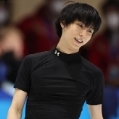
Recommended Posts
Create an account or sign in to comment
You need to be a member in order to leave a comment
Create an account
Sign up for a new account in our community. It's easy!
Register a new accountSign in
Already have an account? Sign in here.
Sign In Now