March 20Mar 20 Author *machine translation, inaccuracies exist* 2026.03.11 Source: https://jbpress.ismedia.jp/articles/-/93694 Archived: https://web.archive.org/web/20260311025306/https://jbpress.ismedia.jp/articles/-/93694 What was the mission that Yuzuru Hanyu felt when he was 16 years old, as he spoke about the 15th anniversary of the Great East Japan Earthquake? The ice show "Yuzuru Hanyu notte stellata 2026," starring Yuzuru Hanyu, a two-time Olympic figure skating champion, was held from March 7th to 9th at the Sekisui Heim Super Arena (Grande 21) in Miyagi Prefecture. This year marked the fourth consecutive year the show was held, and it also coincided with the 15th anniversary of the Great East Japan Earthquake. Spoiler Hanyu performed together for the first time with the Tohoku Youth Orchestra, which was formerly overseen by the late Ryuichi Sakamoto as its music director. As in previous years, notable skaters with ties to Tohoku, as well as those who shared his competitive years, gathered once again. With a sense of compassion for those affected by the disaster, he delivered a dance of requiem imbued with hope and prayer. Through the show, what Hanyu conveyed was a sense of “bonds” that do not easily come undone, no matter how many years have passed since the disaster. The “bonds” that Hanyu continues to cherish At the venue, filled to capacity with 6,500 spectators, countless penlights lit up from the audience seats played an important role in creating a “star-filled sky.” At the beginning narration, Hanyu reflected on the time of the disaster, when he was 16 years old. The streets of his hometown were destroyed, and infrastructure such as electricity and gas was cut off. What frightened Hanyu most was not only the destruction itself, but the way the disaster caused communities to collapse and threatened the connections between people. That is why, on the opening day performance on March 7, Hanyu took the microphone and gently spoke these words: “May each and every skater become, even in a small way, a star of hope for everyone here. And may this performance allow you to feel a sense of connection, and a sense of bonds, even just a little. That is the kind of performance we hope to create.” The opening performance was “Notte Stellata,” which also served as the show’s title. In harmony with the gentle music, he captivated the audience with one of his signature elements, the delayed Axel, after which Rika Hongo, Akiko Suzuki, Takahito Mura, Jason Brown, Javier Fernández, and others carried forward the baton of “bonds” through programs filled with heartfelt expression. One of the highlights of the first half was “Happy End,” a collaboration with the Tohoku Youth Orchestra. It was also a new program choreographed by Hanyu himself. Within it was woven his thoughts on the 15 years that have passed since the disaster. Hanyu later shared this in a post-performance press briefing. The “mission” that Hanyu etched into his heart 15 years ago “Fifteen years have passed since the earthquake, and I feel that I’ve gradually come to understand how to face and live with my own pain and wounds, moving forward little by little. Because those 15 years have passed, I’ve reached a point where I feel able to face those wounds again. And because the disaster happened, I wanted to express the idea that I am now learning from it and living strongly as a result, so I choreographed ‘Happy End’ myself.” In the performance, Hanyu, dressed in white, began the program lying on his back with his arms and legs spread wide. With original and expressive movements, he moved in harmony with the live music. In past years, the special guests have included gymnastics legend Kohei Uchimura, former top star of the Takarazuka Revue and actress Mao Daichi, and kyogen performer Mansai Nomura. Taking on such an important role, the Tohoku Youth Orchestra is said to consist of about 90 members ranging from elementary school students to university students, primarily from Iwate, Miyagi, and Fukushima. On this day, 50 of them performed. One of the performers reflected with joy, “I really felt how difficult it is to combine live art with music, but when our music came together with Hanyu’s performance, I was able to feel that ‘music is fun.’” Among the members who continue their activities to bring vitality to Tohoku through music are individuals who were born after the disaster. Across generations, there was again a shared “bond” rooted in thoughts for the disaster-affected regions. For Hanyu, these 15 years have also been a period of great momentum. He achieved back-to-back Olympic titles at the 2014 and 2018 Games, becoming the first man in 66 years to do so in men’s figure skating. He repeatedly broke the world’s all-time highest scores in competition and was called the “absolute champion.” His exceptional expressive ability transcended competition, shining endlessly on the professional stage. Reflecting on this milestone, he said, “To be honest, I don’t feel that I’ve changed dramatically,” and added that “the affected areas will never return to how they were.” The sentiment behind those words did not seem like despair, but rather a determination that accepting reality is what allows one to move forward. Hanyu also said: “I’ve come to understand that I will continue to carry the wounds and traumas from the disaster for a long, long time, and I feel that I’ve become able to live alongside them.” After the disaster, Hanyu resolved to take on a certain mission as he continued skating. What is his commitment as someone in a ‘position to convey’? “At the time, I was 16, and through the many interviews I was given and the various articles written about me, I came to feel that I had to do my best as someone in a ‘position to convey’ things. Even at a young age, I felt as though I had taken on a kind of mission. And now, in places like Noto, Ōfunato, and also in regions such as Iburi in Hokkaido and Kumamoto… when I’ve visited areas affected by disasters that occurred after that, I believe that because of the Great East Japan Earthquake, awareness of disaster prevention changed, and there were likely lives and livelihoods that were protected as a result.” Since turning professional, his ice shows have been held for four consecutive years, with media previews on opening day becoming a regular feature. This time as well, many media outlets, including those based in Tokyo, came to cover the event. His level of attention remains high; on the front page of a sports newspaper (regional edition) dated the 8th, which reported on the opening day performance, Hanyu was featured, outshining even the international baseball tournament, the World Baseball Classic (WBC). Even by itself, this clearly reflects Hanyu’s desire not to let the memory of the disaster fade from public awareness. As part of the ice show period, in a sub-arena at the venue, a “Wajima Morning Market” was set up, featuring crafts and local specialties from Noto as part of reconstruction support following the Noto Peninsula earthquake that occurred in January 2024. An outreach initiative encouraging people to visit Ishikawa Prefecture, where life-size panels and posters of Hanyu were displayed at tourist facilities across the region, was extended for another year, which he readily agreed to. These connections were born from the charity performance Hanyu held in Ishikawa Prefecture in September 2024 to support reconstruction efforts. For Hanyu, this ice show marked his first public performance in about eight months, following his “maintenance period.” “I was extremely nervous. That sense of tension, or rather, the feeling of being surrounded by so much expectation and the very strong desire to meet it was overwhelming. My hands and feet were literally trembling with nerves, but I feel that I was able to skate while properly putting both my feelings and my technique into it.” When Hanyu looked back on it, his face was filled with relief. Even after finishing the opening day performance and with the next show ahead, he continues to engage with the media, conscious of his role as someone who must “convey” messages. That day, when he appeared before reporters, Hanyu greeted them with a gentle expression, saying, “Thank you for waiting,” and “Thank you for coming all this way.” Then, as the cameras began rolling and the interview started, the “Yuzuru Hanyu” who bears the responsibility of conveying messages shifted to a more focused, sharp gaze. “Little by little, bit by bit,” “forever and ever”—when he repeats his words quickly like this, it can feel like a habitual way he emphasizes what he wants to convey. His words carried the very sentiment described by the young orchestra members as “straightforward.” Source: https://jbpress.ismedia.jp/articles/-/93695 Archived: https://web.archive.org/web/20260311070350/https://jbpress.ismedia.jp/articles/-/93695 What Yuzuru Hanyu developed during his “maintenance period”: his skating shifted from “self-taught” to “theoretical” The ice show “Yuzuru Hanyu notte stellata 2026,” led by Yuzuru Hanyu and opening on March 7, marked his first public performance since July 2025. After successfully staging solo ice shows as a professional skater following the 2022 Beijing Olympics, this return to the rink came after his “maintenance period.” For the first time, including his competitive years, he devoted extended time to confronting and refining both his physical body and his performance. Spoiler Hanyu is said to have spent considerable time theoretically analyzing the “movement and use of the body” in the expression he had developed through his own methods. With his solo ice show “REALIVE,” where he serves as executive producer and performer, scheduled for April, his expressive performance in the new program “Happy End” offered a glimpse of further evolution. A new program upon returning after eight months The collaboration with the Tohoku Youth Orchestra, “Happy End,” which served as the final program of the first half of “Yuzuru Hanyu notte stellata 2026,” was distinctive from the very beginning. Dressed in white, Hanyu opened the performance lying on his back in a star-like “spread-eagle” position. It was an immediate debut of a new program upon his return after eight months away from the public eye. “This season, in order to further evolve, I’ve decided to set aside a maintenance period! I want people to feel from the heart that it’s ‘good!’—and even more than that. Toward next spring, I will study extensively, work on physical conditioning, and push myself further, so please look forward to it! I will keep working hard in the present moment for a future that cannot yet be seen.” Hanyu made this announcement regarding his “maintenance period” on his official X account in August 2025. After completing the Beijing Olympics and announcing his transition to a professional skater in July 2022, he continued, as in his competitive years, to perform solo ice shows that placed extreme demands on his body, with almost no breaks. Professional athletes in sports such as baseball and soccer typically have defined off-seasons. In Hanyu’s case, however, his schedule, filled year-round with preparation and performances, left no clear off-period. For that reason, some viewed this “maintenance period” as a short rest to recover from accumulated fatigue and regain condition. In reality, however, it was not time to simply come to a stop at all. His skating was “self-taught” “I’ve been studying various ways the body moves. Through that process, I realized once again how much of what I’ve done up to now has been self-taught. Figure skating is truly a popular sport, but in terms of how many people actually practice it competitively, it’s not that large a number. And if you ask whether there is a lot of scientifically grounded research, that’s not really the case either.” “In a sport that is still underdeveloped from a research standpoint, I was made to realize how much I had been building my training and techniques without a clear scientific basis. It wasn’t a very long maintenance period, but step by step, I think I was able to learn at least the basics, the very fundamentals, not only as a figure skater, but also as someone involved in sports and dance, about how the body should be used.” The fluid and delicate movement he described as “self-taught” has been regarded as one of a kind. Even during his competitive years, not only his skating technique but also his expressive range received the highest level of acclaim. However, rather than being satisfied with that, his resolve to pursue further exploration was what he referred to as his “maintenance period.” At the roundtable interview that day, Hanyu touched on a part of his “maintenance period” as follows: “There was a lot of practice focused on dance. I also studied academic aspects, especially sports-related concepts like how to use the body. On top of that, I thought about what works best for figure skating, and while dancing, I experimented with and adjusted various training methods.” In that day’s “Happy End,” which he choreographed himself, he also suggested that he had broadened his knowledge: “I increased the dance elements. I think it’s about the kind of connectivity that became possible because I understand the theory behind body movement.” Then, a comment that hinted at that sense of connectivity followed: “I also had the feeling of fully incorporating spins into the steps, almost eliminating the boundary between spins and the performance.” As an example to explain his theory of body usage, Hanyu referred to boxing, a combat sport that appears to be the opposite of figure skating. Common ground with boxers: advancing to the next stage backed by “theory” “The punches of very strong boxers are executed with very clean body movement. There’s a kind of curved beauty in them that is very elegant. In the same way, I think that in our physical expression as figure skaters, there are movements that come across as ‘beautiful’ precisely because they are grounded in sound principles.” In nearly 15 years of covering him, there is no recollection of Hanyu having referenced boxing as an example in this way. It may indicate just how broadly he sought to learn theory, across such a wide range of fields, with great curiosity. The period in which he sought to fill in the lack of scientific and logical grounding in the expression and artistry he had developed through his “self-taught” approach may, on the other hand, have also led him to realize that the direction he had pursued through that approach was not fundamentally misguided. What gives that impression is the way Hanyu described his own body, in choreographing “Happy End,” as “a foundation for carrying emotion,” expressing the idea in the following words: “After the PyeongChang Olympics, I spoke about how expression and artistry are grounded in technique (※Author’s note: On February 27, 2018, after winning back-to-back Olympic titles, Hanyu responded at the Japan National Press Club to a question about the balance between jumps and artistry, stating, ‘Artistry is based on absolute technical prowess.’). Revisiting that idea after going through the maintenance period, I came to realize that in order to carry emotion, there must first be technical and fundamental elements, and only on top of that can emotion finally be layered. With that awareness, this program was carefully built by working through each element one by one.” His career as a professional skater has started moving forward again. His new solo ice show, “Yuzuru Hanyu ‘REALIVE’ an ICE STORY project,” scheduled about one month later on April 11–12, will also take place at the same Miyagi venue, Sekisui Heim Super Arena. What kind of “chemical reaction” will emerge now that his expressive artistry, cultivated through his self-taught approach, is joined by new theoretical understanding? The full picture of his renewed and evolved form will soon be unveiled.
March 20Mar 20 Author *machine translation, inaccuracies exist* 2026.03.11 Source: https://www.sanspo.com/article/20260311-XZZQ7NPPZ5IWBNYFSXXF7RRGVY/ Archived: https://web.archive.org/web/20260311003232/https://www.sanspo.com/article/20260311-XZZQ7NPPZ5IWBNYFSXXF7RRGVY/ Yuzuru Hanyu: "I want to continue speaking out and sharing my message 5 or 10 years from now" - 15 years after the Great East Japan Earthquake, he speaks of his determination for disaster mitigation. Fifteen years have passed since the Great East Japan Earthquake on March 11th. Yuzuru Hanyu (31), who won consecutive gold medals in men's figure skating at the 2014 Sochi and 2018 Pyeongchang Winter Olympics, gave an interview to Kyodo News in his hometown of Sendai on the 10th. Spoiler He himself experienced the disaster when it struck in 2011. “In the face of disasters that may happen again at any time, it’s necessary to keep preparing. As someone who experienced 3.11, I want to keep sharing my message 5 and 10 years from now as well, so that it leads to disaster mitigation,” he said, expressing his determination. On March 11, 2011, Hanyu, then a first-year high school student at Tohoku High School in Miyagi, was training at Ice Rink Sendai in Izumi Ward, Sendai, when the disaster struck. His home was deemed a total loss, and he experienced life in an evacuation shelter. “I still carry the feeling of ‘what if that earthquake had never happened,’ even now,” he said candidly. He also revealed, “Even with a tremor as small as a level 1 earthquake, my body stiffens reflexively. I can still feel the fear from back then.” After winning his first gold medal at the 2014 Sochi Olympics, he took on the role of a “beacon of hope” for disaster-affected areas. “While acknowledging my own hardships as a disaster victim, I’ve always valued the feeling of empathy.” From March 7 to 9 this month, he performed in “notte stellata 2026” at the Sekisui Heim Super Arena in Rifu, Miyagi. Marking the fourth consecutive year since its debut in 2023, he emphasized its significance: “Because it’s the 15th year, I feel I can convey the message even more strongly.” He added, “In the face of disasters that may happen at any time, it’s necessary to keep preparing. As someone who experienced 3.11, I want to continue speaking out 5 and 10 years from now so that it leads to disaster mitigation. I want to keep conveying this so that the lives that should be protected, and the towns that should be protected, are properly safeguarded.” Wearing a vivid yellow costume and smiling, Hanyu Yuzuru continues to walk alongside disaster survivors. Endless drive for improvement At “notte stellata 2026” held from the 7th to the 9th, he made his first joint performance with the Tohoku Youth Orchestra, composed mainly of elementary school through university students from Iwate, Miyagi, and Fukushima. He performed new pieces, including “Happy End” and “Yae no Sakura.” For “Happy End,” which he choreographed himself, he reportedly drew inspiration from the movements of boxers. “The punches of very strong boxers move the body in such a beautiful way, and there’s a kind of elegance in those curves. I tried to build that kind of quality as the emotional foundation,” he said. His drive for improvement shows no sign of fading. ◆ Hanyu’s journey since the Great East Japan Earthquake: ★ March 11, 2011 — He was practicing at the time of the 2:46 p.m. earthquake at Ice Rink Sendai, his base then, and experienced the disaster there. ★ April 2011 — Performed at a charity exhibition in Kobe supporting recovery efforts, calling for donations alongside Shizuka Arakawa, the gold medalist at the 2006 Turin Winter Olympics, and other skaters. ★ March 11, 2012 — Participated in an exhibition at Ice Rink Sendai, which had been temporarily closed. ★ March 11, 2014 — While based in Toronto, Canada, he observed a moment of silence facing the direction of Japan. ★ Summer 2015 — Visited temporary housing in Iwaki, Fukushima, and interacted with about 20 members of a handicraft class making items using kimono fabric. ★ January 9, 2016 — Appeared in the “NHK Trophy Special Exhibition” in Morioka; proceeds were donated to disaster victims via the Japanese Red Cross. ★ April 2018 — After the PyeongChang Olympics, he donated his ¥10 million prize money, giving ¥5 million each to Miyagi Prefecture and Sendai City for reconstruction support. ★ March 2021 — Marking 10 years since the disaster, he contributed a 1,182-character message to the press, expressing prayers for recovery and encouragement to affected areas. ★ March 2023 — Held the first “notte stellata” in Rifu, Miyagi at the Sekisui Heim Super Arena, serving as the lead performer for his first ice show in his hometown after turning professional. Source: https://www.nikkansports.com/sports/news/202603110000477.html Archived: https://web.archive.org/web/20260320101839/https://www.nikkansports.com/sports/news/202603110000477.html Yuzuru Hanyu, 15 years after the earthquake, said, "Life was saved thanks to progress in disaster prevention and mitigation," and performed at the site of remembrance, promising to "continue to support." Today, March 11th, at 2:46 PM, marks 15 years since the Great East Japan Earthquake. Yuzuru Hanyu (31), the only Asian figure skater to win two consecutive Winter Olympic gold medals and now in his fourth season as a professional, also lived in an evacuation center at the time after his home in Sendai was declared completely destroyed. Spoiler “When I was 16, through interviews and articles, I felt that I had taken on a kind of mission to do my best as someone in a position to convey things,” he reflected. Since then, he has consistently been involved in reconstruction support, and this year as well, he held his lead-starring show “notte stellata” for the fourth consecutive year. Over three days through the 9th, he offered prayers for repose and for renewal, at a venue that, after the disaster, had once served as a morgue. The amount of his personal donations to Ice Rink Sendai, where he was practicing when the earthquake struck, has also exceeded 109.97 million yen as of last month. He has continued to stand in support of disaster-affected areas following subsequent disasters as well, including through charity performances for the Noto Peninsula Earthquake. “I’ve visited regions that experienced earthquakes afterward, such as Noto, Kumamoto, and Iburi in Hokkaido. Because of the Great East Japan Earthquake, disaster preparedness and mitigation have advanced, and lives have been saved. Fifteen years… people tend to feel milestones in multiples of five, but while some areas have made progress in recovery, there are also regions that have been left behind, so I want to keep supporting them continuously and without end.” This year, he also performed alongside the Tohoku Youth Orchestra, composed of children and students from the three affected prefectures. “Among those who were born after the earthquake, and those who were too young to remember it, there are many. As someone who knows what happened at the time, I want to continue doing this, protecting and sharing what I’ve learned (as a way to prevent the memory from fading).” Hanyu's support knows no bounds.
March 20Mar 20 Author *machine translation, inaccuracies exist* 2026.03.11 Source: https://the-ans.jp/news/652416/ Archived: https://web.archive.org/web/20260320120056/https://the-ans.jp/news/652416/ A joyous photo released in the figure skating world: "The chairman and Satoko-chan look great, so great!" Yuzuru Hanyu's extremely rare shot receives a huge response. The ice show "notte stellata," starring Yuzuru Hanyu, who won consecutive Olympic gold medals in men's figure skating at the 2014 Sochi and 2018 Pyeongchang Olympics and is now a professional skater, was held in Miyagi from the 7th to the 9th. When the performers posted rare photos of Hanyu on Instagram on the 10th, fans were overjoyed. Spoiler Cast members of "notte stellata" update their Instagram The ice show "notte stellata," starring Yuzuru Hanyu, who won consecutive Olympic gold medals in men's figure skating at the 2014 Sochi and 2018 Pyeongchang Olympics and is now a professional skater, was held in Miyagi from the 7th to the 9th. When the performers posted rare photos of Hanyu on Instagram on the 10th, fans were overjoyed. "Notte Stellata," held for the fourth consecutive year, featured performances by Yuzuru Hanyu and other renowned performers until the 9th. On the 10th, Satoko Miyahara, Akiko Suzuki, and Rika Hongo updated their Instagram accounts, each posting smiling two-shot photos with Yuzuru Hanyu. Fans reacted in various ways. "Thank you for the lovely photo" "Nice two-shot, what a wonderful sight" "The troupe leader and Tomoko-chan look great" "I'm happy to see the troupe leader smiling like this" "Thank you for sharing the photo" This year's "notte stellata" featured not only skaters but also the Tohoku Youth Orchestra as a special guest, adding to the spectacle of the performance. Source: https://the-ans.jp/news/652905/ Archived: https://web.archive.org/web/20260320120327/https://the-ans.jp/news/652905/ Japanophile Brown releases extremely rare "off-camera" photo with Yuzuru Hanyu, captioned in Japanese: "Bye-bye! See you again!" American figure skater Jason Brown updated his social media, sharing some rare off-stage photos from his visit to Japan for an ice show starring Yuzuru Hanyu. Spoiler Jason Brown updates X American figure skater Jason Brown updated his social media, sharing some rare off-stage photos from his visit to Japan for an ice show starring Yuzuru Hanyu. They looked very close and affectionate. Brown appeared in an ice show held at Miyagi's Sekisui Heim Super Arena (Grandw 21) for three days until the 9th. The X post included photos of him interacting closely with Hanyu, such as them posing side-by-side with peace signs and a photo of them taking pictures of each other. The message read, "Bye-bye! Thank you for the fun memories! See you again, Yuzu!" in Japanese, sharing the memories with her fans. On the 10th, he also posted a message of gratitude in Japanese on Instagram. It included selfies and videos with fellow former figure skaters he performed with, such as Yuzuru Hanyu, Satoko Miyahara, Rika Hongo, and Akiko Suzuki, as well as a group photo of the cast and the Tohoku Youth Orchestra, who appeared as special guests. Brown is a renowned skater who won a bronze medal in the team event at the 2014 Sochi Olympics. He is a big fan of Japan and is known as one of the most popular skaters in the country. Source: https://hochi.news/articles/20260311-OHT1T51248.html?page=1 Archived: https://web.archive.org/web/20260320120618/https://hochi.news/articles/20260311-OHT1T51248.html?page=1 A smiling two-shot photo with Yuzuru Hanyu! Takahito Mura was impressed, saying, "I felt I had reached a new level as a performer." Professional figure skater Takahito Mura updated his Instagram on the 11th, posting a photo of himself with fellow professional figure skater Yuzuru Hanyu. Spoiler Mura made a guest appearance at the ice show "Yuzuru Hanyu notte stellata 2026," which was hosted by Hanyu and held at the Sekisui Heim Super Arena in Miyagi Prefecture for three days starting on the 7th of this month. He began his Instagram post by writing, "#Towa Pharmaceutical presents Yuzuru Hanyu notte stellata 2026. I was able to appear in all the performances again this year! I am filled with gratitude that we were able to skate with all our hearts together as the entire notte family again this year," and uploaded a smiling two-shot with the show's host, Hanyu, as well as a group photo. Mura reflected on the show, saying, "In Sendai, we put our hopes for earthquake recovery into this ice show, and we are passing on those hopes. I feel that the significance of this ice show, which everyone created together with Yuzu at the forefront, is very great. I hope that we can return to that place again." He also revealed that he was impressed by Hanyu's performance, saying, "Yuzu's performance of Happy End and Yae no Sakura made me feel that he had reached a new level as an expressive artist." He concluded his post by writing, "I'll post other photos later, but first of all, today is March 11th. I hope that we will never forget that day, and that through skating, I can gently encourage someone, even just a little." Comments on the post include: "What a lovely smile," "The quality of the skaters, including Mura, keeps improving year after year, and this year's show was wonderful again," "Mura's gentle prayers were conveyed through his skates and touched my heart," and "Thank you for a truly special time." Source: https://www.j-cast.com/2026/03/11512741.html Archived: Yuzuru Hanyu and Satoko Miyahara's two-shot photo, smiling and giving double peace signs, is wonderful and has received a great response: "They're both so cute," "Their smiles are amazing." Professional figure skater Satoko Miyahara (27) updated her Instagram on March 10, 2026, and shared a photo of herself with fellow professional figure skater Yuzuru Hanyu (31). Spoiler "It was the best time." Miyahara appeared in the ice show "Notte Stellata 2026," which is led by Hanyu. On Instagram, she posted an off-shot photo of herself smiling and making a double peace sign with Yuzuru Hanyu, saying, "It's over safely again this year!" and "It was the best time to be able to perform with these members again this time." She also added a comment of gratitude, saying, "Sharing this Notte Stellata with Yuzu, David, and all the other skaters is a treasure to me," and "Thank you so much." In addition to praise for Miyahara's performance, the post received comments such as, "Nice two-shot," "Both of you are cute," "My heart is full," "Both of you have such wonderful smiles," and "My two favorites." Source: https://www.buzzfeed.com/jp/yukiadachi/hanyuyuzuru-fanmessage0309 Archived: “‘Congratulations…’ Yuzuru Hanyu’s on-camera message draws a strong response: ‘I will always support you,’ ‘I was moved’ The official account for the ice show “Towa Pharmaceutical presents Yuzuru Hanyu notte stellata 2026,” led by professional figure skater Yuzuru Hanyu, updated its X account on March 9, sharing a message from Hanyu. After completing all performances, many reactions have been received in response to Hanyu expressing his gratitude. Spoiler The official account for the ice show " Towa Pharmaceutical presents Yuzuru Hanyu notte stellata 2026, " which is led by professional figure skater Yuzuru Hanyu, updated its Twitter account on March 9th, releasing a "message" from Hanyu himself. Hanyu performed in the ice show held in his hometown of Miyagi from March 7th to 9th. He performed alongside top skaters from Japan and abroad, including Javier Fernandez and Satoko Miyahara, with the Tohoku Youth Orchestra, comprised of elementary school to university students from Iwate, Miyagi, and Fukushima prefectures, as special guests. On the final day of the show, the official account posted a photo with the comment, "Here's a message from the lead performer ✨". The photo shows Hanyu holding out both hands as if to show off the writing on a whiteboard. The board has a message that appears to be in Hanyu's own handwriting, written in blue pen: "notte stellata 2026" and "Thank you very much!!!" along with a drawing of a feather. He is smiling at the camera, as if to express his gratitude. Furthermore, the official account also released a video message from Hanyu the following day, the 10th. The video shows him saying, "Notte Stellata 2026 has successfully concluded. Thank you very much," and "We really, really did our best. I hope that we were able to bring even a little bit of hope to everyone..." "Yuzuru Hanyu Notte Stellata" is an ice show in which Yuzuru Hanyu and his fellow skaters send a message of "hope" from Miyagi Prefecture, a region affected by the Great East Japan Earthquake. This year marks the fourth consecutive year and the fourth time the show has been held. The show will be broadcast on BS Nippon Television on Tuesday, March 24th from 10:00 PM to 11:30 PM .
March 20Mar 20 Author *machine translation, inaccuracies exist* 2026.03.11 Source: https://www.yomiuri.co.jp/shinsai311/news/20260311-GYT1T00073/ Archived: https://web.archive.org/web/20260311032806/https://www.yomiuri.co.jp/shinsai311/news/20260311-GYT1T00073/ Yuzuru Hanyu: "I'm proud to live with the weight of having been affected by the disaster and being a gold medalist"... Yomiuri Shimbun interview A reconstruction-support ice show: “I will continue it forever” Fifteen years have passed since the Great East Japan Earthquake on the 11th. Yuzuru Hanyu (31), a professional figure skater who was affected by the disaster in his hometown of Sendai and went on to win back-to-back Olympic titles in men’s figure skating, gave an interview to the Yomiuri Shimbun, expressing his determination to continue standing alongside disaster-affected areas. Spoiler On that day, while he was practicing at a rink in Sendai, he was struck by shaking so severe that he felt his life was in danger. The ice began to ripple, doors warped, and cracks appeared in the walls. Still wearing his skate boots, he fled on all fours. He was 16 years old. “Those memories are vivid, I can recall every movement I made. I remember the smells and the sounds. I don’t think I’ve had an experience greater than that. I remember it more clearly than even very happy moments like the PyeongChang Olympics.” The shock was such that, even now, it feels “unreal.” In the following season, as he was seen as a “representative of disaster victims,” he began to make strides, finishing third at the World Championships among other achievements. “At the time, I really disliked being seen as a representative of disaster victims when competing at the World Championships or being selected for the national team. I felt pressure and fear,” he reflected. Over time, however, his perspective changed: “By achieving results, there were many people who were happy. Some said they received courage from me. I came to feel that it was truly meaningful to be able to be part of that.” At the press conference following his gold medal at the Sochi Olympics, he said, “Even if I win a medal, there’s nothing I can directly do for reconstruction. I feel a sense of helplessness.” However, as he continued to visit disaster-affected areas year after year, his mindset gradually changed. “When I visit disaster-affected areas with my gold medal, people are genuinely happy. I believe there are things only I can do, as someone from a disaster-affected area, someone who experienced the disaster, and an Olympic gold medalist. Being from Sendai, having experienced 3/11, and being a gold medalist, I take pride in carrying all of these with me as I live. I want to continue to carry those things with me and use the medal with a strong sense of responsibility.” Fifteen years later, another change has also taken place: he has finally become able to face his own experience as a disaster survivor. “When I visited disaster-affected areas, I met many people along the coastal regions struck by the tsunami who had lost loved ones and endured deeply painful experiences. I was in inland Sendai, where I didn’t lose anyone close to me, nor did I lose skating. At one point, I felt I couldn’t even call myself a disaster victim. But at last, I’ve come to feel that it’s okay to face my own experience and acknowledge, ‘I was affected too. I carry scars too.’” In addition to his reconstruction support ice show, he has also expanded his efforts to support other disaster-affected areas, such as organizing a local products exhibition from Ishikawa Prefecture, which was affected by the Noto Peninsula earthquake. “I hope that people continue to learn from disasters, whether 3.11 or the Noto Peninsula earthquake, about how damage could have been reduced and how lives could have been saved. If I can serve as a reminder of that importance, that would be enough. As a skater, I will continue supporting others for as long as my body allows. Beyond that as well, I feel a sense of mission that I will carry on indefinitely. Even if the form changes, I want to keep doing what I can.” 2026.03.25 Source: https://www.yomiuri.co.jp/bosai-nippon/feature/18624 Archived: https://web.archive.org/web/20260325010526/https://www.yomiuri.co.jp/bosai-nippon/feature/18624 Yuzuru Hanyu's main disaster relief activities Spoiler 2011 In March, the disaster struck while the family of four was practicing at a rink in Sendai City. In April, he performed at a charity skating event for the Great East Japan Earthquake held in Kobe. From spring to summer, he practiced while touring ice shows across the country. 2012 In March, he placed third at the World Championships. From the summer, he moved his training base to Canada. 2014 February: Won a gold medal at the Sochi Olympics. June: Visited Ishinomaki City, Miyagi Prefecture. 2015 In June, he visited Iwaki City, Fukushima Prefecture. 2018 February: Won a gold medal at the Pyeongchang Olympics, becoming the first man in 66 years to win back-to-back Olympic gold medals. 2019 In June, he visited the areas affected by the Hokkaido Eastern Iburi Earthquake that occurred in 2018. 2022 In February, he placed fourth at the Beijing Olympics. In July, he announced his intention to turn professional. 2023 In March, the "Notte Stellata" ice show, supporting the recovery efforts after the Great East Japan Earthquake, was held for the first time. It continued to be held for four consecutive years until 2026. 2024 In September, he performed in a charity acting event to support the recovery efforts following the Noto Peninsula earthquake that occurred in January. **English article version** Source: https://japannews.yomiuri.co.jp/sports/figure-skating/20260311-315874/ Archived: https://web.archive.org/web/20260320104858/https://japannews.yomiuri.co.jp/sports/figure-skating/20260311-315874/ Japan Figure Skating Legend Yuzuru Hanyu Is Proud Disaster Survivor and Gold Medalist, Vows to Continue Support Efforts Wednesday marked the 15th anniversary of the 2011 Great East Japan Earthquake. Professional figure skater and gold medalist at two consecutive Winter Olympics, Yuzuru Hanyu, 31, expressed his determination to keep supporting affected areas in a recent interview with The Yomiuri Shimbun. Spoiler He experienced the disaster in his hometown of Sendai. On the day of the earthquake, Hanyu had been training at a rink in Sendai when struck by shaking so violent he feared for his life. The ice rippled, doors warped and cracks appeared in the walls. He crawled out on all fours, still wearing his skates. He was 16 years old. “My memories from that time are vivid, so I can recall every single movement. I remember the smells and the sounds. I don’t think I’ve ever experienced anything like it. I remember it more clearly than even incredibly happy events such as the PyeongChang Olympics.” The shock was so profound that “even now, I can’t believe it was real.” The following season, while drawing attention as a “representative of the victims of the disaster,” Hanyu began his rise, achieving a third-place finish at the world championships. “Back then, I really hated being seen as a disaster victim representative, competing in the world championships or being selected as a member of the Japanese national team. I felt the pressure and was scared,” he recalls. Gradually, however, he came to think, “There were so many people who were happy for my achievements, telling me, ‘You gave me courage.’ I felt truly fortunate to be involved in something like that.” At a press conference for his Sochi Olympics gold medal, Hanyu stated, “Even winning a medal doesn’t directly contribute to reconstruction. I feel powerless.” However, his mindset changed as he visited the disaster-affected areas almost every year. “When I visit the disaster areas with my gold medal, everyone is genuinely happy. I believe there must be things only I can do — someone from the disaster area who experienced the disaster — and is an Olympic gold medalist,” he said. “Being from Sendai, having experienced the disaster on March 11, and being a gold medalist — I take pride in living with all of that. I want to carry that gold medal forward and use it responsibly.” Fifteen years later, another change occurred. He finally became able to confront his own experience. “Visiting the disaster areas, I saw many people in the coastal areas hit by the tsunami who suffered terribly, losing loved ones. I was in inland Sendai, so I didn’t lose anyone close to me, and I didn’t lose my skating. I couldn’t call myself a disaster victim anymore.” “But finally, I started thinking, maybe, it’s okay to face my own experience and say, ‘I was affected. I have scars.’” Alongside ice shows to support reconstruction for affected areas, Hanyu has expanded his efforts to other disaster areas, such as holding a product exhibition for Ishikawa Prefecture, which was affected by the Noto Peninsula Earthquake. “Whether it’s the March 11 quake or the Noto Peninsula Earthquake, I hope people continue to learn from disasters — what could have reduced damage, what could have saved lives. I want to be a reminder of that importance.” “As a skater, I’ll keep supporting for long as my body allows. I feel a sense of duty to carry this mission forward indefinitely. Even if the form for support changes, I want to keep doing what I can.”
March 20Mar 20 Author *English article* 2026.03.11 Source: https://www.olympics.com/en/news/hanyu-yuzuru-commemorate-2011-earthquake-catalyst-avoid-the-disaster-fading Archived: https://web.archive.org/web/20260320114925/https://www.olympics.com/en/news/hanyu-yuzuru-commemorate-2011-earthquake-catalyst-avoid-the-disaster-fading Hanyu Yuzuru commemorates 2011 earthquake: "I want to keep being the catalyst to avoid the disaster fading" On the eve of the 15th anniversary of the Great East Japan Earthquake Disaster, the double Olympic figure skating champion underlined his personal mission to uphold the memory of the victims and promote disaster mitigation. Spoiler Figure skating legend Hanyu Yuzuru has reiterated his commitment to honouring the lives and memories of those affected by the March 11, 2011, earthquake and tsunami disaster that struck northeastern Japan. "My body stiffens like a conditioned reflex, even during a minor tremor of 1 (on the Japanese seismic intensity scale of 7). I feel the fear," Hanyu told Kyodo News on Tuesday (10 March) in his native Sendai, the biggest city of the Tohoku region, where the magnitude-9.0 quake and tsunami hit 15 years ago. Hanyu was just 16 years old and training at his local ice rink when the natural disaster hit, wreaking havoc on his home, his city and the surrounding areas. The tsunami, a consequence of the tremors, led to a nuclear meltdown at the Fukushima Daiichi Power Plant. Nearly 16,000 people died as a result. He and his family had to spend time in a temporary evacuation centre set up in a gymnasium, after their home was destroyed. Three years later, he claimed Olympic gold at Sochi 2014. Since then, the skater has made it a personal responsibility to continue helping the affected areas through his performances on the ice, and off it, too. From charity exhibitions, including the latest instalment of his three-day Notte Stellata show to mark the 15th anniversary, to donating proceeds from his autobiographies and merchandise, Hanyu continues to amplify the hardships of those still affected. "I want to keep being the catalyst to avoid the disaster fading (from people's memory)," he said. "I want to keep conveying messages in order to protect the lives and towns that need to be protected." Underlining that commitment, the Japanese skater featured the Tohoku Youth Orchestra in his most recent show, which took place from 7-9 March. "We need to keep preparing in the face of disasters that could happen again at any moment. As someone who experienced March 11, I want to keep the message alive five, 10 years from now for disaster mitigation."
March 20Mar 20 Author *machine translation, inaccuracies exist* 2026.03.11 Source: https://news.yahoo.co.jp/expert/articles/b85c2ed60e8af67aea3aef4f255792e09c14f81b Archived: https://web.archive.org/web/20260320105545/https://news.yahoo.co.jp/expert/articles/b85c2ed60e8af67aea3aef4f255792e09c14f81b The Tohoku Youth Orchestra, performing with Yuzuru Hanyu, offers prayers for 3.11... The story of the orchestra nurtured by Ryuichi Sakamoto #KeepKnowing The ice show “Yuzuru Hanyu notte stellata 2026,” led by professional figure skater Yuzuru Hanyu as its lead performer, was held in Miyagi from the 7th to the 9th. The Tohoku Youth Orchestra appeared as a guest, and they performed together with the shared intention of preventing the memory of the Great East Japan Earthquake from fading, while also expressing hope. Last year, I interviewed the captain of the Tohoku Youth Orchestra. I heard stories about Ryuichi Sakamoto, who nurtured the orchestra as a place for emotional recovery. I will share those stories, along with my impressions of the live viewing I attended on the 9th. Spoiler [Yuzuru Hanyu] He experienced the disaster in Sendai City and felt a sense of hope from the star-filled sky he saw while heading to the evacuation shelter. He has continued staging a program titled “notte stellata,” which in Italian means “starry night,” for four consecutive years. In this performance, the guest Tohoku Youth Orchestra performed Merry Christmas Mr. Lawrence, composed by Ryuichi Sakamoto. To the accompaniment of pieces such as “Yae no Sakura” and “Happy End,” Hanyu Yuzuru delivered a new, intensely expressive program. The finale, “ETUDE,” is a lively piece well known from Tohoku Youth Orchestra concerts. Yuzuru Hanyu and his friends (including Javier Fernández, Jason Brown, Satoko Miyahara, Akiko Suzuki, Keiji Tanaka, and Takahito Mura) perform with smiles on their faces. Applause breaks out, and the entire audience, including those at live viewing venues, comes together as one. [Excerpt from Hanyu’s comments] “This place was used as a morgue after 3.11. It is a place that is close to death, but also a place where many forms of ‘life’ come together. Professor Sakamoto’s music was played here, and these wonderful skaters performed with prayers, love, and hope in their hearts. I hope that even a fragment of that remains with all of you. I hope it can become a source of hope for times when things feel a little difficult in the future. Please, cherish the life you have today.” The Birth of the Tohoku Youth Orchestra The “Children’s Music Restoration Fund,” established in 2011 with composer Ryuichi Sakamoto and others as its founders, raised donations and allocated them to cover costs such as inspecting and repairing pianos and other musical instruments, subsidizing purchases, and supporting musical activities at approximately 1,850 schools across Iwate, Miyagi, and Fukushima, areas heavily affected by the Great East Japan Earthquake. In March 2014, the “General Incorporated Association Tohoku Youth Orchestra” was launched as a successor to the fund. In addition to annual regular concerts held every March, the group has continued activities such as volunteer performances in disaster-affected areas, carrying on Sakamoto’s vision, who passed away in March 2023, and working toward emotional recovery through music. [Ryuichi Sakamoto] In 1978, he formed the Yellow Magic Orchestra (YMO) with Haruomi Hosono and Yukihiro Takahashi. Sakamoto won the British Academy Film Award for the film 'Merry Christmas, Mr. Lawrence,' in which he also appeared, and received both the Academy Award for Best Original Score and a Grammy Award for his music for 'The Last Emperor.' He has also composed music for Japanese films such as "Nagasaki: Memories of My Son," producing numerous works, while also engaging in environmental and anti-nuclear advocacy. As the director of the Tohoku Youth Orchestra, he wrote on the official website: “I was somewhat concerned that this might be seen as adults imposing their own goodwill under the guise of ‘doing something for Tohoku.’ However, when we recruited members, more than 100 children raised their hands. Reading their applications, I was deeply moved by how the earthquake had left a significant emotional wound in their hearts, and at the same time, how they were trying to heal and overcome those wounds through music. I sincerely ask for your continued long-term support of the Tohoku Youth Orchestra.” He passed away on March 28, 2023. After 3.11: Unable to Play Outside Kota Kaizu of Fukushima University plays trombone in the Tohoku Youth Orchestra and has served as its captain since 2023. On March 11, 2011, when the Great East Japan Earthquake occurred, he was a first-grade elementary school student. Areas such as Shirakawa and Sukagawa experienced strong shaking, and he was affected by the disaster. Although he was able to remain living in his home, due to the accident at the Fukushima Daiichi Nuclear Power Plant, he wore a radiation-measuring device around his neck when going to school. In his early elementary years, he has little memory of playing outside. The schoolyard soil was replaced, and large trucks came to the school to measure the effects of radiation on the human body. Against this backdrop, and encouraged by his mother, he began playing trombone in the school brass band in fourth grade. He joined brass bands in both junior high and high school, where he met supportive upperclassmen. At his mother’s suggestion, he joined the Tohoku Youth Orchestra in 2017, when he was in the second year of junior high school. Once a month, his mother would wake up early and drive him from Shirakawa City to Fukushima City, and rehearsals would take up the entire day. The orchestra is open to those with ties to the three Tohoku prefectures, from fourth-grade elementary students up to graduate students. With about 90 members, participants balance the orchestra with their regular studies rather than attending a music conservatory, and some travel from distant areas. People working in the music industry who admire Sakamoto also support the orchestra’s activities. Sakamoto-san held my trembling hand When Kaizu first joined, he was shy and “afraid.” One of his most important memories is being encouraged by Ryuichi Sakamoto after making a mistake out of nervousness. Standing backstage, he felt devastated, thinking, “It’s over.” At that moment, Sakamoto came over and firmly grasped his trembling hand. Sakamoto would also bring cakes as treats during December rehearsals and join in ensemble playing. Before the annual March concert, he would participate in training camps. Before the COVID-19 pandemic, there were also summer camps held in places such as Okinawa, Hokkaido, and Lake Kawaguchi. At Kawaguchi, Sakamoto joined as well, rehearsing during the day, and in the evenings, everyone would barbecue and set off fireworks together. He was described as playful, like a kind grandfather. During rehearsals for concerts, Sakamoto would offer messages to the members. When they tried playing as he suggested, their sound would suddenly improve or take on a different character, as if entering “Sakamoto’s world.” As the performance improved, Sakamoto could be seen smiling warmly in the backstage area. He conveyed his passion for music until the very end After Sakamoto’s passing, I watched several documentary programs abuot him. Two days before his death, Sakamoto was watching a Tohoku Youth Orchestra concert via online stream. Even while on his deathbed, he was overflowing with energy and passion for music. The members were unaware of the seriousness of his condition. A message from Sakamoto was written on a board at the venue, and after the performance, he sent a message to the performers: “Superb! Bravissimo (applause ×5) Wonderful!! That was great. Thank you everyone (applause ×3). Good work ♪” He praised them wholeheartedly. In March 2023, Kaizu learned of Sakamoto’s passing for the first time through the news and cried. About three months later, rehearsals resumed, and he was appointed the new captain. When Kaizu spoke again with people close to Sakamoto and members from the first generation, he learned that Sakamoto consistently conveyed the belief that “it’s not about skill level, but about the heart.” From Being Supported to Supporting Others In 2025, they held a concert in Hokuriku with volunteers. The group has moved from being those who are supported to those who support others, becoming a source of encouragement for people affected by disasters. Last year, I attended a concert at Suntory Hall. It featured a violinist from Ukraine who had connections with Ryuichi Sakamoto, and also included orchestral arrangements of YMO songs. On a personal note, I once attended a YMO concert as a child with my late father. As a journalist assigned to Fukushima who has continued covering the Tohoku region, I felt both the timeless beauty of music and its evolving, adaptable nature. And this year, 15 years after the earthquake, watching the performance with Yuzuru Hanyu gave me further hope. That performance can also be viewed via television broadcasts and other media. In addition, the Tohoku Youth Orchestra will hold a concert at Suntory Hall on March 26. I hope you will feel the spark of hope as you watch them enjoy music while still carrying the wounds of the earthquake and the pain of losing Ryuichi Sakamoto.
March 20Mar 20 Author *machine translation, inaccuracies exist* 2026.03.11 Source: https://www.web.nhk/tv/an/telemasa/pl/series-tep-M917RJ4V72/bl/p8jzAREJp8/bp/p76qnEzOdA Archived: https://web.archive.org/web/20260320105120/https://www.web.nhk/tv/an/telemasa/pl/series-tep-M917RJ4V72/bl/p8jzAREJp8/bp/p76qnEzOdA?_reload=1774003880806 Earthquake-related interview with figure skater Yuzuru Hanyu This is another installment in our series of interviews about the earthquake and tsunami. This time, we interviewed Yuzuru Hanyu, a figure skater from Sendai City. We asked him about his thoughts now, 15 years after the earthquake. (Interviewer: Keita Miyazaki, Teremasa caster, NHK Sendai Broadcasting Station) Spoiler (Hanyu): “It feels both long and short, like it flew by in an instant, yet at the same time it’s been very full and dense. Looking back, so many things have happened—there were three Olympics for me, and many other events in everyday life as well. But when I actually see it as the number of 15 years, I also feel like, ‘So much time has already passed.’” (Miyazaki, anchor): “Over the past 15 years, both the tsunami-affected areas and Miyagi Prefecture have changed significantly. How do you feel about the changes in Miyagi?” (Hanyu): “Of course, the town where I live as well... back then, for example, there were traffic lights that had fallen over, and buildings where all the glass had shattered. In that sense, new buildings have been going up one after another, the roads have become very clean, and things like fallen utility poles are no longer there. I feel that the area has become much cleaner. However, what was lost cannot be brought back. For example, the view from Hiyoriyama in Ishinomaki is completely different now. In that sense, the changes are probably a positive thing, as they represent progress toward the future. But as time passes and we move forward, we must never forget the original way of life that existed in those places, or the things that were lost at that time. That’s how I feel.” (Miyazaki, anchor): “I’m from Sendai as well, and as things have continued to change, I think there are still many people whose hearts haven’t quite caught up yet. How do you feel about that?” (Hanyu): “I think everyone perceives and interprets these 15 years differently. There are people who feel that they’ve been able to sort things out in their minds now that 15 years have passed, and at the same time, there are surely people who, even within those 15 years, still don’t want to face certain things. There are also people whose hearts haven’t been able to keep up at all with the changes in the town. I think it’s fine for each person to experience time in their own way. There will likely come a day when they have no choice but to face it, and a day when they come to understand how to live with that pain. I believe that time, like a kind of medicine, will eventually take effect in a positive way. Until then, I hope we can continue to stay close to and support those people with our hearts.” (Miyazaki, anchor): “As you just mentioned, through ice shows and in various other ways, you have continued to stay close to Miyagi. What kind of mindset have you had in doing so?” (Hanyu): “The damage caused by 3.11 was of an overwhelming scale, and of course, I don’t think it will ever be forgotten. However, as generations change, the way we convey it also has to continue evolving. Even if the form may change, it’s something we want to keep passing on. What I’ve felt through visiting places affected by disasters, such as Noto or Ofunato, is that because of 3.11, disaster preparedness drills have become more concrete and manuals have been developed in more detail. I’ve seen many regions where disaster damage was mitigated as a result. I would never say that the earthquake was a good thing, of course. But I do think it’s important that we continue to convey that there are lessons learned from it, and that there are lives and communities that have been protected because of those lessons.” (Miyazaki, anchor): “Finally, Hanyu-san, how would you like to continue staying close to Miyagi going forward?” (Hanyu): “Ultimately, I believe each person has a completely different mindset and feelings toward 3.11. It may not be possible to stand by everyone, but I want to remain, in a kind way, someone who is always on their side, someone who continues to be a supporter for them.” He will appear live on “Teremasa” on Thursday, March 12, where we will ask him about his thoughts on the earthquake disaster and Miyagi. Please note that there will be no public audience for that day’s broadcast of “Teremasa.” ▽ You can watch the interview video “In Conversation with Yuzuru Hanyu” at the URL below: https://news.web.nhk/newsweb/na/nb-6000035477
March 20Mar 20 Author *machine translation, inaccuracies exist* 2026.03.11 Source: https://newsdig.tbs.co.jp/articles/-/2524536?display=1 Archived: https://web.archive.org/web/20260312075012/https://newsdig.tbs.co.jp/articles/-/2524536?display=1 [Yuzuru Hanyu - Video Released] "The only light I could see was the starry sky. I hope I can become someone like that." He speaks about his thoughts on recovery from the earthquake 15 years ago. On March 11, the 15th anniversary of the Great East Japan Earthquake, professional figure skater Yuzuru Hanyu, who won consecutive Olympic gold medals in 2014 and 2018, appeared live on TBC TV's "N-Sta Miyagi Special: The Current Situation 15 Years After the Great East Japan Earthquake" and spoke about his feelings regarding the earthquake and his support for reconstruction efforts. Spoiler New discoveries during the "maintenance period" From 2025 onwards, Hanyu refrained from appearing in shows and spent time focusing on improving his own skills. Reflecting on this period, he said, "It was a time when I truly rebuilt everything from scratch, from the ground up, in order to become better and stronger, such as how to build my body, how to move it, and how to control it." When asked about new inspiration, he spoke candidly: “I realized things like, ‘So this is what allowed me to do those jumps,’ or ‘This is what made that kind of skating possible,’ alongside discoveries such as, ‘Ah, there are even simple things that I still can’t do.’ That made me feel that I want to keep strengthening myself.” "notte stellata" is a work themed around reconstruction Regarding "notte stellata," an ice show themed on reconstruction held in Rifu Town, Miyagi Prefecture from March 7th to 9th, Hanyu emphasized the significance of holding the event for the fourth consecutive year. The venue incorporated elements of reconstruction support, such as a morning market with stalls from Sendai and Noto in Ishikawa Prefecture selling goods useful for disaster prevention. "For example, waterproof furoshiki (wrapping cloths), or flashlights, I really hope that my show has given people a chance to think about earthquakes, disaster prevention, and disaster mitigation," he said, explaining that the initiative is not only about reflecting on past disasters but also about preparing for the future. The "starry sky" I looked up at after the earthquake The show's title, "notte stellata," means "starry sky" in Italian. This is derived from the starry sky on the night of the earthquake. Reflecting on that time, Hanyu said, "For me, at that time, all the electricity suddenly went out, and the only light I could see in the surreal cityscape of Sendai was the starry sky." "It's difficult to express in simple words like 'it gave me hope' or 'it gave me strength,' but it was something that moved me deeply and touched my heart. I skated to the program 'notte stellata' with the hope that I too can become someone like that." Even now, 15 years later, he revealed , "I've been feeling restless and unsettled since around January," frankly describing his feelings that haven't changed over time. "Is it okay for me to be skating?" Hanyu revealed that he had mixed feelings about participating in the charity show held in May 2011, immediately after the earthquake. "At a time like that, when I myself had been affected by the disaster and everything around me was in complete chaos, I honestly felt guilty about whether it was okay for me to be skating. But rather than being there and feeling depressed or doing nothing, I wanted to help someone, to help Tohoku, to help Miyagi, so I decided to participate." Hanyu, who said he was inspired by the success of Rakuten Eagles and Vegalta Sendai, spoke about his feelings at the time, saying , "As someone involved in sports, I thought that I wanted to become that kind of person, that kind of presence." Gold medal and a sense of mission Regarding his two consecutive gold medals in Sochi in 2014 and Pyeongchang in 2018, Hanyu frankly expressed his joy, saying, "To be honest, I feel a sense of mission. I've been doing this sport all this time because I wanted to win a gold medal at the Olympics, so I was really happy to finally reach that point. " In particular, at a press conference after the Sochi Olympics, he expressed a sense of powerlessness at not being able to directly help with the recovery efforts. However, he later reflected on the experience on television, saying, "It was a moment when I felt truly glad that all the hard work I had put in, the work I had done for myself, had benefited so many people, and I was so happy." Regarding the Pyeongchang Olympics, he revealed the sense of mission he felt, saying, "If I don't win here, I don't know when I'll ever be able to win again ," and "I strongly wanted to deliver to those who had high expectations of me and make them smile with my results." A sense of unity in the parade Regarding the fact that as many as 100,000 people gathered along the route for the two victory parades, Hanyu recalled, "It was truly an unbelievable sight." He added, "The sense of unity at that time, and the fact that the people who gathered there picked up trash and did various things for the community, it reminded me a little of the way we came together during the reconstruction efforts, when we were saying that we would rebuild and move forward." He said he felt the power of sports to unite people. Many fans sent messages to the program, and he expressed his gratitude, saying, "As I mentioned earlier, this was a dream I worked hard for myself, so it's truly wonderful to be able to share this happiness with so many people."
March 20Mar 20 Author *machine translation, inaccuracies exist* 2026.03.11 Source: https://news.ntv.co.jp/n/mmt/category/sports/mm4e3485cd35404043a1658f17633e4b6f Archived: https://web.archive.org/web/20260312181724/https://news.ntv.co.jp/n/mmt/category/sports/mm4e3485cd35404043a1658f17633e4b6f [Exclusive] A skate of remembrance on 3/11... An interview with Yuzuru Hanyu, 15 years after the earthquake. March 11, 2026. A skate of remembrance at Ice Rink Sendai. Miyagi Television conducted an exclusive interview with professional figure skater Yuzuru Hanyu, who hails from Sendai. 2:46 PM... A moment of silence on the ice. What are your feelings as we approach the 15th anniversary of 3/11? "As a resident of Miyagi Prefecture, I think about many things on this day, I have never missed observing a moment of silence, and I have always tried to offer prayers for all kinds of souls. The Great East Japan Earthquake caused damage in Tohoku and along the coast, but when I visited the disaster-stricken areas of Noto, Kumamoto, and Hokkaido, I felt that there were many people affected by the Great East Japan Earthquake who took certain actions because of the lessons they learned from the earthquake, and I felt that many lives and precious things were saved as a result. So I think these past 15 years have not been in vain, and although we have lost irreplaceable things, we have certainly learned a lot." A message to the people of my hometown, Miyagi. "Fifteen years have passed since then, but as a resident of Miyagi Prefecture, I don't see this as a milestone, but rather as an opportunity to reconsider what it means to pass on the story once again, to confront the wounds we suffered once more, and to embrace them once more. I hope this can be such a day." "I'll give my all to skate as hard as I can to support people like you. Please do your best!"
March 20Mar 20 *machine translation, inaccuracies exist* 2026.03.11 Source: https://www.tokyo-sports.co.jp/articles/-/380507 Archive: https://web.archive.org/web/20260314061931/https://www.tokyo-sports.co.jp/articles/-/380507 Tokyo Sport Yuzuru Hanyu – The mission of connecting lives on 3.11 People like us are said to be “non-essential and non-urgent,” but… [Exclusive Interview – First Part] By Sota Nakanishi More than 16,000 lives were lost, and about 2,500 people are still missing. Professional skater Yuzuru Hanyu (31), who achieved two consecutive Olympic victories in men’s figure skating, was affected by the disaster while at Tohoku High School as a first-year student, at Ice Rink Sendai, and he also experienced living in evacuation shelters. The skater who continued running as a symbol of reconstruction, what does he think now, 15 years later? In the first part of this newspaper’s two-part exclusive interview, we approach his vow as a “messenger.” Spoiler Hanyu: I have the feeling that as much as 15 years have passed, and when I think back on it, there were many dense days, and there were also many days that flowed by, so I also have the sense that 15 years really have passed. — You have had more opportunities to think about the earthquake Hanyu: Until now, if anything, I often had work where people asked, “What do you think about the ice show?” or where I conveyed the feelings and the thoughts of people at the places I visited, so I didn’t focus on my own disaster experience. But with the arrival of the milestone of 15 years, it became an opportunity to look back, and little by little I felt again that there is my own pain, the past, the days that moved forward from there, and also parts that have continued forward but haven’t changed, and that there are scars too. — In the recent “Yuzuru Hanyu notte stellata,” your way of sending out messages about “life” and “living” was impressive Hanyu: When I remember what happened at 3.11, and also looking at how unstable the current world situation is—during the COVID period as well—but if you put it bluntly, people like us are something that could be called non-essential and non-urgent, aren’t we? During the COVID period there were situations where the rink couldn’t be used, so it didn’t seem impossible that a future could come where skating could no longer be done. That’s exactly why I think we have to live while valuing the life we have now, the feeling of skating, and the feeling that people are able to watch skating. — Why do you continue to be active outside the rink as well, such as serving as tourism ambassador for your hometown Sendai? Hanyu: Because I think it’s something I can do precisely because I’m someone who has won Olympic gold medals. While visiting my alma mater or disaster-affected areas with the gold medal, I felt that just the experience of seeing the gold medal or touching it could become an opportunity for people to feel encouraged, even if only for that moment. That’s something special, and of course the messages that continue to be delivered through skating are important, but I think activities outside skating might also be an important mission. — How do you think the Great East Japan Earthquake should be conveyed from now on? Hanyu: Through the elementary- and junior-high-school students of the Tohoku Youth Orchestra who performed together in “notte stellata,” I felt that there are increasing numbers of children who have no memory of 3.11. It’s not about sharing painful memories with those children, but rather I hope we can continue to exist as a trigger for them to learn about and know various things related to disaster prevention and disaster-damage reduction. I think that from 3.11 we were able to learn an awareness of protecting the things that are important, and that we must learn it, so I want to connect it carefully going forward.
March 20Mar 20 Author *machine translation, inaccuracies exist* 2026.03.11 Source: https://www.tokyo-sports.co.jp/articles/-/380507 Archived: https://web.archive.org/web/20260312090413/https://www.tokyo-sports.co.jp/articles/-/380507 Yuzuru Hanyu on 3.11 and his mission to “connect lives” in figure skating: “We’re often described as something ‘non-essential’… but…” — Exclusive interview (Part 1) The Great East Japan Earthquake, which occurred on March 11, 2011, caused immense damage, mainly in the Tohoku region. It claimed the lives of approximately 16,000 people, and the whereabouts of about 2,500 people remain unknown. Yuzuru Hanyu (31), a professional figure skater who achieved two consecutive Olympic gold medals in men's figure skating, was a first-year student at Tohoku High School when the earthquake struck while he was at the Sendai Ice Rink, and he also experienced life in an evacuation center. What does the skater, who has continued to run as a symbol of recovery, think now, 15 years later? In the first of two parts of our exclusive interview, we delve into his vow as a "messenger" of the disaster. Spoiler — It will be 15 years since the Great East Japan Earthquake on the 11th. Hanyu: I feel like 15 years have passed, and when I look back, there were many intense days as well as many that simply went by, so it really feels like 15 years have gone. — Have there been more opportunities recently to reflect on the earthquake? Hanyu: Until now, most of my work has been about ice shows, being asked things like “What do you think?” or conveying the emotions I felt at the places I visited, and the thoughts of the people there. Because of that, I haven’t really focused on my own experience as a disaster survivor. But reaching the milestone of 15 years gave me an opportunity to look back. Gradually, I’ve come to reflect on my own hardship, my past, the days I’ve lived since then, and also how, while I’ve moved forward, there are parts of me that haven’t changed, and there are still scars that remain. — In your recent “notte stellata” performance, your emphasis on themes like “life” and “living” was particularly striking. Hanyu: When I think back to 3.11, and also considering how unstable the world situation is now, as well as during the COVID-19 pandemic, it’s easy to say that what we do is “non-essential,” isn’t it? During the pandemic, there were times when we couldn’t even use the rink, so I think a future where we might not be able to skate isn’t impossible. That’s why I feel we have to live while valuing the life we have now, the feeling of being able to skate, and the sense of being able to have people watch our skating. — As the tourism ambassador for your hometown, Sendai, what motivates you to continue activities outside the rink? Hanyu: I believe it’s something only someone who holds an Olympic gold medal can do. When I visit my alma mater or disaster-affected areas with the gold medal, I’ve felt that even just seeing or touching the medal can become a moment that gives people a bit of encouragement. That’s something special. While the message I convey through skating is of course important, I think activities outside of skating are also an essential part of my mission. — How do you think the Great East Japan Earthquake should be passed on in the future? Hanyu: I felt that there are more and more children who have no memory of 3/11, like the elementary and junior high school students of the Tohoku Youth Orchestra with whom I performed at "notte stellata." Rather than sharing painful memories with them, I hope that we can remain something that serves as an opportunity for them to learn about disaster preparedness and mitigation. I believe we learned from 3/11 the importance of protecting what matters most, and I feel that this is something we must continue to learn and pass on with care. Source: https://www.tokyo-sports.co.jp/articles/-/380561 Archived: https://web.archive.org/web/20260312114333/https://www.tokyo-sports.co.jp/articles/-/380561 Yuzuru Hanyu expresses his thoughts on social media 15 years after the Great East Japan Earthquake: “I'll pray.” Yuzuru Hanyu (31), a professional figure skater and two-time consecutive Olympic gold medalist in men’s singles, updated his official X (formerly Twitter) account on the 11th, sharing his current thoughts. Spoiler That day marked 15 years since the Great East Japan Earthquake, which caused devastating damage primarily across the Tohoku region. Hanyu himself experienced the disaster while he was a first-year student at Tohoku High School, when he was at Ice Rink Sendai, and he also lived through life in an evacuation shelter. On X, he began with “15 years,” and wrote, “So many thoughts and memories come flooding back. I cannot return to that time, but I want to keep it carefully in my heart. I'll pray.” He went on to conclude, “And to everyone born on this day, happy birthday. I truly wish you happiness.” In response to the post, messages such as “Even though he must be in pain himself, he always thinks of disaster victims,” “Thank you for your meaningful message,” and “I will join you in praying” were shared. 2026.03.12 Source: https://www.tokyo-sports.co.jp/articles/-/380632 Archived: https://web.archive.org/web/20260313113654/https://www.tokyo-sports.co.jp/articles/-/380632 [Figure Skating] Yuzuru Hanyu: A Professional's Pride - "I'm still desperately trying to get better" [Exclusive Interview Part 2] The Great East Japan Earthquake, which occurred on March 11, 2011, caused immense damage, mainly in the Tohoku region. Yuzuru Hanyu (31), a professional figure skater who achieved two consecutive Olympic gold medals in men's figure skating, was at the Sendai Ice Rink when the earthquake struck while he was a first-year student at Tohoku High School and also experienced life in an evacuation center. What does the skater, who has continued to run as a symbol of recovery, think now, 15 years later? In the second part of our two-part exclusive interview, we delve into his pride as a "professional." Spoiler — In the summer of 2025, you announced that you would set aside a “maintenance period.” What was your aim? Hanyu: “I wanted to get better. To be honest, continuing ice shows while also improving my physical level at the same time is really difficult… When I was a competitor, I only had to focus on raising my competitive level, but now I’m also creating performances, so there are many things I have to do. That’s why I took about eight months off.” — “Yuzuru Hanyu notte stellata,” held to mark the 15th anniversary of the Great East Japan Earthquake, was your first ice show in about eight months. Hanyu: “My range of motion and the flexibility I can make use of have improved considerably. I’ve always had a wide range of motion, but in order to properly incorporate it as a form of expression, it’s not just about understanding how I should use my body in my head. It’s also about being able to let it come out naturally when I think, ‘I want to move this way for this piece.’” — Your motivation clearly remains high. Hanyu: “It’s not that I’m trying to maintain my current level, it’s more that I have a strong desire to improve. When people see something, if there’s a sequel, they naturally expect something even better, don’t they? In order to keep meeting those expectations, I always want to improve. When I’m trying to convey emotions and other things, I often feel frustrated because my technique is still far from complete. Rather than just the desire to improve, I think the feeling of ‘I can’t forgive myself for being this unskilled’ is even stronger.” — That attitude likely makes you a role model for younger skaters. Hanyu: “I’m really happy that so many skaters mention my name as someone they look up to, but I’m not trying to have them carry on anything from me or impose anything on them. That said, I did feel the passage of time a little (laughs). I used to work hard myself because I wanted to get closer to the skaters I admired. Of course, I’m glad to be looked up to, but I still feel I have a long way to go, so I’m pushing myself to keep getting better.” — Looking ahead, is there anything you hope to achieve or a level you want to reach? Hanyu: “I think I’ll probably always feel that my own performances are lacking or not good enough. I don’t think I’ll ever be fully satisfied with my skating. There are more times when it’s not enjoyable, but the moments when I achieve something are definitely more rewarding. Even if it’s not always fun, what I dislike even more is performing in a way that I can’t be proud of. So each time, I want to give everything I have and keep pushing myself to the point where I can say, ‘I’ve done everything I could.’” Yuzuru Hanyu Born December 7, 1994. From Sendai City, Miyagi Prefecture. He won gold medals at the 2014 Sochi and 2018 PyeongChang Olympics. In 2020, he also won the Four Continents Championships, becoming the first men’s skater to achieve the Super Slam (winning all six major international titles). He turned professional in July 2022 and now leads and successfully stages numerous ice shows.
March 20Mar 20 Author *machine translation, inaccuracies exist* 2026.03.15 Source: https://note.com/ryoko_ohta/n/nb16054bc34c4 Archived: https://web.archive.org/web/20260320132511/https://note.com/ryoko_ohta/n/nb16054bc34c4 When despair is purified: Yuzuru Hanyu Notte Stellata 2026 The commemorative ice show “notte stellata,” held in memory of the Great East Japan Earthquake, marked its fourth edition in 2026. As in previous years, it was held in March at the Sekisui Heim Super Arena in Grande 21, Rifu Town, Miyagi Prefecture. It was Yuzuru Hanyu’s first ice show following the “maintenance period” that began in early summer of the previous year, and the evolution he displayed was striking. Excluding group numbers performed with other skaters, Hanyu presented three programs. Spoiler notte stellata Opening the show, as always, was the program that shares the show’s title, “notte stellata.” The swan costume, adorned with feathers and stones, was largely the same as in previous years. His body appeared more toned, with slimmer shoulders, and his arms, legs, and neck remained as elegantly long as ever, though his lines had become more taut and defined. Back around the time of the 2018 PyeongChang Olympics, his notte stellata was soft and gentle, sweet like ice cream. In 2026, Hanyu appeared with a composed, almost stern expression. His figure, pure and translucent, traced unwavering paths across the new ice, as if there were only a single correct line to follow. His spin axis was sharp, and the numerous feathers sewn into his costume spread outward under centrifugal force, as though ready to take flight. Not only fast, each spin also contained shifts in tempo. Combined with fluid changes in positions, it drew in the audience’s gaze, their breath, and even their very spirits, capturing them completely. One can only imagine the kind of training he must have undergone, but Hanyu seems to have acquired the ability to control the muscles of his entire body with greater precision and subtlety, both in terms of speed and movement. Happy End “Happy End,” performed in collaboration with the Tohoku Youth Orchestra. At the beginning, Hanyu lies on the ice on his back. He wears a simple white shirt and pants, with black markings resembling scars drawn across the fabric like a spider’s web. Even as he flails his arms and legs, he cannot get up. It is as if he is dazed and immobilized by a sudden, overwhelming shock, unable to understand what has happened or how he should respond. At last, he rises and begins to dance. His movements are large, yet somehow fragile, like fragments of debris tossed about in turbulent waves. The wavering of his slightly oversized costume, the contrast between the white of his exposed ankles and the black skates beneath his short pant legs, these stand out vividly. Caught up in the repeated main melody, he struggles, moving his entire body in a desperate manner. At times he appears to be searching for something; at others, as if trying to escape. In men’s figure skating, has there ever been a performance that uses the entire body, especially the upper body, so boldly? As the tone of the music shifts, Hanyu stops skating and throws himself onto the cold ice, writhing. It is as if he is tormented by inescapable pain and an unforgettable sense of loss. Though there are no jumps, through what feels like an improvisational contemporary dance on ice, along with spins and twizzles that seem to melt and continuously transform, Hanyu constructs an unprecedented world so compelling that one cannot afford to blink. For not only survivors of the Great East Japan Earthquake, but for everyone, a sense of loss lies deep within the heart: beloved people, familiar places, dreams that slipped away. Pain and sorrow that, because they cannot be resolved, are left unspoken, pushed deep inside, and hidden from view. Even if we do not face them or touch them, they do not disappear; rather, the further time moves away from the point of loss, the more unbearable those sudden resurgences of feeling can become. Whether we confront them or ignore them, they remain, like an unknown virus that has infiltrated a system, settling in, exploiting moments of vulnerability, and quickly beginning to multiply. Hanyu’s “Happy End” begins with a gaze turned toward the heavens, unleashes an unerasable pain, exposes despair, loneliness, and fragility, and ends in a collapse that resembles an almost frantic prostration under the weight of the entire body. Perhaps salvation lies only in "End = Death." Yae no Sakura And then, “Yae no Sakura.” Hanyu described this work after the performance as a continuation of “Heaven and Earth,” which had been his final free program during his competitive career. The costumes are also similar; if “Heaven and Earth” evokes Mount Yoshino in spring, then “Yae no Sakura” feels like an Usuzumi cherry tree at dusk. However, from my perspective at the live viewing on the first day, it appeared as though the protagonist who collapsed at the end of “Happy End” had been reborn into the realm between life and death. Drifting through the dim twilight, he seems like a guardian of the underworld, gathering the scattered souls of people and, together with prayer, delivering them to the world of the stars. Having completed his mission, Hanyu quietly sheathed his sword and returned to where he belongs. PS: This year as well, I watched notte stellata via live viewing and streaming. I did apply for the first “notte stellata 2023,” but I lost in the initial lottery. Even in March, the inland areas of Miyagi can be quite cold, and I also felt that “it’s better for local people to see it in person,” so since then I haven’t applied and have only watched via live viewing and streaming. But that may have mostly been an excuse, perhaps the truth is that I didn’t have the courage to go to Grande 21, which had once served as a temporary morgue. I myself live in the Kanto region, but my husband, Kotaro, who was hospitalized at the time, had practice studios in Sendai and Kesennuma where he taught Noh chanting and Noh dance, and he had many long-time students there. On March 11, I was able to return home the same day, but my son could not return from work, and communications were in chaos so I couldn’t reach anyone anywhere. Since the power did not go out, I stayed glued to the television alone. I still vividly remember the sense of despair I felt when I saw the entire night harbor of Kesennuma engulfed in red flames. The fire, fueled by oil that had been washed out by the tsunami and ignited, appeared enormous, as if it would burn down both the port and the town. I even thought that the harbor festivals where decorated ships filled the bay, and the beaches of Oshima where our family once played, might never be seen again, and that I might never meet anyone again. The next day, when I went to Kotaro’s hospital, a radio placed in the hallway was left on all day, continuously broadcasting updates about the disaster area. Kotaro was already half a resident of a dreamlike world, but when he saw my face, he said: “Bring the car. Let’s load it with water, food, and daily necessities and deliver them to Kesennuma. I’ll drive.” Even though he couldn’t even sit up on his own. I tried, in a somewhat faltering way, to explain that the disaster area was buried in debris, that transportation infrastructure was badly damaged, and that it wasn’t a situation ordinary people could reach, but Kotaro would not be convinced. Each time I visited the hospital, he kept saying: “I have to go to Kesennuma.” After some time, I learned that two of Kotaro’s students in Kesennuma had died in the tsunami. Before I could properly convey that fact to him, Kotaro himself passed away at the end of spring. I would like to watch “Yuzuru Hanyu ‘REALIVE’ an ICE STORY project” in person at Grande 21. The leg I injured at the end of last year has not fully healed, but I’m fond of my new cane. The sunlight feels unusually beautiful to my eyes, which were recently fitted with new lenses. For me, it is a small kind of adventure, but once April arrives it will become warmer, and I believe I can still take one or two steps forward.
March 20Mar 20 Author *machine translation, inaccuracies exist* 2026.03.16 Source: https://www2.myjcom.jp/special/tv/thema/figureskate/column/detail/20260316.shtml Archived: https://web.archive.org/web/20260320133232/https://www2.myjcom.jp/special/tv/thema/figureskate/column/detail/20260316.shtml Yuzuru Hanyu “Beyond maintenance” - Best performance in 8 months The ice show ‘notte stellata 2026,’ led by professional figure skater Yuzuru Hanyu, was held from March 7 to 9 at the Sekisui Heim Super Arena in Rifu Town, Miyagi Prefecture. This marked the fourth consecutive year that the show was staged at the same venue. With the 15th anniversary of the Great East Japan Earthquake falling on March 11, the performance carried an even stronger sense of prayer for the repose of the victims and for recovery, while also conveying hope from the disaster-affected region. Spoiler Ryuichi Sakamoto’s “Legacy” From August of last year, Hanyu entered what he called a “maintenance period,” during which he refrained from performing in public and spent roughly eight months working on physical conditioning and technical improvement. The Tohoku Youth Orchestra, which participated as a special guest in this show, originated from the “Children’s Music Revival Fund,” a project initiated by world-renowned musician Ryuichi Sakamoto, who passed away in March 2023. The project supported inspections and repairs of musical instruments at approximately 1,850 schools affected by the Great East Japan Earthquake across Iwate, Miyagi, and Fukushima. At the end of the first part, Hanyu performed to melodies played by the orchestra. The title of the program was “Happy End,” composed by Sakamoto. Dressed in an all-white costume, Hanyu began by lying spread-eagle at center ice as his starting position. He expressed the suffering of disaster survivors through movements such as writhing across the ice and clutching his head. When asked about “Happy End” during a group interview, Hanyu described it as “extremely painful,” and continued: “Recovery is definitely progressing little by little, but the scars remain. The ice rink in Sendai where I practice has been repaired, but marks still remain on the walls. While sensing those visible scars and being worn down by them, I ultimately come to accept that ‘those scars are also part of myself.’ I intended this to be a program that, at the end of the performance, leaves you with the feeling that there is something beyond it.” His second collaboration with the orchestra that day came as the eighth performance in the second part. The piece was “Yae no Sakura.” Sakamoto had sought to express, through this composition, the image of disaster-affected regions moving toward renewal despite having suffered immense damage. “Art” Supported by “Technique” At this time, Hanyu appeared in a white, Japanese-style shirt paired with black pants. In contrast to the dance-oriented performance seen in Part 1, this program incorporated many elements of figure skating. Layback Ina Bauer, triple loop, delayed axel (a one-and-a-half rotation jump), hydroblading… His supple movements appeared even more refined than before. What he refers to as a “maintenance period” may more appropriately be understood as a “strengthening training period,” during which he worked on building his core and overall musculature to improve both explosiveness and endurance. Hanyu himself has said, “Art is based on absolute technical ability,” and the “technical ability” that supports “art” is underpinned by physical strength, muscular strength, and conditioning. The reason I write “Hanyu the athlete” rather than simply “Mr. Hanyu” lies here. He is, even now, a perpetually evolving athlete. After the first day’s performance, Hanyu also offered the following remarks: “The punches of a very strong boxer move the body in a very clean way, don’t they? There’s a kind of curve-like beauty to it. In the same way, in our physical expression, I think there are movements that, because they are rational, are aesthetically beautiful as human motion. After going through the maintenance period, I realized that ‘technical and fundamental elements exist first, and emotion is layered on top of them.’” One of the notable works on boxing is 'On Boxing' by Joyce Carol Oates, a writer who has long been mentioned as a candidate for the Nobel Prize in Literature. Let us quote a line from the work: <Just like a dancer, a boxer is "their" body, and the boxer and their body are completely one.> It is not that emotion creates movement. Rather, movement is what “carries” emotion. The “technique” that governs and controls all movement is achieved through unity with the body. That is why Hanyu’s movements are beautiful and graceful. 2026.03.17 Source: https://s-style.machico.mu/pickup/47245 Archived: https://web.archive.org/web/20260320134812/https://s-style.machico.mu/pickup/47245 [Miyagi Event] A Report on "Yuzuru Hanyu notte stellata 2026": A Unified Experience with the Venue! "Yuzuru Hanyu notte stellata 2026 " was held on Saturday, March 7, 2026. Following last year, we were once again granted permission to cover and photograph the event, and we thoroughly enjoyed its magnificence on site! Prior to its publication in the April issue of "Sendai Town Information S-style," we will be posting a quick report online. Spoiler What is notte stellata? Yuzuru Hanyu’s special ice show, “Yuzuru Hanyu notte stellata,” began in 2023. The title “notte stellata” is originally the name of a program Hanyu performed in the exhibition gala at the 2018 PyeongChang Olympics, and it is an Italian phrase meaning “star-filled sky” or “starry night.” At the time of the earthquake, Hanyu was 16 years old. Looking up at the night sky with anxiety about what would happen next, he saw countless stars shining. Finding a sense of hope in that light, he holds this ice show in March, serving as its lead (chairman). Together with star skaters who share his sentiments, he presents programs filled with deep emotion. This year’s collaboration is with the Tohoku Youth Orchestra! Having collaborated with numerous legends up to now, Hanyu’s partner this time is the Tohoku Youth Orchestra. It is a mixed orchestra consisting of approximately 90 members, ranging from elementary school students to university students from Iwate, Miyagi, and Fukushima. The orchestra was founded and directed by the late Ryuichi Sakamoto. In the collaborative program with Hanyu, they performed “Happy End,” presenting a program reminiscent of contemporary dance and revealing a different side of Hanyu’s appeal than seen before. In the “Yae no Sakura” program performed in the second part, the atmosphere shifted completely to a traditional Japanese mood. Hanyu danced with a dignified presence to the sharp, resonant sound of the clappers, further highlighting the strength of the music. By responding with his whole body and soul to the earnest performances delivered by the young musicians, he elevated the quality of his performance to an even higher level. It was a program that truly reflected Hanyu's way of being as a performer. The skaters who supported the ice show together Ten skaters appeared that day, including Hanyu. The ice was filled with familiar faces from "notte stellata," including Rika Hongo, who hails from Sendai; Javier Fernandez, a close friend of Yuzuru Hanyu; Shae-Lynn Bourne Turok, known for her choreography of "SEIMEI"; and Violetta Afanasieva, who performs using a hula hoop. In particular, Shae-Lynn Bourne-Turok’s performance of “La Cumparsita” featured a staging in which a chair was used as a partner, drawing the entire venue into its elegant and captivating world. This year also introduced a lighting effect using light sticks held by the audience. Depending on the program, the colors changed, sometimes resembling a sky full of stars, at other times like flowers swaying in the wind, creating a richly colored atmosphere throughout the venue and many moments where a strong sense of unity between the stage and the audience could be felt. “Towa Pharmaceutical presents Yuzuru Hanyu notte stellata 2026” March 7, 2026 Program [Part 1] Yuzuru Hanyu – “Notte Stellata” Opening – “Twinkling Stars of Hope” Rika Hongo – “Suzume” Akiko Suzuki – “Chopin’s Farewell Song” Takahito Mura – “Kaerou” (“Let’s Go Home”) Violetta Afanasieva – “A Cool Cat in Town” Jason Brown – “Say Something” Javier Fernandez – “Prometo” Tohoku Youth Orchestra – “Merry Christmas, Mr. Lawrence” Yuzuru Hanyu × Tohoku Youth Orchestra – “Happy End” [Part 2] Tohoku Youth Orchestra × Shae-Lynn Bourne-Turok, Satoko Miyahara, Akiko Suzuki, Keiji Tanaka, Takahito Mura – “Little Buddha” Violetta Afanasieva – “Le Freak” Shae-Lynn Bourne-Turok – “La Cumparsita” Javier Fernandez – “You Are So Beautiful” Keiji Tanaka – “Your Name.” Satoko Miyahara – “Is Paris Burning?” Jason Brown – “Mirror in the Mirror” Yuzuru Hanyu × Tohoku Youth Orchestra – “Yae no Sakura” Finale – “Song of Hope” Curtain Call – “Etude” Fifteen years since the earthquake. As we feel the weight and length of that time, it also seems that certain things can only be confronted because so many years have passed. “Sendai Town Information S-style,” which has long been sharing information about Sendai and Miyagi, celebrates its 51st year since its founding. With the desire to convey even more of the charm of this land and the people who live here, we will continue to share the enjoyment of the region with as many people as possible this year as well. I hope this gave you a glimpse of what the ice show was like and how moving it was. The April issue of S-style (on sale March 25th) will feature exclusive photos from this ice show. The issue will also include a report on the "Yuzuru Hanyu and Sendai City Exhibition - Towards Reconstruction and the Future Beyond . " Please enjoy both!
March 20Mar 20 *machine translation, inaccuracies exist* 2026.03.19 Source: https://deepedgeplus.kyodonews.jp/feature/hanyu-3-11-interview/ Archive: https://web.archive.org/web/20260319053025/https://deepedgeplus.kyodonews.jp/feature/hanyu-3-11-interview/ DeepEdge Plus Yuzuru Hanyu’s thoughts on the 15th year since the Great East Japan Earthquake: “I will continue to convey it 5 years, 10 years into the future.” Fifteen years have passed since the occurrence of the Great East Japan Earthquake. On March 10, Yuzuru Hanyu (31), a two-time consecutive Winter Olympic champion in men’s figure skating, responded to a Kyodo News interview in his hometown of Sendai and spoke of his resolve: “It is necessary to keep preparing for disasters that may happen again at any time. As someone who experienced ‘3.11,’ I want to continue sending out messages 5 years from now and 10 years from now so that it can be connected to disaster-damage reduction.” Spoiler The full interview is as follows. “The time when I only felt sadness has become less.” — Fifteen years have passed since the Great East Japan Earthquake. “I really feel that all sorts of things have happened. For me, these 15 years included three Olympics, and within those three Olympics there were each four-year periods, and within those four years there are, after all, truly all kinds of memories day by day. Of course, when I think about reconstruction and about how to stay close to pain, I do think that every single day of these 15 years has been something precious, but when I feel it anew, there is also the feeling that 15 years have already passed, and really, it’s many different feelings.” — You have continued to face the disaster for half of your life. Have your feelings changed? “I feel that the time that was just about being sad has become less. Of course there are still times when I think, it’s sad, and when I face it I remember various things, but there’s no mistake that we are moving forward, and time moves forward equally for everyone, so while entrusting myself to that flow of time, I also want to properly turn my eyes toward the town that is moving forward step by step, and toward our hearts as well, and live on.” “Even if I cannot be close to everyone.” — Looking back again, what is the Great East Japan Earthquake to you? “I think it would have been better if it hadn’t happened. It doesn’t go beyond that. Of course, because that happened, it’s true that I learned many things and lived while feeling many things because of it, but for me those are after-the-fact meanings. I still continue to think that it would have been better if it hadn’t happened.” — Through words and performance, you have continued your activities as a storyteller. “I am a figure skater. I think physical expression crosses borders, and precisely because it is not expression through words, some kind of emotion is conveyed, and because it becomes completely different depending on each culture and on each recipient, I feel it is rewarding, and I do think I am glad to be involved in figure skating.” “However, whether it is words or skating as physical expression, just as these 15 years and the days that each person has lived are different, everyone’s feelings toward the disaster are also completely different, so while realizing that I cannot be close to everything, I always want to be gentle and kind toward each person’s feelings.” — You have struggled with the difficulty of being close to everyone. “There is no answer to this. I think I will change again as time goes on and as I have various experiences in the future, but as I am now, I feel that at last I have become able not to leave myself behind. Certainly, the pain of the tsunami, the pain of losing something, the pain of having the foundation of daily life or work destroyed, honestly, I myself did not experience those things, so I cannot say I completely understand. Precisely because I don’t understand, there were times when I felt I couldn’t truly be close to others. But until now I was in a phase of saying, I’m sorry, I don’t understand, but I am trying to be close. From there, little by little, I’ve begun to feel that it was okay for me to feel pain too, and to acknowledge that as someone who also experienced the disaster, I had this kind of pain as well, and while valuing the desire to be close to others, to value both sides, that’s something I feel I’ve gradually become able to do, just a little.” “I began to re-examine emotions I didn’t want to see in myself.” — You have spoken about living while carrying emotional wounds and trauma. When do those memories resurface? “It’s really in sudden moments. Also, earthquakes are very frequent in Tohoku, so even if it’s a small shaking, like intensity 1 or 2, there’s the fear that it might grow bigger from here, and if the initial shaking is vertical, I feel fear. There are times when my body moves reflexively or freezes.” — At the ice show “notte stellata” held in early March, you performed the new program “Happy End,” depicting moving forward while carrying wounds. Was there difficulty or burden in creating a program while confronting those memories? “I’ve always expressed things that are outside of my feelings, but I hadn’t really done the kind of work of focusing on my inner side and directly connecting that to expression when I choreograph myself. Not only the disaster, but also the ways in which I myself have been hurt, well, I don’t live only through the disaster. I have my own life, and within that life there are various pains and wounds. Digging into those areas is painful, but in a sense it’s like a drastic treatment, or perhaps a form of counseling. It became an opportunity to re-examine a kind of story deep in my heart, feelings I had, feelings I had tried not to look at, and how those feelings changed from there.” “Because it is expression without words, there are things it can do.” — You have visited many disaster-affected areas. Did you feel that people continuing to convey their experiences contributed to disaster mitigation? “Really, in every region. After 3.11, every region was completely different. I was born in December 1994, so regarding January 17, 1995, the Great Hanshin Earthquake, I was in Tohoku and didn’t experience that shaking, and even if it was on TV, I didn’t really understand the news and don’t remember it. But buildings built after that and changes in building standards and seismic standards have shaped the towns we live in now. In that sense, we ourselves are receiving those benefits, and what was learned from 1.17 has continued to protect our lives. I realized that again as I visited areas that experienced disasters after 3.11.” “That’s why, as someone who experienced 3.11, I want to keep conveying it continuously, and when I think that because there was a disaster like 1.17, which should never happen again, we may be alive today, I feel gratitude to those who conveyed their experiences. And because of that, I must convey it as well. I feel that a cycle like that has formed.” — While carrying the fear that the disaster might fade from memory. “Rather than the fear of it fading, I honestly think there are children who don’t need to know the details of the disaster. They don’t need to experience that pain. But I want them to know that we faced problems like the nuclear accident and the tsunami, thought about many things, and reached various conclusions. While continuing to convey that, we must also keep preparing for disasters that may occur again and continue conveying things so that lives and towns that should be protected are truly protected.” — What do you see as your role in the next 5 or 10 years? “Recently I’ve been thinking that we must not become textbooks[1]. Textbooks aren’t something people read voluntarily. You only look at them when a teacher tells you which page to read. So we must not become just textbooks or history. We must continue to be a trigger for learning. People don’t really remember things that are just given to them. What is most important, I think, is that events and emotions become a trigger for people to feel interest, to think, and to realize that what was important to others might also be important to themselves. In that sense, physical expression, because it is expression without words, is something that can do that, and I think it may be a kind of mission.” “I don’t want to use the word ‘milestone,’ but…” — You took a recharge period last year and returned at “notte stellata.” What were your thoughts? “I had the feeling that I wanted to somehow make it in time for this. I honestly don’t like to use the word milestone, but generally people feel something special about multiples of five. Because it was the 15th year, I thought it was a place where I could convey an even stronger message, so I wanted to return in time for this.” — You often emphasize words like “hope” and “bonds.” “My foundation hasn’t changed. Right after the disaster, I received courage and hope from many sports. I often felt like, I saw something good, I’ll do my best. The efforts of Vegalta Sendai and Tohoku Rakuten Golden Eagles were a great source of strength for me. But I don’t think I should be in a position of giving courage. It’s not that I give something; people simply feel something. Because they have interest and concern, they are able to feel it. So while sincerely facing those who show interest, I want to keep putting out things that can become strength for those who wish to receive it, and even if it is 5 or 10 years from now, even if the form changes, if possible I want to continue for as long as I can.” * * * * At the end of the interview, he handed over a calligraphy board on which he wrote: 「変わらない想いと共に、前へ」 “With unchanging feelings, we move forward.” * * * * — Why did you choose those words? “While valuing the fact that even after 15 years some things haven’t changed, ‘together, forward’ has been a slogan for a long time, so I want to keep continuing that without change as well.” NOTE: [1] 「教科書になってはいけない」, where 教科書 (kyōkasho) implies a type of book that’s official, fixed, distant from daily life.
March 20Mar 20 Author *machine translation, inaccuracies exist* 2026.03.17 Source: https://mainichi.jp/articles/20260316/k00/00m/050/120000c Archived: https://web.archive.org/web/20260320133844/https://mainichi.jp/articles/20260316/k00/00m/050/120000c 15 years since the Great East Japan Earthquake: Yuzuru Hanyu says, "The core of my feelings remains unchanged." Yuzuru Hanyu (31), a professional figure skater from Sendai who won two consecutive Olympic gold medals in men's figure skating, gave an exclusive interview to the Mainichi Shimbun on the 15th anniversary of the Great East Japan Earthquake. Spoiler The "notte stellata" performance, held in March to bring hope from the disaster-stricken areas, is now in its fourth year. This year, Hanyu performed a new routine in collaboration with the Tohoku Youth Orchestra, which was formed in the wake of the earthquake, accompanied by live music. With each performance, his trust in his fellow cast members grows stronger. "I've come to realize that I don't have to do everything by myself. I felt especially strongly this time that I have friends who can bear the burden (of 3/11) together with me." There have also been changes in how he confronts the “pain” and “scars” he carries within himself. “Up until now, I’ve always pushed forward believing that the most important thing was to skate for someone else, and to keep burning my own emotions and the flame of my soul for others. But now I’ve started to feel that acknowledging my own struggles and the fact that I have ‘scars,’ while still pushing forward with everything I have, are things that can coexist.” Since last summer, he has been re-examining how he uses his body, maintaining an unwavering commitment to refining his performance as a skater. “I want to make use of figure skating as a means to convey my feelings, my wishes, and my prayers.” He emphasized those words with added conviction. The disaster-stricken region has been something he has carried since his competitive days. Even now as a professional, and even with 15 years having passed since the earthquake, he says that “the kind of messages I want to convey, and their essence, have not changed.” As “Yuzuru Hanyu,” he continues to skate forward with conviction.
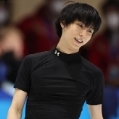
Create an account or sign in to comment