yuzurujenn Posted March 18 Author Posted March 18 *machine translation, inaccuracies exist* 2026.03.05 Source: https://hochi.news/articles/20260305-OHT1T51292.html?page=1 Archived: https://web.archive.org/web/20260318130445/https://hochi.news/articles/20260305-OHT1T51292.html?page=1 Yuzuru Hanyu smiles with his teammates during rehearsal; "notte stellata" opens on the 7th. The ice show "Yuzuru Hanyu note stellata 2026," starring professional figure skater Yuzuru Hanyu (31), will be held for three days starting on the 7th at the Sekisui Heim Super Arena in Miyagi Prefecture. Hanyu and other performers participated in a rehearsal at a skating rink in Miyagi Prefecture on the 5th. Spoiler This year marks the 15th anniversary, on the 11th, since the Great East Japan Earthquake. The show “notte stellata,” themed around sharing hope, will be held for the fourth consecutive year. Yuzuru Hanyu spent about three hours rehearsing and coordinating with his fellow performers. In 2024, Javier Fernández, the bronze medalist from the 2018 PyeongChang Winter Olympics, joined the cast that had appeared in the inaugural 2023 performance. Since then, this unchanging “family” has continued to build the show together. With choreographer David Wilson at the center, the entire cast, including co-stars Akiko Suzuki, Takahito Mura, and Keiji Tanaka, checked their movements together, demonstrating perfect synchronization. Their smiles spoke volumes about the trust they had in each other. Hanyu, who was affected by the disaster in Sendai City, felt a "light of hope" in the starry sky he saw on his way from his home to the evacuation center, and named his performance "notte stellata," which means "starry night" in Italian. Guests will include Javier Fernandez, Jason Brown, Shae-Lynn Bourne Turok, Satoko Miyahara, Akiko Suzuki, Keiji Tanaka, Takahito Mura, Rika Hongo, and Violetta Afanasieva, as well as the Tohoku Youth Orchestra, based in Tohoku, as a special guest this year. ◆Streaming: "Towa Pharmaceutical presents Yuzuru Hanyu note stellata 2026" will be exclusively live-streamed on Hulu. Source: https://hochi.news/articles/20260305-OHT1T51307.html?page=1 Archived: https://web.archive.org/web/20260318130852/https://hochi.news/articles/20260305-OHT1T51307.html?page=1 Yuzuru Hanyu makes his return after eight months, restarting his activities in his hometown of Miyagi. Rehearsals underway for ‘notte stellata,’ opening on the 7th.” The ice show "Yuzuru Hanyu note stellata 2026," starring professional figure skater Yuzuru Hanyu (31), will be held for three days starting on the 7th at the Sekisui Heim Super Arena in Miyagi Prefecture. Hanyu participated in a rehearsal at a skating rink in Miyagi Prefecture on the 5th. Spoiler This year marks 15 years since the Great East Japan Earthquake on the 11th. "notte stellata," with its theme of sending a message of hope, is being held for the fourth time in four consecutive years. Choreographer David Wilson led the way as all the performers, including co-stars Akiko Suzuki, Takahito Mura, and Keiji Tanaka, checked their movements together, demonstrating perfect synchronization. Their mutual trust was evident in their smiles. Last August, Hanyu reported on his X (formerly Twitter) that he would take a maintenance period during the season to further improve himself. This performance marks his return in his hometown. It is his first appearance in about eight months since the opening commemorative ice show “The First Skate,” held last July at an arena in Sendai. During rehearsal, he successfully landed triple jumps such as the loop and flip, showcasing his unchanged, beautiful skating. ◆Streaming: "Towa Pharmaceutical presents Yuzuru Hanyu note stellata 2026" will be exclusively live-streamed on Hulu.
yuzurujenn Posted March 18 Author Posted March 18 *machine translation, inaccuracies exist* 2026.03.06 Source: https://hochi.news/articles/20260305-OHT1T51402.html?page=1 Archived: https://web.archive.org/web/20260318131240/https://hochi.news/articles/20260305-OHT1T51402.html?page=1 Yuzuru Hanyu makes a long-awaited return after 8 months, restarting in his hometown Miyagi—‘notte stellata’ opens on the 7th. The ice show "Yuzuru Hanyu not stellata 2026," starring professional figure skater Yuzuru Hanyu (31), will be held for three days starting on the 7th at the Sekisui Heim Super Arena in Miyagi Prefecture. On the 5th, Hanyu participated in a rehearsal at a skating rink in Miyagi Prefecture. After a maintenance period, this marks his first appearance since July of last year. He is restarting his activities with his fourth consecutive show in his hometown. From the disaster-stricken area, which will mark 15 years since the Great East Japan Earthquake in March 2011 on the 11th, he will once again send a message of hope. Spoiler The moment Hanyu appeared on the ice, the atmosphere became more vibrant and focused. Last August, he announced on his X account that "For this season, I have decided to take a maintenance period in order to further improve." This was his first appearance in eight months since the opening ceremony ice show "The First Skate" held at the Sendai City Arena in July of the same year. After his maintenance period, Yuzuru Hanyu has returned to the ice. He landed triple jumps such as the loop and flip, showcasing his unchanged, beautiful skating. He spent about three hours rehearsing and coordinating with his fellow performers. In 2024, Javier Fernández, the bronze medalist from the 2018 PyeongChang Winter Olympics, joined the cast from the show’s first performance in 2023. Since then, this steadfast “family” has continued to build the show together. Centered around choreographer David Wilson, performers including Takahito Mura and Keiji Tanaka rehearsed in perfect sync, carefully confirming their movements. Their smiles reflected the strong trust they share. March 11 marks 15 years since the Great East Japan Earthquake. Hanyu, who experienced the disaster in Sendai, felt a “light of hope” in the starry sky he saw while heading from his home to an evacuation center. This inspired the title “notte stellata,” which means “starry night” in Italian. This year marks the fourth consecutive staging of the show. He will once again demonstrate leadership as the show's lead. When the show was announced last December, he shared: “Together with my fellow skaters, transcending nationalities, I hope we can form one circle and create a shared sense of hope.” In his cherished hometown, with his cherished companions, he takes another step in his renewed journey. ◆ Streaming: “Towayakuhin presents Yuzuru Hanyu notte stellata 2026” will be streamed exclusively live on Hulu. Source: https://hochi.news/articles/20260306-OHT1T51446.html?page=1 Archived: Yuzuru Hanyu and the Tohoku Youth Orchestra share a sense of unity at "notte stellata," which opens on the 7th. The ice show "Yuzuru Hanyu note stellata 2026," starring professional figure skater Yuzuru Hanyu (31), will be held for three days starting on the 7th at the Sekisui Heim Super Arena in Miyagi Prefecture. A rehearsal simulating the actual performance was held at the venue on the 6th. Spoiler Yuzuru Hanyu and the other skaters met this year's special guest, the Tohoku Youth Orchestra, on the ice. They introduced themselves and exchanged applause. The practice proceeded in a calm atmosphere. They performed their collaborative number together for the first time with live music. A sense of unity enveloped the venue even during the dress rehearsal, which started in the evening. Source: https://hochi.news/articles/20260306-OHT1T51448.html?page=1 Archived: Yuzuru Hanyu performs in Miyagi, blending music and emotion — ‘notte stellata’ opens on the 7th.” The ice show "Yuzuru Hanyu note stellata 2026," starring professional figure skater Yuzuru Hanyu (31), will be held for three days starting on the 7th at the Sekisui Heim Super Arena in Miyagi Prefecture. A rehearsal simulating the actual performance was held at the venue on the 6th. This year's special guest, the Tohoku Youth Orchestra, performed a collaborative piece. Spoiler The Tohoku Youth Orchestra was born from a musical exchange between Ryuichi Sakamoto and children in the disaster-stricken areas that began immediately after the Great East Japan Earthquake in 2011. It is a mixed orchestra of about 90 members, ranging from elementary school students to university students from Iwate, Miyagi, and Fukushima. This time, around 50 members will participate. Their activities are driven by a strong desire to convey emotions through music from the Tohoku region. The skaters and the orchestra worked together in unity, preparing for the premiere on the 7th.
yuzurujenn Posted March 18 Author Posted March 18 *machine translation, inaccuracies exist* 2026.03.07 Source: https://hochi.news/articles/20260306-OHT1T51451.html?page=1 Archived: https://web.archive.org/web/20260318132150/https://hochi.news/articles/20260306-OHT1T51451.html?page=1 Yuzuru Hanyu joins the Tohoku Youth Orchestra in a performance carrying on a legacy. ‘notte stellata’ opens on the 7th.” The ice show "Yuzuru Hanyu note stellata 2026," starring professional figure skater Yuzuru Hanyu (31), will be held for three days starting on the 7th at the Sekisui Heim Super Arena in Miyagi Prefecture. A rehearsal simulating the actual performance was held at the venue on the 6th. Hanyu met with special guests, the Tohoku Youth Orchestra, and deepened their bond by performing their collaborative routine together on the ice for the first time. Spoiler Yuzuru Hanyu and the Tohoku Youth Orchestra met for the first time on the ice. The participating skaters lined up in a row for self-introductions. In a friendly atmosphere of applause, the practice began. The orchestra's leader was seen smiling gently and saying, "Thank you for having me." They performed their collaborative number together for the first time with live music. The skaters responded to the music, which was filled with unwavering determination, with passionate skating. The Tohoku Youth Orchestra was born from a musical exchange between Ryuichi Sakamoto and children in the disaster-stricken areas that began immediately after the 2011 Great East Japan Earthquake. It is a mixed orchestra of about 90 members, ranging from elementary school students to university students from Iwate, Miyagi, and Fukushima prefectures, with 50 participating this time. A strong desire to convey emotion through music from Tohoku is the source of their activities. The skaters and orchestra worked together in harmony as they prepared for the performance. A sense of unity enveloped the venue even during the dress rehearsal that began in the evening. March 11th marks 15 years since the Great East Japan Earthquake. Before the opening of this show, Hanyu said, "I feel it is important to convey to children born after the Great East Japan Earthquake, and to children who are too young to remember the earthquake, both the hardships of the disaster, and what we were able to learn because of it." His dedication to give his all from rehearsal remains unchanged. From the ice, he offers his prayers and passes hope on to the future. Source: https://hochi.news/articles/20260307-OHT1T51364.html?page=1 Archived: https://web.archive.org/web/20260318133025/https://hochi.news/articles/20260307-OHT1T51364.html?page=1 Yuzuru Hanyu performed Ryuichi Sakamoto's "Yae no Sakura" in Tohoku, reflecting on the 15th anniversary of the Great East Japan Earthquake. The ice show "Yuzuru Hanyu note stellata 2026," starring professional figure skater Yuzuru Hanyu (31), opened on the 7th at the Sekisui Heim Super Arena in Miyagi Prefecture. Spoiler It’ll be 15 years since the Great East Japan Earthquake on the 11th. Hanyu performed “Yae no Sakura,” a piece reflecting Ryuichi Sakamoto’s hopes for reconstruction, accompanied live by the Tohoku Youth Orchestra as special guests, sending a message of hope and prayer from the disaster-stricken region. After an eight-month break for maintenance, he returned to the ice and presented two new programs. The show, the fourth in four consecutive years, began with the title number, "not stellata." The glow of penlights in the audience shone like stars. During the opening, he gave a speech on behalf of all the performers, speaking gently into the microphone. “I hope each skater can be, even just a little, a star of hope for everyone. And now, 15 years later, more than ever, we want to combine our individual strengths, just as we did back then, so that when you leave tonight, you can feel even a little of this sense of unity, this bond. We want to make this performance that kind of experience.” Hanyu prepared two new programs to music by Ryuichi Sakamoto, who served as music director of the Tohoku Youth Orchestra, connecting hearts in sync with the live performance. At the end of the first half, he skated “Happy End,” a self-choreographed piece. Dressed in white, he started sprawled on the ice in a star shape and included original movements and spins. For the grand finale, he performed “Yae no Sakura,” the theme song for the 2013 NHK Taiga drama, which was set in Fukushima, Yae's hometown. Hanyu delivered a powerful and beautiful performance, reflecting both Yae’s strength in turbulent times and Japan’s ongoing journey of recovery after the earthquake. The Tohoku Youth Orchestra was formed from the musical exchanges between Ryuichi Sakamoto and children in the disaster-affected regions that began immediately after the 2011 earthquake. The mixed orchestra, consisting of around 90 students from elementary to university in Iwate, Miyagi, and Fukushima, had 50 members participate in this ice show. Source: https://hochi.news/articles/20260307-OHT1T51461.html?page=1 Archived: https://web.archive.org/web/20260318133613/https://hochi.news/articles/20260307-OHT1T51461.html?page=1 Yuzuru Hanyu: "It's incredibly difficult" - Thoughts on his new program "Happy End" - Part 1 of Q&A The ice show "Yuzuru Hanyu notte stellata 2026," starring professional figure skater Yuzuru Hanyu (31), opened on the 7th at the Sekisui Heim Super Arena in Miyagi Prefecture. The 11th marks 15 years since the Great East Japan Earthquake. Hanyu expressed his wish that "we can feel the 'circle' and 'bond' even more strongly." He performed four songs, including two new pieces, in his first collaboration with the Tohoku Youth Orchestra, for which Ryuichi Sakamoto served as music director. This is the first part of a Q&A session with Hanyu, who made his return after eight months in front of a sold-out audience of 6,500 people. Spoiler -Thank you for your hard work. "thank you very much" —It had been a while since you last performed in front of everyone. "I was incredibly nervous. It wasn't just the tension, but the overwhelming feeling of wanting to live up to the high expectations placed upon me. I was so nervous that my hands and feet were actually shaking. But I think I was able to put my feelings and technique into my performance." —It's almost 15 years since the earthquake. What are your thoughts as you performed? "Fifteen years have passed. I feel like I've been moving forward, gradually understanding how to confront and coming to terms with my own ways of facing and living with sadness and pain. Because of these 15 years, I’ve also felt a desire to confront those wounds directly. And precisely because of what happened, I feel that I’ve learned and grown; that I’m living and living strongly now. I wanted to express that in some way, so I choreographed 'Happy End' myself." —How have your feelings towards the disaster-stricken areas changed over the past 15 years? "Honestly, I don't feel like anything has really changed for me. Fifteen years is, in a sense, a number that feels like a milestone in human life, like a multiple of five. Certainly, in Fukushima, Miyagi, and Iwate, reconstruction has advanced in some areas, and communities have been revived. But there are still regions that remain left behind. Even in places that have supposedly recovered, if you look deeper, things aren’t fully restored. In that sense, I feel that I want to continue supporting them, and at the same time, I’ve come to understand that I, too, need to carry the wounds and traumas I experienced from the disaster, and learn to live with them.” —What was your interpretation of the meaning behind "Happy End" and how did you approach your performance? "It's just incredibly painful. I have a piece in my repertoire called ‘Requiem for Heaven and Earth,’ and with that, I tried to express the scenes of looking out over streets strewn with rubble at the time, or the cars around the airport, and the roads piled high with debris, as if a soul were present within those sights. But this time, it felt more like my own body was being consumed. Of course, it’s a piece by Professor Ryuichi Sakamoto. I had heard that when he originally wrote this piece, he was struggling with illness. I feel that the wounds of the earthquake and the affected areas, places like Miyagi Prefecture and Sendai, are gradually recovering, little by little, but there are still scars. For example, when I skate at Ice Rink Sendai, I can see the marks on the walls, scars that remain even though they’ve been repaired. I sense those visible scars bit by bit. Even while being affected by them and struggled with the pain, I’ve come to accept that all those scars are a part of me. I wanted to create a program that, even after the performance ends, leaves the audience with the feeling that there’s a next step, a next time." Source: https://hochi.news/articles/20260307-OHT1T51468.html?page=1 Archived: https://web.archive.org/web/20260318134954/https://hochi.news/articles/20260307-OHT1T51468.html?page=1 Yuzuru Hanyu: "Yae no Sakura" is a sequel to "Ten to Chi to" (Part 2 of Q&A) The ice show "Yuzuru Hanyu not stellata 2026," starring professional figure skater Yuzuru Hanyu (31), opened on the 7th at the Sekisui Heim Super Arena in Miyagi Prefecture. The 11th marks 15 years since the Great East Japan Earthquake. Hanyu expressed his hope that "we can feel the 'circle' and 'bond' even more strongly." He performed four songs, including two new routines, in his first collaboration with the Tohoku Youth Orchestra, for which Ryuichi Sakamoto served as music director. This is the second half of the Q&A session with Hanyu, who made his return after eight months in front of a sold-out audience of 6,500 people. Spoiler —After your break, have you made any new discoveries, anything new regarding figure skating? “I’ve been studying various ways of moving the body, and I realized once again just how much I’ve been skating in my own way all this time. Figure skating is certainly a popular sport, but if you look at the actual number of people practicing it, it’s not that large. And if you ask whether there is a lot of research with scientific evidence, that’s not really the case either. In such a sport that is still largely unexplored from a research perspective, I realized once again how much of my training and technique has been based on trial and error, without much scientific foundation. In that sense, even though it was only a little, and I haven’t had a very long period to do maintenance, I feel that I have been able to learn, at least the very basics of how to use the body, not only as a figure skater but also as someone involved in sports or dance.” —The generation that didn’t experience the earthquake firsthand is increasing. “Among the Tohoku Youth Orchestra, with whom we collaborated this time, there are people who were born after the earthquake, and there are children who were so young at the time that they have no memory of it. I believe that, thanks to Ryuichi Sakamoto, those children have spent their lives thinking about the disaster and the ongoing recovery. Similarly, I was 16 at the time, and through all the interviews and articles, I felt that I had a role to play in passing on what had happened. Even though I was young at the time, I felt like I had some kind of mission. Since then, I’ve visited various places affected by disasters, not just the Great East Japan Earthquake, but also Noto, Ofunato, Iburi, and Kumamoto. I’ve seen that the event has changed awareness of disaster preparedness, and as a result, lives and livelihoods have been protected. I believe that it is because these stories are being passed down that disaster mitigation efforts continue to grow. For that reason, it’s important for those of us who remember that time to keep passing on the knowledge, even as generations grow younger, as new lives are born. We must continue to tell them: this happened, and because of that, we learned to protect what is important.” —What is the reason for choosing "Yae no Sakura" and the feelings you put into it? “First, as part of the collaboration, I listened to many pieces that the Tohoku Youth Orchestra wanted to play or could play. ‘Yae no Sakura’ was one of the pieces I selected from that lineup. For myself, I had chosen ‘Ten to Chi to’ as the final program for my free skate, and I felt a strong desire to perform ‘Yae no Sakura’ as a continuation of that. Although the piece is used in the historical drama, I didn’t base my performance on the story itself. Rather, it was about how I want to live my life going forward, after finishing ‘Ten to Chi to’ and standing on this stage, and imagining whether, through my skating and my performance on the ice, I could leave something behind in the paths of everyone’s lives. I created the program with the image of leaving behind one memory after another at the end.” — Did you choreograph it yourself? “I created it together with David (Wilson).” — For ‘Happy End,’ there was a different sense of tension and stillness compared to before. What aspects did you focus on in the choreography? “Yeah… I feel like I added more dance elements. Also, I talked a lot about how to use the body. Because I understand the theory behind body movement, I can create coordinated motion that makes sense physically. It’s a bit like boxing, though I’m not a boxer, but when a really strong boxer throws a punch, their body moves so beautifully. There’s a kind of beauty in those curved lines of motion. In the same way, I think that in our physical expression, there are movements that are beautiful precisely because they follow rational principles. I kept that in mind as a foundation for the emotions in the program. After the PyeongChang Olympics, I mentioned that artistry has to be built on solid technique. During this maintenance period, I realized again that to convey emotion effectively, you first need that technical and fundamental base. Only then can you layer emotion on top. I built this program carefully, step by step, with that in mind.” — You used a lot of spins. “Yes, I tried to fully integrate spins into the steps, so to speak. I wanted to erase the boundary between spins and the rest of the performance.” — During your maintenance period, did you work on the basics of dance through theory, like classroom-style lecture, or mostly through actual practice? “Most of it was actual dance practice. But I also spent a lot of time on theoretical study of how to use our bodies, the kind of approach you’d expect from a sports-training perspective.” — So you actually danced? “Yes, I danced, and also experimented with different training methods, trying new approaches, adjusting things, and thinking about what would work best for figure skating. That’s what this period was like.” — Did your body change at all? “I feel like I got a bit slimmer.”
yuzurujenn Posted March 19 Author Posted March 19 *machine translation, inaccuracies exist* 2026.03.07 Source: https://www.sponichi.co.jp/sports/news/2026/03/07/articles/20260307s00079000343000c.html Archived: https://web.archive.org/web/20260319030304/https://www.sponichi.co.jp/sports/news/2026/03/07/articles/20260307s00079000343000c.html Yuzuru Hanyu performs a requiem dance: “So that we can feel the circle, and the bonds.” Restarting with two new programs. Yuzuru Hanyu, 31, a native of Sendai City and a two-time Olympic champion in men’s figure skating, appeared on the 7th in the ice show “notte stellata” held at Sekisui Heim Super Arena in Rifu Town, Miyagi Prefecture, marking 15 years since the Great East Japan Earthquake. Following a period of rest, this was his return to public performance since last July. Spoiler The Tohoku Youth Orchestra, founded by the late Ryuichi Sakamoto (who passed away at 71), was invited as a special guest. Hanyu premiered two new programs, “Happy End” and “Yae no Sakura.” Together with the opening piece “notte stellata” and the finale “Song of Hope,” he infused all four performances with a sense of requiem and remembrance. The curtain call ended on a bright note with the orchestra’s performance of “Etude.” The show’s title means “a sky full of stars” in Italian. It is inspired by the “light of hope” Hanyu felt when he saw a star-filled sky on the night he walked to an evacuation center after being affected by the disaster. This marked the fourth consecutive year of the event, with about 6,500 people attending the opening performance. Hanyu expressed his wish: “Now that 15 years have passed, I hope we can feel even more deeply the circle and the bonds between us.” Source: https://www.sponichi.co.jp/sports/news/2026/03/07/articles/20260307s00079000419000c.html Archived: https://web.archive.org/web/20260319030637/https://www.sponichi.co.jp/sports/news/2026/03/07/articles/20260307s00079000419000c.html [Yuzuru Hanyu Speaks (1)] 15 Years Since the Earthquake: "I put my feelings and my technique into it properly" Yuzuru Hanyu (31) , a native of Sendai City who won two consecutive Olympic gold medals in men's figure skating, appeared in the ice show "notte stellata" at the Sekisui Heim Super Arena in Rifu Town, Miyagi Prefecture on the 7th, coinciding with the 15th anniversary of the Great East Japan Earthquake. This marked Hanyu's return to public appearances after a break, his first since July of last year. The following is a Q&A from after the opening performance. Spoiler —You performed in front of an audience for the first time in a while. “I was incredibly nervous. It’s that sense of tension, being showered with such high expectations, and having an overwhelming desire to live up to them. I was so nervous that my hands and feet were actually trembling, but I think I was able to skate while properly putting both my feelings and my technique into it.” —It’s been 15 years since the earthquake. What are your thoughts on that? “Over these 15 years, I feel like I’ve been moving forward while gradually learning how to face and live with my own sadness and wounds. Precisely because this span of 15 years has passed, I now find myself wanting, in a way, to confront those wounds again. And conversely, because that happened, I’m here now, learning, living, and living strongly. I wanted to express something like that, which is why I choreographed ‘Happy End’ myself in particular.” —How have your feelings toward the disaster-affected areas changed over these 15 years? “Honestly, I don’t feel that they’ve changed in any major way. Fifteen years is, in a sense, one of those milestone numbers people tend to mark. Certainly, in places like Fukushima, Miyagi, and Iwate, there are areas where reconstruction has progressed, and communities that have been restored. But there are also regions that have been left behind, and even in places said to be ‘recovered,’ when you look closely, they’re not truly restored, because things can never simply return to how they were. In that sense, I want to keep supporting these places for a long, long time. And I think I’ve come to understand that I, too, will continue to carry the wounds and trauma from having experienced the disaster, and to live alongside them.” —With that in mind, what meaning and interpretation did you put into “Happy End”? “It feels extremely painful. I have another program called ‘Requiem of Heaven and Earth.’ That one is more directly devoted to the disaster, expressing scenes like walking through roads of debris at the time, or looking out over areas near the airport piled high with wreckage, with the image of a single soul there. But this time, it’s more about my own body being gradually eroded. Since it’s a piece by Ryuichi Sakamoto, I had heard that he composed it while he was battling illness, so I connected that with the wounds of the disaster. Even now, in the affected areas of Miyagi, Sendai, recovery is certainly progressing little by little, but traces of damage still remain. Like the scars on the walls that are still visible when I skate at Ice Rink Sendai, repaired, but still there. I tried to feel those lingering scars, little by little, as something that continues to eat away at me. And while I’m suffering under that, in the end I wanted to create a program where I can accept that all those wounds are part of who I am, and after the performance ends, feel that there’s still something ahead.” Source: https://www.sponichi.co.jp/sports/news/2026/03/07/articles/20260307s00079000429000c.html Archived: https://web.archive.org/web/20260319030807/https://www.sponichi.co.jp/sports/news/2026/03/07/articles/20260307s00079000429000c.html [Yuzuru Hanyu Speaks (2)] Rediscovering how to use his body after a period of rest: "I realized how much I had been doing things my own way until now..." Spoiler --After a period of rest and recharging, you skated in front of an audience for the first time in a while. Did you make any new discoveries? “I’ve been studying various aspects of how the body moves, and it really made me realize anew just how much of what I’ve done up to now has been my own, self-taught way. Figure skating is certainly a popular sport, but if you ask whether a large number of people actually practice it, that’s not really the case. And if you ask whether there’s a wealth of scientifically grounded research behind it, that’s not really true either. It made me keenly aware of just how much of my training and technique has lacked solid evidence, in a sport that’s still underdeveloped from a research perspective. That said, little by little, though it wasn’t like I had a long period to fully rebuild myself, I feel like I’ve been able to learn at least the very basics of how the body should be used, not just as a figure skater, but as someone involved in sports and in dance.” —It’s been 15 years since the earthquake. As more people now belong to a generation that doesn’t know the disaster, how would you like to continue your activities going forward? “Even among the members of the Tohoku Youth Orchestra we collaborated with this time, there are people who were born after the disaster, and surely some who were so young at the time that they don’t remember it. Thanks to Ryuichi Sakamoto bringing them together, I think they’ve continued to live while reflecting on reconstruction and the disaster itself. In the same way, I was 16 back then, and through all the interviews and articles, I came to feel that I had a role, a responsibility, to convey what happened, almost like a mission, even at that young age. And now, whether it’s places like Noto, or Ofunato, or Iburi, or Kumamoto, I’ve visited areas affected not only by the Great East Japan Earthquake but also by disasters that came afterward. And I’ve felt that because that disaster happened, awareness of disaster prevention has changed, and there are surely lives and livelihoods that have been protected as a result. Because those lessons have been passed on, efforts to reduce disaster impact continue to grow. That’s why, precisely because we are people who experienced that time, even as generations grow younger and new lives are born, I want to keep sharing what happened, that this is what occurred, and because of it, we learned how to protect ourselves. I want to continue conveying that message.” Source: https://www.sponichi.co.jp/sports/news/2026/03/07/articles/20260307s00079000433000c.html Archived: https://web.archive.org/web/20260319031004/https://www.sponichi.co.jp/sports/news/2026/03/07/articles/20260307s00079000433000c.html [Yuzuru Hanyu Speaks (3)] "Yae no Sakura" is a sequel to "Ten to Chi to"... "It's like leaving memories behind" Spoiler —Why did you choose “Yae no Sakura,” and what meaning did you put into it? “First of all, in collaborating with the Tohoku Youth Orchestra, I listened to many of the pieces they wanted and were able to perform, and selected this as one of them. I had previously chosen a program called ‘Ten to Chi to’ as my final free skating program, and I wanted to perform ‘Yae no Sakura’ as a kind of continuation of that. Although it’s a piece used in a historical drama, I’m not particularly tied to the drama’s content. Rather, it’s about how I want to live my life going forward after finishing ‘Ten to Chi to’ and standing on this stage. Ultimately, I created it with the image of whether I’ve been able to leave something behind through my performance, through skating, on the ice, and within the paths of people’s lives, and of placing down each memory one by one at the end. —Did you choreograph it yourself?) “I created it together with David.” —“Happy End” had a different kind of tension, strength, and also a sense of stillness compared to before. What did you focus on? “I feel like I increased the dance elements. Also, I talked a lot about how to use the body, but precisely because I understand the theory behind body mechanics, I can create that sense of interconnected movement. It’s like, though I’m not a boxer, when a really strong boxer throws a punch, their body moves beautifully, with this kind of flowing, curved elegance. In the same way, I think in our physical expression, movements that are grounded in reason naturally appear beautiful as human motion. I tried to build that in as a foundation for the emotions throughout. After the PyeongChang Olympics, I mentioned that artistry rests on technique as its foundation. Going through this maintenance period again, I’ve come to realize that in order to layer emotion, you need those technical and fundamental elements first; only then can emotion truly be placed on top. With that awareness, I carefully crafted this program piece by piece. —Did you use a lot of spins? “I wanted to integrate spins into the steps, to blur the boundary between spins and the performance itself.” —During your maintenance period, while working on dance fundamentals, did you also do lecture-style study? “I did more actual dancing practice. But in the end, I also did quite a lot of theoretical study, mainly from a sports science perspective, like how to use the body. I practiced dancing, experimented with and adjusted different training methods, and thought about what best suits figure skating. That was the kind of period it was. —Changes in your body? “I feel like I’ve gotten slimmer.”
yuzurujenn Posted March 19 Author Posted March 19 *machine translation, inaccuracies exist* 2026.03.07 Source: https://www.nikkansports.com/sports/news/202603070001377.html Archived: Yuzuru Hanyu performs for the first time in eight months after taking a break: "I felt a sense of connection" - his stage show commemorating the 15th anniversary of the Great East Japan Earthquake opens. Yuzuru Hanyu (31), the two-time Winter Olympic gold medalist in men's figure skating and now in his fourth professional season, is the star of the ice show "Yuzuru Hanyu Notte Stellata 2026," which premiered on the 7th at the Sekisui Heim Super Arena (Grandy 21) in Miyagi Prefecture. The show aims to send a message of "hope" from the areas affected by the Great East Japan Earthquake, which will soon mark its 15th anniversary. After a period of maintenance and recharging, Hanyu performed in public for the first time since July of last year, offering prayers for recovery. Spoiler This year marks the fourth consecutive year the event has been held, and the Tohoku Youth Orchestra, founded by the late Ryuichi Sakamoto, was invited as a special guest. They collaborated on a new piece composed by Sakamoto, titled "Happy End." Dressed in a white-based costume, Yuzuru Hanyu began his performance lying flat on his back, arms and legs outstretched. He shared the stage with the orchestra, made up of 90 members ranging from elementary school to university students from disaster-affected areas, who have continued to perform memorial music, and expressed his wish: “Precisely because 15 years have passed, I want this to be a performance where we can feel the circle, and feel the bonds, even more deeply, just like back then.” He has also been engaged in disaster prevention awareness and regional contribution efforts. Goods sold at the venue focused on items that double as emergency supplies. Hanyu has also been involved in supporting the recovery efforts after the Ishikawa-Noto Peninsula earthquake, and in addition to local Tohoku cuisine, a pop-up "Wajima Morning Market" was also held. In the second part, he also performed a new number, "Yae no Sakura." He poured his feelings of remembrance into a total of four songs, including the finale. The opening of the first half featured “notte stellata,” a program he performed in the exhibition at the 2018 PyeongChang Olympics, where he achieved back-to-back Olympic titles following the 2014 Sochi Games. The title means “a sky full of stars” in Italian, inspired by the hope Hanyu felt when he saw a star-filled sky in the darkness of a blackout after experiencing the 2011 disaster in his hometown of Sendai. The performance, held at a venue that served as a temporary morgue after the disaster, runs for three days through the 9th, carrying prayers for recovery. ◆ Yuzuru Hanyu notte stellata 2026 ◆ Dates (2026): March 7 (Sat): Doors 16:00 / Show 17:00 March 8 (Sun): Doors 15:00 / Show 16:00 March 9 (Mon): Doors 15:00 / Show 16:00 Venue: Sekisui Heim Super Arena (Grandee 21), Miyagi Performers: Yuzuru Hanyu Javier Fernández Jason Brown Shae-Lynn Bourne Satoko Miyahara Akiko Suzuki Keiji Tanaka Takahito Mura Rika Hongo Violetta Afanasieva Tohoku Youth Orchestra Source: https://www.nikkansports.com/sports/news/202603070001543.html Archived: https://web.archive.org/web/20260319032213/https://www.nikkansports.com/sports/news/202603070001543.html Yuzuru Hanyu resumes activities after an eight-month recharge, unveiling two new programs: the Japanese-themed “Yae no Sakura” and a piece set to music by Ryuichi Sakamoto. Yuzuru Hanyu, the two-time Olympic champion in men’s figure skating and now in his fourth season as a professional at age 31, unveiled two new programs. Spoiler The ice show he leads, “Yuzuru Hanyu notte stellata 2026,” opened on the 7th at the Sekisui Heim Super Arena (Grandee 21) in Miyagi. From a region affected by the Great East Japan Earthquake, now approaching its 15th year, he sent out a message of “hope.” Following a period of rest and maintenance, this marked his first public performance since last July, carrying prayers for recovery. Now in its fourth consecutive year, the show welcomed the Tohoku Youth Orchestra, established by the late Ryuichi Sakamoto, as a special guest. Hanyu collaborated with them on a new program set to Sakamoto’s composition, “Happy End.” Wearing a white-based costume, he began the performance lying flat on his back, arms and legs outstretched. Performing alongside the orchestra, comprised of 90 members ranging from elementary school students to university students from disaster-affected areas, who have continued to play memorial music, he expressed: “Precisely because 15 years have passed, I want this to be a performance where we can feel the circle, and the bonds between us, even more deeply. Just like back then.” He also collaborated with them in the climax of the second half, delivering a solemn performance of the new Japanese-themed number “Yae no Sakura.” Even in traditional-style costume, he landed elements such as a triple loop and a delayed Axel. Across a total of four pieces, including the finale, he imbued the program with prayers for repose. The opening of the first half featured “notte stellata,” a program he performed in the exhibition at the 2018 PyeongChang Olympics, where he achieved back-to-back Olympic titles following the 2014 Sochi Games. The title means “a sky full of stars” in Italian, inspired by the hope he felt when he saw a star-filled sky in the darkness of a blackout after experiencing the 2011 disaster in his hometown of Sendai. By its very origins, the show also emphasizes disaster preparedness and regional contribution. Goods sold at the venue focus on items that can also serve emergency purposes. Hanyu has also been involved in supporting recovery efforts for the Noto Peninsula earthquake in Ishikawa, and in addition to local Tohoku cuisine, a traveling version of the “Wajima Morning Market” was set up. The venue itself served as a temporary morgue after the disaster, a place unforgettable for the people of Miyagi. This performance, carrying prayers for recovery, will run for three days through the 9th. Source: https://www.nikkansports.com/sports/news/202603070002107.html Archived: [Figure Skating] Yuzuru Hanyu, who was affected by the disaster at the age of 16 and is now 31, promises to "continue" his support to ensure the disaster is not forgotten. Yuzuru Hanyu (31), the only Asian figure skater to win two consecutive Olympic gold medals and now in his fourth season as a professional, has made his "comeback performance" after approximately eight months. His ice show, "Yuzuru Hanyu notte stellata 2026," in which he serves as the lead performer, premiered on the 7th at the Sekisui Heim Super Arena (Grandy 21) in Miyagi Prefecture. He sent a message of hope from the area affected by the Great East Japan Earthquake, which will mark its 15th anniversary in four days. Spoiler After a period of rest and maintenance, Yuzuru Hanyu returned to public performance for the first time since last July. “I was so nervous that my hands and feet were actually trembling,” he said, yet he expressed his prayers for recovery through a graceful performance. In its fourth consecutive year, the show welcomed the Tohoku Youth Orchestra, established by the late Ryuichi Sakamoto, as a special guest. Hanyu collaborated with them on two new programs: “Happy End”, based on a composition by Sakamoto, and “Yae no Sakura.” Wearing a white-based costume and traditional Japanese attire, he imbued all four pieces, including the finale, with a sense of remembrance. After the show, he shared his thoughts on reconstruction and his enduring commitment to remembering the disaster. —15 years since the earthquake. Your thoughts? “Fifteen years have passed, and I feel that I’ve been gradually learning how to face and live with my own sadness and wounds while moving forward. Precisely because these 15 years have passed, I now feel a desire to confront those wounds. And conversely, because that happened, I’m here now learning, living, and living strongly. I wanted to express that, which is why I choreographed ‘Happy End’ myself.” —How have your feelings toward the disaster-affected areas changed over 15 years? “Honestly, I don’t feel that they’ve changed significantly. Fifteen years is, in a sense, a milestone number. In Fukushima, Miyagi, and Iwate, reconstruction has progressed in some areas, and communities have been restored. But some areas have been left behind, and even in places said to have recovered, when you look closely, they’re not truly restored. Things cannot simply return to how they were. In that sense, I want to continue supporting them for a long, long time. I also feel that I’ve come to understand that I, too, will continue to carry the wounds and trauma from having experienced the disaster, and to live alongside them.” —With more of the younger generation not knowing about the earthquake, how do you plan to continue supporting recovery efforts? “Even among the members of the Tohoku Youth Orchestra we collaborated with this time, there are people who were born after the disaster, and surely some who were so young at the time that they have no memory of it. Thanks to Ryuichi Sakamoto bringing them together, I believe these young people continue to reflect on reconstruction and the disaster itself. Similarly, I was 16 at the time, and through interviews and articles, I felt that I had a role, a responsibility, to convey what happened. Even at that young age, it felt like a kind of mission. And now, visiting various regions such as Noto, Ofunato, Iburi in Hokkaido, and Kumamoto, not just areas affected by the Great East Japan Earthquake but also regions hit by later disasters, I’ve seen that because of the earthquake, awareness of disaster prevention has changed. Lives and livelihoods have been protected, and that knowledge has been passed on, which is why efforts to reduce disaster damage continue. That’s why, precisely because we are people who experienced that time, even as generations grow younger, new lives are born, and communities are reborn, I want to keep sharing: this is what happened, and because of it, this is what we learned about protecting ourselves. I want that to continue indefinitely.” The show’s title, notte stellata, comes from the program Hanyu performed in the exhibition at the 2018 PyeongChang Olympics, where he achieved back-to-back Olympic victories following the 2014 Sochi Games—the first Winter Olympics held after the disaster. The Italian phrase means “a sky full of stars.” Hanyu, who experienced the 2011 disaster in his hometown of Sendai, was inspired by the star-filled sky he saw in the darkness of a blackout, which gave him a sense of hope. This performance, held at a venue that served as a temporary morgue after the disaster, continues prayers for reconstruction and will run for three days through the 9th. Source: https://www.nikkansports.com/sports/news/202603070002110.html Archived: [Figure Skating] Yuzuru Hanyu performs for the first time since July of last year: "I was so nervous my hands and feet were shaking," he says, praying for the recovery from the Great East Japan Earthquake. Yuzuru Hanyu (31), a two-time Olympic gold medalist in men's figure skating and now in his fourth season as a professional, is the star of the ice show "notte stellata," which premiered on the 7th at the Sekisui Heim Super Arena in Miyagi Prefecture. Spoiler The show is broadcast from the area affected by the Great East Japan Earthquake, which will mark its 15th anniversary in four days. After a period of rest and recuperation, Hanyu performed for the first time since July of last year, and while he said he was "so nervous his hands and feet were shaking," he performed with prayers for recovery. For the fourth consecutive year, Yuzuru Hanyu performed alongside the Tohoku Youth Orchestra, established by the late Ryuichi Sakamoto. He presented two new programs composed by Sakamoto, “Happy End” and “Yae no Sakura,” saying, “Precisely because 15 years have passed, I want this to be a performance where we can feel the circle, and the bonds between us. I want to continue the mission I carried at 16 so that it won’t be forgotten.” The show, held at a venue that served as a temporary morgue after the disaster, will run for three days through the 9th, sending prayers for reconstruction.
yuzurujenn Posted March 19 Author Posted March 19 *machine translation, inaccuracies exist* 2026.03.07 Source: https://mainichi.jp/articles/20260307/spp/sp0/004/413000c Archived: [Yuzuru Hanyu Speaks (1)] 15 Years Since the Earthquake: "I put my feelings and my technique into it properly" Yuzuru Hanyu (31), a native of Sendai City who won two consecutive Olympic gold medals in men's figure skating, appeared in the ice show "notte stellata" at the Sekisui Heim Super Arena in Rifu Town, Miyagi Prefecture on the 7th, coinciding with the 15th anniversary of the Great East Japan Earthquake. This marked Hanyu's return to public appearances after a break, his first since July of last year. The following is a Q&A from after the opening performance. Spoiler --It's been a while since I performed in front of everyone. "I was incredibly nervous. I felt a great sense of tension, or rather, a great deal of expectation, and I was overflowing with a strong desire to live up to it. I was so nervous that my hands and feet were actually shaking, but I think I was able to put my feelings and technique into my skating." —Fifteen years have passed since the earthquake. What are your thoughts now? "After 15 years, I feel like I've gradually come to understand how to confront and deal with my own sadness and pain, and have moved forward. Because of these 15 years, I now feel like I want to confront that pain. On the other hand, because of what happened, I'm learning and living now, living strongly, and I wanted to express that in some way, so I choreographed 'Happy End' myself." —How have your feelings towards the disaster-stricken areas changed over the past 15 years? “Honestly, I don’t feel that they’ve changed drastically. Fifteen years is, in a sense, a milestone—multiples of five tend to feel significant in life. In Fukushima, Miyagi, and Iwate, reconstruction has advanced in some areas, and some communities have been restored. But there are still districts that have been left behind, and even in areas said to have recovered, if you look closely, reconstruction is far from complete. Things can’t simply return to the way they were. In that sense, I feel a strong desire to continue supporting them for a long, long time. I’ve also come to understand that I, too, will continue carrying the wounds and trauma from having experienced the disaster, and I’ve learned how to live with them.” —In that sense, what are your thoughts and interpretations behind "Happy End"? "It's just incredibly painful. I have a song in one of my programs called 'Requiem for Heaven and Earth.' With that song, I was trying to express my feelings directly about the earthquake, like the rubble-strewn roads at the time, or the scenery of looking out at the roads around the airport where cars and rubble were piled up, and the idea that there was a single soul there... But this time, it's about my own body being consumed. Of course, because it’s a piece by Ryuichi Sakamoto, I had heard that when he composed this music, he himself was struggling with illness. So for me, it became connected to my own wounds from the earthquake and the disaster-affected areas. The affected areas, Miyagi Prefecture, Sendai, are definitely recovering little by little, but there are still scars that remain. Like the scratches on the wall when I skate at Ice Rink Sendai. They've been repaired, but the scars are still visible, and I feel those little by little, and I'm suffering as I'm consumed by them, but ultimately I accept that all those scars are a part of me, and I tried to make a program where, after the performance, you can feel that there's a next step to move forward." Source: https://mainichi.jp/articles/20260307/spp/sp0/004/423000c Archived: https://web.archive.org/web/20260319033545/https://mainichi.jp/articles/20260307/spp/sp0/004/423000c [Yuzuru Hanyu Speaks (2)] Rediscovering how to use his body after a period of rest: "I realized how much I had been doing things my own way until now..." Spoiler —After a period of rest and recharging, you skated in front of an audience for the first time in a while. Did you make any new discoveries? "I've studied various aspects of body movement, but I've come to realize just how much I've been doing things my own way. Figure skating is a very popular sport, but if you ask if there are actually that many people who participate, it's not that many. And if you ask if there are a lot of scientifically grounded studies, the answer is no. I've come to realize just how much I've been practicing and using techniques without any scientific basis in a sport that's underdeveloped from a research perspective. In that sense, it's only been a little bit, even though I haven’t had a very long period for maintenance, so it might only be a tiny bit, but I feel like I've been able to learn at least the very basics of how to use my body, not just as a figure skater, but as someone involved in sports and dance." —It's been 15 years since the earthquake. With more and more people growing up without knowing about the disaster, how do you want to continue your activities going forward? "In fact, among the members of the Tohoku Youth Orchestra with whom we collaborated this time, there are some who were born after the earthquake. And there are surely some children who were still very young at the time of the earthquake and have no memory of it. Thanks to Ryuichi Sakamoto's efforts, I think those children have been thinking about reconstruction and the earthquake for a very long time. In the same way, I was 16 years old at the time, but as I was interviewed and had various articles written about me, I felt that I, too, had a mission to convey the story, and even though I was young at the time, I felt like I had been given some kind of mission. And now, in Noto in various places... Like Ofunato, for example. And Iburi, and Kumamoto. I've been to areas affected not only by the Great East Japan Earthquake but also by subsequent disasters, and I've seen that because of those events, awareness of disaster prevention has changed, and lives have been saved, and livelihoods have been protected. I believe that it is because these things are being passed down that disaster mitigation efforts continue to grow. That's why, as people who experienced it firsthand, even though generations are getting younger, people are being reborn, and new lives are sprouting, I want to continue to tell people that this is what happened there, and that because of that, they learned how to protect themselves in this way." Source: https://mainichi.jp/articles/20260307/spp/sp0/004/426000c Archived: https://web.archive.org/web/20260319033735/https://mainichi.jp/articles/20260307/spp/sp0/004/426000c [Yuzuru Hanyu Speaks (3)] "Yae no Sakura" is a sequel to "Ten to Chi to"... "It's like leaving memories behind" Spoiler —What was the reason for choosing "Yae no Sakura" and what feelings did you put into it? “First, in the process of collaborating, I listened to a lot of pieces that the Tohoku Youth Orchestra wanted to play or could play, and ‘Yae no Sakura’ was one I chose from among them. I had originally selected ‘Ten to Chi to’ as the final program for my free skate, and I wanted to perform ‘Yae no Sakura’ as a continuation of that. Although the piece is used in a historical drama (taiga), I didn’t really base it on the story itself. Rather, it was more about how I, after finishing ‘Ten to Chi to’, wanted to step onto this stage and think about how I want to live my life from now on. I created the program with the image of leaving, one by one, memories on the ice and in people’s lives through my skating, trying to leave something behind." —Did you choreograph it yourself? "I created this together with David." —"Happy End" had a different kind of tension, power, and stillness compared to your previous works. What aspects did you focus on? "I feel like I've increased the dance elements. I also talked a lot about how to use the body, and the coordination that's possible because I understand the theory of how to use the body. I'm not a boxer, but the punches of really strong boxers are made with such beautiful body movements. There's something beautiful about the curves of their movements. In the same way, I think that in our physical expression, there are movements that are beautiful as human beings precisely because they are logical. I had the image of incorporating all of that as the foundation of emotion. After the PyeongChang Olympics, I mentioned that expression, that art, is built on a foundation of technique. Going through this maintenance period again, I realized that to truly convey emotion, you need that technical, fundamental base, and only on top of that can you layer the emotion. That’s how I carefully constructed each part of the program." —You used a lot of spins. "I wanted to incorporate spins into the steps, or rather, I wanted to eliminate the boundary between spins and the performance." —During your maintenance period, while working on dance basics, did you also do theoretical study? "I spent more time practicing dancing. But I also did a lot of theoretical study on how to use my body, the kind of theoretical thinking you'd expect from a sports enthusiast. I thought a lot about dancing, tried different training methods, and experimented to see what fits figure skating best. That was the purpose of this period. —Changes in your body? "I feel like I've gotten thinner." Source: https://mainichi.jp/articles/20260307/k00/00m/050/278000c Archived: https://web.archive.org/web/20260319034419/https://mainichi.jp/articles/20260307/k00/00m/050/278000c Yuzuru Hanyu speaks about his thoughts on his new program 15 years after the Great East Japan Earthquake. Professional figure skater Yuzuru Hanyu (31), who won two consecutive Olympic gold medals in men's figure skating, is the director of "Yuzuru Hanyu notte stellata 2026," an ice show broadcasting from the areas affected by the Great East Japan Earthquake. The show opened on the 7th at the Sekisui Heim Super Arena in Rifu Town, Miyagi Prefecture. This is the fourth consecutive year the show has been held since 2023. Over three days until the 9th, the show will deliver "hope" from the disaster-stricken areas through its performances. The following is an exchange with Hanyu after the performance. [Hitoshi Kurazawa] Spoiler “Fifteen years, I feel I’ve been moving forward while gradually understanding it.” <After the maintenance period, performing publicly for the first time in a while> “I was extremely nervous. I’m not sure how to describe it, but it was this intense tension, this sense of being under so much expectation. At the same time, I had an overwhelming, overflowing desire to meet those expectations. My hands and feet literally trembled from the nerves. But I feel that I was able to skate with both my feelings and my technique fully expressed.” <How did you feel performing 15 years after the earthquake?> “Fifteen years have passed, and I feel that I’ve been moving forward while gradually understanding how to face and live with my own sadness and wounds. Because of this period of 15 years, I’ve even felt a stronger desire now to confront those wounds. In fact, it’s precisely because of what happened that I’ve learned and grown, and I wanted to express that I am living strongly. That’s why I personally choreographed ‘Happy End’.” <How has your feeling toward the disaster-affected areas changed over these 15 years?> “Honestly, I don’t feel that it has changed drastically. In a sense, 15 years is a multiple of five, which tends to feel like a milestone in human life. Certainly, places like Fukushima, Miyagi, and Iwate have made progress in reconstruction, and some communities have recovered. However, there are still areas that have been left behind, and even in places that seem to have recovered, if you look deeper, the recovery isn’t complete. Things don’t return to exactly how they were. In that sense, I feel a continued desire to keep supporting them, and I think I’ve also come to understand that my own wounds and trauma from the disaster are things I must continue to carry and live with.” <What thoughts did you put into your new program, ‘Happy End’?> “Well, it was just incredibly painful, relentlessly so. One of the programs I’ve skated before is set to 'Requiem of Heaven and Earth,' and that piece was more directly connected to the earthquake itself. I imagined scenes like roads full of debris at the time, or the airport area with cars piled high among the rubble, and tried to express a single soul within that context. This time, though, I felt my own body being gradually worn down. Of course, since it’s a piece composed by Ryuichi Sakamoto, I heard that when he wrote it, he himself was enduring illness, and that added another layer. I felt as though my own wounds from the earthquake, the scars of the disaster in places like Miyagi and Sendai, were there with me. Reconstruction has certainly progressed bit by bit, but some scars remain. Even skating at Ice Rink Sendai, I noticed the marks on the walls, repaired but still visible. Feeling those, being affected by them, and enduring that suffering myself, I aimed to create a program where, ultimately, I accept that those scars are a part of myself, and after the performance, you can feel that there’s a next step to move forward.” After the maintenance period… <Did you discover anything new after your “recharge” period?> I studied my body movements in depth and realized just how much I had been skating based on my own methods all this time. Figure skating is certainly a popular sport, but if you look at the actual number of people practicing it, it’s not that many. Also, if you ask whether there is extensive scientific research backing it, there really isn’t. In this sense, figure skating is still a sport that’s relatively unexplored scientifically, and I realized again how much training and technique I had acquired without much solid foundation. Though it was only for a short period, I feel that I was able to learn at least the very basics of how to use the body not just as a figure skater, but also as someone involved in sports and dance in general. <With generations who didn’t experience the earthquake increasing, how do you want to continue your activities?> Among the members of the Tohoku Youth Orchestra I collaborated with, some were born after the disaster, and some were too young at the time to remember it. Thanks to Ryuichi Sakamoto’s efforts, these young people have grown up thinking about reconstruction and the earthquake. In the same way, when I was 16, I felt a kind of responsibility or mission through interviews and media coverage, something I was young but somehow entrusted with. Now, visiting various regions, not just the areas affected by the Great East Japan Earthquake, but also places like Noto, Ofunato, Iburi, and Kumamoto affected by later disasters, I’ve seen how those experiences changed people’s awareness of disaster preparedness, saved lives, and protected communities. Because that knowledge continues to spread, mitigation efforts keep going. So, we who experienced those events need to keep passing it on, even as new generations grow up and new life emerges. I want to make sure that people always know, “This happened, and this is why we learned to protect ourselves,” and to continue conveying that lesson. <Why did you choose the other new program, “Yae no Sakura,” and what meaning did you put into it?> In the collaboration with the Tohoku Youth Orchestra, I first listened to a lot of the pieces they wanted to play and could play, and “Yae no Sakura” was one of the ones I selected from that lineup. For myself, I had chosen “Ten to Chi to” as the final program of my free skate, so I felt that performing “Yae no Sakura” would be a kind of continuation of that story. Although the music is used in a historical drama, I didn’t let the drama’s content influence me. Rather, I imagined finishing “Ten to Chi to,” standing on this stage, thinking about how I want to live my life going forward, and leaving something behind, not only through my skating, but also in people’s memories. I created it with the image of placing one memory at a time. I worked on it together with David Wilson. <What did you focus on in the choreography for “Happy End”?> I felt I had increased the dance elements. I also talked a lot about body movement. Knowing the theory of how the body works allows for coordinated, fluid movement. For example, even though I'm not a boxer, a strong boxer’s punch moves beautifully through the body, creating a kind of curve that is aesthetically pleasing. In the same way, I feel that when our body expressions are logically grounded, the movements themselves become beautiful as human motions. I tried to make that the foundation for expressing emotions. After the PyeongChang Olympics, I spoke about how expression and artistry rest on technique. During this maintenance period, I realized that emotions can only be layered on top of technical and foundational mastery. Every element of the program was carefully crafted with that in mind. —Did you use spins frequently? Yes, I incorporated spins fully into the steps, aiming to erase the boundary between spins and the rest of the performance. —During the maintenance period, did you work on basic dance training? I spent more time practicing dancing. But there was also theoretical work. I studied how to use the body from a sports-science perspective, experimented with various training methods, and considered what works best for figure skating. That was the focus of this period.
yuzurujenn Posted March 19 Author Posted March 19 *machine translation, inaccuracies exist* 2026.03.07 Source: https://deepedgeplus.kyodonews.jp/ice-show/167174/ Archived: Yuzuru Hanyu: "I hope to feel a stronger sense of community and connection" - Ice show in Miyagi 15 years after the earthquake Yuzuru Hanyu (31), a native of Sendai City who won two consecutive gold medals in men's figure skating at the Winter Olympics, appeared in an ice show held on the 7th at the Sekisui Heim Super Arena in Rifu Town, Miyagi Prefecture, to commemorate the 15th anniversary of the Great East Japan Earthquake. He expressed his feelings, saying, "Now that 15 years have passed, I want to make sure that we can feel the sense of community and bonds even more strongly." The Tohoku Youth Orchestra, founded by the late musician Ryuichi Sakamoto with young people from the three affected prefectures (Miyagi, Iwate, and Fukushima), performed new pieces, "Happy End" and "Yae no Sakura." The elegant dance of remembrance set to beautiful melodies captivated approximately 6,500 spectators. During the disaster, seeing the starry sky on his way to an evacuation center at night evoked "strong feelings that cannot be expressed in words amidst despair," and he has held the event for four consecutive years, naming it "notte stellata," which means "starry night" in Italian. Disaster preparedness goods were sold at the venue, and Wajima Morning Market in Ishikawa Prefecture, which was damaged in the 2024 Noto Peninsula Earthquake, also had a stall. Hanyu, who is also involved in disaster preparedness awareness, said, "As someone who experienced that time, I feel a mission to pass on what I have learned."
yuzurujenn Posted March 19 Author Posted March 19 *machine translation, inaccuracies exist* 2026.03.07 Source: https://www.sanspo.com/article/20260307-PJWSZMTBXNCPDNREQPYGP4YW54/ Archived: Yuzuru Hanyu: "It's precisely because 15 years have passed..." Performing for the fourth consecutive year in Miyagi, a disaster-stricken area / Figure Skating Yuzuru Hanyu (31), a native of Sendai City, who won consecutive gold medals in men's figure skating at the 2014 Sochi and 2018 Pyeongchang Winter Olympics, held an ice show called "notte stellata 2026" on the 7th at the Sekisui Heim Super Arena in Rifu Town, Miyagi Prefecture, to commemorate the 15th anniversary of the Great East Japan Earthquake. Spoiler At the start of the ice show, he performed to the music of "Notte stellata," showcasing smooth footwork and sharp spins, leaving a lasting impression of his unique presence. After the opening, he took the microphone and reflected on the earthquake, saying, "Now that 15 years have passed, I hope that we can all combine our strengths, just like we did back then, so that we can feel a sense of unity and connection," before completing the approximately two-hour performance. Tickets for all three scheduled performances are completely sold out. The immense popularity shows no signs of waning, as evidenced by the release of additional seats with obstructed views. The special guest for this event is the Tohoku Youth Orchestra, which was formed at the behest of world-renowned musician Ryuichi Sakamoto, who passed away in 2023. The harmony of their beautiful melodies and Hanyu's performance will be a beacon of hope for recovery. Source: https://www.sanspo.com/article/20260307-RI5UK4KMCFESXCI2BEEUDVOGSU/ Archived: https://web.archive.org/web/20260319042034/https://www.sanspo.com/article/20260307-RI5UK4KMCFESXCI2BEEUDVOGSU/ Yuzuru Hanyu's "notte stellata 2026" setlist / Figure Skating Spoiler Yuzuru Hanyu (31), a native of Sendai City, who won consecutive gold medals in men's figure skating at the 2014 Sochi and 2018 Pyeongchang Winter Olympics, held an ice show called "notte stellata 2026" on the 7th at the Sekisui Heim Super Arena in Rifu Town, Miyagi Prefecture, to commemorate the 15th anniversary of the Great East Japan Earthquake. The setlist is as follow: Yuzuru Hanyu notte stellata 2026 [Part 1] 1. Yuzuru Hanyu Notte Stellata 2. Opening: Twinkling Stars of Hope 3. Rika Hongo - Suzume 4. Akiko Suzuki - Chopin's Farewell Song 5. Takahito Mura - Let's go home 6. Violetta Afanasieva - A cool cat in town 7. Jason Brown - Say something 8. Javier Fernandez - Prometo 9. Tohoku Youth Orchestra: Merry Christmas, Mr. Lawrence 10. Yuzuru Hanyu x Tohoku Youth Orchestra - Happy End [Part 2] 1. Tohoku Youth Orchestra x Shae-Lynn Bourne Turok, Satoko Miyahara, Akiko Suzuki, Keiji Tanaka, Takahito Mura - Little Buddha 2. Violetta Afanasieva - Le Freak 3. Shae-Lynn Bourne Turok - La Cumparsita 4. Javier Fernandez - You are so beautiful 5. Keiji Tanaka - Your Name 6. Satoko Miyahara - Is Paris on Fire? 7. Jason Brown - Mirror in a Mirror 8. Yuzuru Hanyu x Tohoku Youth Orchestra: Yae no Sakura 9. Finale: Song of Hope 10. Curtain Call Etude Source: https://www.sanspo.com/article/20260307-XEPKLG2HNBC5ZOT746DROLZZZA/ Archived: https://web.archive.org/web/20260319040619/https://www.sanspo.com/article/20260307-XEPKLG2HNBC5ZOT746DROLZZZA/ Yuzuru Hanyu: "Please be careful on your way home," "I'll do my best for the next two days." Showing concern for reporters despite his tired body after the ice show / Figure Skating Yuzuru Hanyu (31), a native of Sendai City, who won consecutive gold medals in men's figure skating at the 2014 Sochi and 2018 Pyeongchang Winter Olympics, held an ice show called "notte stellata 2026" on the 7th at the Sekisui Heim Super Arena in Rifu Town, Miyagi Prefecture, to commemorate the 15th anniversary of the Great East Japan Earthquake. After the performance, Hanyu gave an interview. The complete Q&A is as follows. Spoiler “Thank you. Thank you very much,” he said, bowing his head as he entered the press room… —It's been a while since you performed in front of everyone, how did you feel? “I was extremely nervous. I mean… how should I put it… it’s that feeling of tension, and being under so much expectation. That desire to respond to it was so strong and it overflowed within me, so much that my arms and legs were literally shaking. But I think I was able to skate with both my emotions and my technique fully put into it.” —It’s been 15 years since the earthquake. What were your thoughts during your performance? “Over these 15 years, I’ve tried to gradually understand and move forward in how I deal with my own grief and wounds. It’s because of these 15 years that now I even feel like I want to face those wounds. And because of what happened, I’ve learned and grown, and I live strongly now. I wanted to express that, so I choreographed Happy End myself.” —Looking back, how have your feelings toward everyone changed over these 15 years? “To be honest, I don’t think they’ve changed that much within me. Fifteen years is a number where people often feel milestones in life, multiples of five. Of course, in Fukushima, Miyagi, and parts of Iwate, reconstruction has progressed and communities have revived. But there are still areas left behind, and even where reconstruction has happened, if you look closely, it hasn’t fully recovered, it’s not like things have returned to how they were. In that sense, I feel I want to continue supporting them, and I also feel I’ve come to understand that the wounds and traumas from the disaster are something I will carry with me forever and need to live with.” —Regarding Happy End, which you mentioned earlier, what interpretation did you bring to the performance, including your thoughts for the future? “It's just incredibly painful. One of the programs I have, Requiem for Heaven and Earth, is more about directly channeling feelings toward the disaster, expressing scenes like roads full of debris, cars around the airport, or landscapes piled with rubble, with one soul in mind. But this time, it was more about my own body being worn down. And, of course, since it’s a piece by Ryuichi Sakamoto, I heard he composed it during a time when he was battling illness. So in a way, I thought about myself, the wounds of the earthquake, the disaster areas, Miyagi, and Sendai. The reconstruction has definitely been happening gradually, but some scars remain, like the scratches on the walls at the Sendai Ice Rink where I skate, the scratches that are still visible even though they've been repaired. While being slowly consumed by that, while suffering, I wanted to ultimately accept that all these scars are part of me, and to create a program that leaves me feeling like there is a next step after the performance is over.” —After your recharge period, skating again in front of an audience after a while, did you discover anything new about figure skating or your own approach? “I’ve been studying how the body moves in various ways, and through that, I’ve rediscovered just how much I’ve been doing things in my own way all this time. Figure skating is indeed a very popular sport, but if you ask whether many people actually practice it, it’s not really a large sport. And if you ask whether there’s a lot of research with scientific backing, there really isn’t much either. In a sport that is still, in many ways, undeveloped in terms of research, I’ve come to realize once again how much training and technique I’ve built up without solid grounding. In that sense, even if only a little, I feel that through this I’ve been able to learn at least the very basics, the foundation of how the body should be used, not just as a figure skater, but as someone involved in sports, and as someone involved in dance.” —Earlier, you mentioned that this year marks the 15th anniversary of the earthquake. As more and more people are from generations who didn’t experience it, or don’t remember it, how do you envision continuing to convey this moving forward? “In the Tohoku Youth Orchestra I collaborated with, some were born after the earthquake, and some were too young to remember it. I think, thanks to Ryuichi Sakamoto gathering everyone for this, these young people have been reflecting on the disaster and the reconstruction in their lives. Similarly, when I was 16, doing interviews and having articles written about me, I felt I had a responsibility, a mission, to convey something. Even as a young person, I felt that sense of duty.” “I’ve also visited places like Noto, Ofunato, Iburi, and Kumamoto, not just areas affected by the 2011 disaster but also those hit by later disasters. Experiencing those events changed awareness of disaster preparedness, saving lives and livelihoods. Because that knowledge spreads, disaster mitigation continues. So, even as generations change and new lives begin, I want to keep sharing the message: ‘This happened,’ and ‘This is why we learned to protect ourselves.’ That continuity is important.” —Why did you choose Yae no Sakura, and what meaning did you want to convey? “When collaborating with the Tohoku Youth Orchestra, I listened to many pieces they wanted to play or could play, and Yae no Sakura was one I chose from that selection. I had already selected Ten to Chi as the last program for my (competitive) free skate, and I wanted to perform Yae no Sakura as a continuation. Although the piece is used in the NHK Taiga drama, I didn’t really focus on the content of the drama itself. Rather, I imagined myself standing on this stage after finishing Ten to Chi, thinking about how I want to live my life from here on, and ultimately whether I could leave something behind through my performance, through skating, on the ice, and in the path of people’s lives. I created it with the image of leaving each memory, one by one, at the end.” —Who choreographed it? “I created it together with David.” —Regarding Happy End, it felt like there was a different kind of tension than before, and also a sense of stillness. What did you emphasize in the choreography? “I’d say I increased the dance elements. Also, we talked a lot about body mechanics. Understanding how the body works allowed me to connect movements smoothly. It’s like with a boxer, not that I’m a boxer, but when a really strong boxer throws a punch, their body moves in a very clean, beautiful way, and there’s a certain elegance in the curves of the motion. I feel that in the same way, our physical expression, when it’s based on reason and structure, creates movements that are beautiful as human movements. I aimed to incorporate that fully as a foundation for the emotions in the program.” “After the PyeongChang Olympics, I talked about how expression and art are based on technique. After my maintenance period, I realized that having that technical and foundational base is what allows emotions to sit on top of it. I carefully built the program step by step. I also aimed to integrate spins into the steps, blurring the boundary between spins and the rest of the performance.” —During the maintenance period, in addition to the basics of dance, did you also do any classroom-style learning, or mostly practice dancing on land? “I’d say I did more actual dancing practice, yes. But I also did quite a bit of classroom-style work, mainly focusing on how to use the body, the so-called sports-science approach. On top of that, I practiced dancing, experimented with different training methods, adjusted and tried out what might work best for figure skating. That’s basically what that period was like.” —Did your body change at all? “Hmm… I feel like I’ve gotten a bit slimmer.” (When someone called out, “Interview’s over”…) “Thank you very much. I really appreciate you coming all the way out here. Please be careful on your way home. Thank you. I’ll do my best for the next two days. Which way should I head back…? Ah, sorry, thank you very much. I look forward to seeing you again,” he said, bowing his head as he left the interview venue. Source: https://www.sanspo.com/article/20260307-FVBLAW2GIBOUBH2ELG7EAYGXNE/ Archived: Yuzuru Hanyu captivates fans in his hometown of Miyagi on the 15th anniversary of the Great East Japan Earthquake: "I hope to feel an even stronger sense of community and connection" / Figure Skating Yuzuru Hanyu (31), a native of Sendai City, who won consecutive gold medals in men's figure skating at the 2014 Sochi and 2018 Pyeongchang Winter Olympics, held an ice show called "notte stellata 2026" on the 7th at the Sekisui Heim Super Arena in Rifu Town, Miyagi Prefecture, to commemorate the 15th anniversary of the Great East Japan Earthquake. Spoiler He captivated 6,500 fans with his beautiful footwork and sharp spins. He revealed his current feelings, saying, "Now that 15 years have passed, I want to make the sense of camaraderie and connection even stronger." This year's event, the fourth in a row, featured the Tohoku Youth Orchestra as a special guest. The orchestra was formed after the earthquake at the behest of world-renowned musician Ryuichi Sakamoto (who passed away in March 2023 at the age of 71), and consists of elementary school to university students mainly from Iwate, Miyagi, and Fukushima prefectures. Tickets for the performances from the 7th to the 9th are sold out. The immense popularity shows no signs of waning, with additional seats with obstructed views being released. "I feel that I have a responsibility to do my best as someone who should be conveying this message," Hanyu said. The beautiful melodies created by Sakamoto and Hanyu's performance came together to become a beacon of hope for recovery. ★Special guest: The Orchestra In 2024, former Takarazuka top star and actress Mao Daichi participated as a special guest, and in 2025, Kyogen performer Mansai Nomura took part, but this time the Tohoku Youth Orchestra took on the important role. Minami Suzuki (3rd year university student), who played the violin, said, "When we were coordinating the music and the performance, (Hanyu) looked like he was having so much fun performing, and it was fun to play as well." Aiko Chiba (4th year university student), who also played the violin, said with sparkling eyes, "With Hanyu's powerful skating added to (the final part) 'Yae no Sakura,' I felt the strength of Tohoku and the strength of the people."
yuzurujenn Posted March 19 Author Posted March 19 *machine translation, inaccuracies exist* 2026.03.07 Source: https://www.sanspo.com/article/20260307-ZGGGO22YXZEZPEVHPECEW6VQJU/ Archived: https://web.archive.org/web/20260319041444/https://www.sanspo.com/article/20260307-ZGGGO22YXZEZPEVHPECEW6VQJU/ Yuzuru Hanyu's ice show features the customary "coelacanth monaka queue." Yuzuru Hanyu (31), a native of Sendai City, who won consecutive gold medals in men's figure skating at the 2014 Sochi and 2018 Pyeongchang Winter Olympics, held an ice show called "notte stellata 2026" on the 7th at the Sekisui Heim Super Arena in Rifu Town, Miyagi Prefecture, to commemorate the 15th anniversary of the Great East Japan Earthquake. In the venue's sub-arena, the "Wajima Morning Market" was set up as part of the recovery support for the Noto Peninsula earthquake that occurred in January 2024. In addition to Noto crafts and food, many famous sweets from Sendai were also sold. Among them, the longest line was drawn for the Sendai specialty sweet, "Coelacanth Monaka." This famous Sendai confection became a hot topic after Yuzuru Hanyu chose it as a gift for the "Fantasy on Ice 2023" ice show held in 2023. It is sold by the Western-style confectionery shop "Maison Coelacanth" in Sendai City, Miyagi Prefecture, and on this day too, it drew a long line in the sub-arena. A sales booth was also set up inside Sendai Station, where long lines of people formed to buy the product. For "Hanyu fans," it reigns as a Sendai specialty confectionary that is even more valuable than "Hagi no Tsuki." 2026.03.07 Source: https://www.sanspo.com/article/20260307-O7KTEGX5MJBFPLNEP44GCOFADM/ Archived: https://web.archive.org/web/20260319041548/https://www.sanspo.com/article/20260307-O7KTEGX5MJBFPLNEP44GCOFADM/ Samurai Japan is a secondary concern: Long lines for women's restrooms at Yuzuru Hanyu's ice show. Yuzuru Hanyu (31), a native of Sendai City, who won consecutive gold medals in men's figure skating at the 2014 Sochi and 2018 Pyeongchang Winter Olympics, held an ice show called "notte stellata 2026" on the 7th at the Sekisui Heim Super Arena in Rifu Town, Miyagi Prefecture, to commemorate the 15th anniversary of the Great East Japan Earthquake. On this day, the Japanese national baseball team, "Samurai Japan," was playing against South Korea in their bid for a second consecutive World Baseball Classic (WBC) title. Tokyo Dome was packed to capacity, but Sekisui Heim Super Arena in Rifu Town, Miyagi Prefecture, was equally packed with female spectators. Long lines formed at every women's restroom before the show started and during the 40-minute intermission. Tickets for the ice show are completely sold out for all three scheduled performances. The immense popularity shows no signs of waning, as they even had to release additional seats with obstructed views. For Hanyu fans, the Samurai Japan team seems to be a secondary concern.
yuzurujenn Posted March 19 Author Posted March 19 *machine translation, inaccuracies exist* 2026.03.07 Source: https://www.tokyo-sports.co.jp/articles/-/379952 Archived: https://web.archive.org/web/20260308114051/https://www.tokyo-sports.co.jp/articles/-/379952 [Figure Skating] A junior skater talks about Yuzuru Hanyu's efforts in supporting the recovery from the Great East Japan Earthquake: "His feelings were conveyed." The ice show “Yuzuru Hanyu notte stellata,” led by professional figure skater Yuzuru Hanyu (31), a two-time Olympic champion in men’s figure skating, will be held from the 7th to the 9th at Sekisui Heim Super Arena in Miyagi. March 11 marks 15 years since the Great East Japan Earthquake, in which Hanyu himself was also affected. Natsu Suzuki (fourth-year student at Kansai University), who trained in her childhood at Ice Rink Sendai where Hanyu grew up skating, responded to an interview with this newspaper, speaking about the “strength” that reconstruction support efforts gave to people in Tohoku. The strong desire to see his hometown recover had clearly reached his juniors as well. Spoiler At 2:46 p.m. on March 11, 2011, the unprecedented earthquake and tsunami, which claimed about 20,000 lives, drastically changed everyday life. Ice Rink Sendai, where Hanyu and Suzuki had skated, was also affected and was forced to close for about four months. Suzuki recalls, “At the time I was in first or second grade and had just started skating, but it was disappointing not being able to practice, and we couldn’t do anything for a long period.” Hanyu himself spent his days moving from place to place across Japan while continuing his training. In between, he participated in numerous ice shows. He also performed his skating at Ice Rink Sendai after it reopened. Suzuki said, “Through skating, his desire to contribute to his hometown, or rather, to bring even a little encouragement, was clearly conveyed. It was the first time I had seen a top-level skater perform up close, so it made me want to work harder as well, and I remember being genuinely moved while watching.” Suzuki attended the same elementary and junior high schools as Hanyu. She still clearly remembers the occasion when he visited their alma mater carrying his Olympic gold medal. “I think I was in fourth grade. It was shortly after the 2014 Sochi Olympics, where he won his first gold medal, when he came to bring the gold medal. He gave what felt like a lecture in the school gymnasium, and it was very moving. I feel that each of these individual actions also contributed to the recovery efforts,” she reflected. He has also contributed to his hometown in various ways, including donating over 100 million yen to Ice Rink Sendai. At the same time, there are challenges that come with the passage of time. Suzuki pointed out, “When the topic of the earthquake came up while I was living in Kansai, a senior once said something like, ‘Wait, was I even born then?’ From the perspective of someone with ties to Sendai, it’s something that really should not be forgotten no matter how many years pass.” Hanyu shares a similar sentiment. As a way of “creating opportunities to prevent it from fading from memory,” he has carried out many activities. One of them is “Yuzuru Hanyu notte stellata.” Suzuki expressed her gratitude, saying, “For people in Miyagi and Tohoku, it’s incredibly meaningful that a well-known figure continues to talk about how difficult the earthquake was, even years later.” As a skater born and raised in Miyagi, Hanyu has devoted himself to contributing to his hometown more than anyone. His unwavering spirit continues to be passed on to the next generation. Source: https://www.tokyo-sports.co.jp/articles/-/380018 Archived: https://web.archive.org/web/20260308072559/https://www.tokyo-sports.co.jp/articles/-/380018 [Figure Skating] Yuzuru Hanyu's "notte stellata" was a huge success even outside the venue! "Yuzuru Hanyu note stellata," a show chaired by professional figure skater Yuzuru Hanyu (31), who won two consecutive Olympic gold medals in men's figure skating, opened on the 7th at the Sekisui Heim Super Arena in Miyagi Prefecture, and the excitement is also evident outside the venue. Spoiler At some NewDays stores in JR Sendai Station, bottled water with Winnie the Pooh labels was sold because Hanyu is known to be a fan of the popular Disney character Winnie the Pooh. At the sub-arena, "Coelacanth Monaka" sweets from "Maison Coelacanth," a confectionery shop in Sendai, Miyagi Prefecture, were being sold, and fans formed long lines. "Coelacanth Monaka" had been given as a gift to performers at a previous ice show by Hanyu. The information spread rapidly, and it became a big topic of conversation. In addition, Wajima lacquerware and other items were sold as part of a pop-up Wajima morning market. At the outdoor special venue, Sendai's famous beef tongue and other delicacies were sold, satisfying the fans' appetites. Long lines also formed at the "notte stellata" merchandise booth, further enhancing the festive atmosphere. This will be the fourth "notte stellata" event. This year it will be held from the 7th to the 9th.
yuzurujenn Posted March 19 Author Posted March 19 *machine translation, inaccuracies exist* 2026.03.07 Source: https://www.tokyo-sports.co.jp/articles/-/380062 Archived: https://web.archive.org/web/20260308043100/https://www.tokyo-sports.co.jp/articles/-/380062 [Figure Skating] Yuzuru Hanyu expresses his feelings about 3/11...Performing in his hometown of Sendai: "There are moments when each of us feels alive..." The opening performance of "Yuzuru Hanyu not stellata," a show starring professional figure skater Yuzuru Hanyu, who won two consecutive Olympic gold medals in men's figure skating, was held on the 7th at the Sekisui Heim Super Arena in Miyagi Prefecture, captivating a sold-out audience. Spoiler The Great East Japan Earthquake, which occurred at 2:46 PM on March 11, 2011, affected the disaster along with his family in his hometown of Sendai. Based on his experience of feeling a glimmer of hope when he looked up at the starry sky in the darkness, this show was created to offer prayers for the recovery of the disaster-stricken areas and to deliver hope like that starry sky. On this day, he performed alongside Akiko Suzuki, who competed with him in the team event at the 2014 Sochi Olympics, Satoko Miyahara, a member of the women's team at the 2018 Pyeongchang Olympics, and Javier Fernandez (Spain), the bronze medalist in the men's event at the 2018 Pyeongchang Olympics. In a collaboration with the Tohoku Youth Orchestra, he performed a magnificent skate to songs such as "Yae no Sakura." In front of approximately 6,500 people, he performed a routine expressing his hopes for reconstruction. It had been about eight months since he last skated in public after a maintenance period. After the performance, he spoke solemnly, saying, "As March 11th approaches, I think about many things. Everyone has moments when they feel alive, but I realize that this is not something to be taken for granted." Source: https://www.tokyo-sports.co.jp/articles/-/380072 Archived: https://web.archive.org/web/20260308063521/https://www.tokyo-sports.co.jp/articles/-/380072 [Figure Skating] Yuzuru Hanyu's thoughts behind his new program: "I wanted to express something about living strongly." Professional figure skater Yuzuru Hanyu (31), who achieved two consecutive Olympic gold medals in men's figure skating, revealed the intentions behind his new program, "Happy End." Spoiler The opening performance of "Yuzuru Hanyu not stellata," in which he serves as the director, took place on the 7th at the Sekisui Heim Super Arena in Miyagi Prefecture, where he conveyed his wish for the repose of the souls of the victims through his skating. The 11th marks 15 years since the Great East Japan Earthquake. After the performance, he solemnly said, "I was incredibly nervous. I felt a great sense of tension, or rather, I was bathed in such high expectations, and I was overflowing with an overwhelming desire to live up to them." Hanyu, who himself has experienced the disaster, recalled, "I feel like I've been moving forward little by little, while understanding how to confront and cope with sadness and pain." He said that he performed "Happy End" with the thought that "because 15 years have passed, I now feel like confronting that pain, and conversely, because of what happened, I am able to learn and live like this now, and live strongly." He further explained, "I felt that I myself had been wounded by the earthquake, and that the affected areas, Miyagi Prefecture and Sendai, are definitely recovering little by little, but there are still scars remaining, like the scratches on the walls where I skate at Ice Rink Sendai, the scratches that are still visible even though they have been repaired. I was suffering, but in the end I accepted that all those scars are a part of me, and I tried to create a program that would make people feel like there is a next time after the performance is over." He showcased what he had gained over the past 15 years in front of an audience of approximately 6,500 people. Source: https://www.tokyo-sports.co.jp/articles/-/380077 Archived: https://web.archive.org/web/20260308045202/https://www.tokyo-sports.co.jp/articles/-/380077 [Figure Skating] Yuzuru Hanyu learns what he learned during his maintenance period: "How much I've been doing things my own way until now" What did professional figure skater Yuzuru Hanyu (31), who achieved two consecutive Olympic gold medals in men's figure skating, learn during his "maintenance period"? Spoiler The opening performance of "Yuzuru Hanyu not stellata," in which he serves as the lead performer, took place on the 7th at the Sekisui Heim Super Arena in Miyagi Prefecture, where he performed in public for the first time in about eight months. He revealed that during his break he "studied various body movements" and reflected that "I rediscovered how much I had been doing things my own way until now." He also commented on challenges facing the sport: “Figure skating is a popular sport, but if you ask whether there are many people who actually participate in it, it’s not that widespread.” He continued, “If you ask whether there is a large body of scientifically grounded research, that’s not really the case either. In a sport that is still underdeveloped in terms of research, I’ve come to realize just how much I had built up training methods and techniques without a strong scientific basis.” During his maintenance period, he focused not only on dance lessons but also on academic study. “I spent more time practicing dance, but I also devoted a lot of time to studying the theoretical side of sports, about how to use the body. I actually danced, and I also thought about and adjusted my training methods in various ways,” he recalled. His tireless curiosity appears to remain undiminished, no matter his age. Source: https://www.tokyo-sports.co.jp/articles/-/380081 Archived: https://web.archive.org/web/20260308105455/https://www.tokyo-sports.co.jp/articles/-/380081 [Figure Skating] Yuzuru Hanyu: "I want to continue supporting them forever" It's almost 15 years since the Great East Japan Earthquake... Yuzuru Hanyu (31), a professional figure skater who won two consecutive Olympic gold medals in men's figure skating, spoke about his feelings towards the disaster-stricken areas. Spoiler On the 7th, the opening performance of “Yuzuru Hanyu notte stellata,” for which he serves as the lead performer, was held at Sekisui Heim Super Arena in Miyagi. He performed new programs, including “Happy End.” With March 11 marking 15 years since the Great East Japan Earthquake, he expressed his wishes for repose for the victims through his skating. Regarding the passage of 15 years since the disaster, he said, “To be honest, I don’t feel that something has changed drastically within myself,” while revealing his complex emotions. “From a human perspective, milestones like multiples of five tend to feel significant, but in places like Fukushima, Miyagi, and Iwate, some areas have made progress in reconstruction, and I think communities have been restored in some places. However, there are also areas that have been left behind, and even in places considered to have been rebuilt, if you look closely, it hasn’t truly been restored, as things can’t simply return to how they were.” He understands well that emotional wounds do not easily heal. That is why he reflected, "I want to continue supporting them forever, but I've also come to understand and come to terms with the fact that I myself have been affected by the disaster and have had traumas that I will continue to carry with me forever." As someone who “lived through those times,” Hanyu has continued to speak out about the Great East Japan Earthquake. “Younger generations keep coming along, and society keeps renewing itself, but I want to continue sharing that ‘this is what happened,’ and ‘because this happened, we learned how to protect lives like this,’” he said, expressing his determination to fulfill that responsibility going forward.
yuzurujenn Posted March 19 Author Posted March 19 *machine translation, inaccuracies exist* 2026.03.07 Source: https://the-ans.jp/news/649744/ Archived: https://web.archive.org/web/20260319072341/https://the-ans.jp/news/649744/ “Latest shot shared across the figure skating world: For Yuzuru Hanyu… nine people gathered from around the world. ‘Super exciting!!!’” The ice show "Towa Pharmaceutical presents Yuzuru Hanyu notte stellata 2026," starring Yuzuru Hanyu, a two-time Olympic figure skating champion and professional skater, will be held for three days starting on the 7th at the Sekisui Heim Super Arena in Miyagi Prefecture. On the 6th, during the final rehearsal, a group photo of nine individuals gathered from around the world drew excited reactions from many fans. Spoiler Choreographer David Wilson, who is well known for his close creative partnership with Hanyu, updated his Instagram and posted a photo. In the image, nine people, including Wilson himself, Javier Fernández, Jason Brown, Akiko Suzuki, Keiji Tanaka, and Satoko Miyahara, form a circle and lean in toward a camera placed at the center, as if looking directly into the frame. Wilson wrote, “Finally, the last day of rehearsals!” The group, brought together from around the world for Hanyu’s show, prompted many reactions to the post, such as “Wow, thank you so much,” “I’m super excited!!,” and “I can’t wait for tomorrow.” Wilson had also shared on social media in early February that he choreographed routines for this ice show. With anticipation high over what will be presented on stage, the annual “notte stellata,” beloved by many figure skating fans, is set to begin once again this year. Source: https://www.huffingtonpost.jp/entry/story_jp_69ab8ebfe4b00d350bef5edf Archived: https://web.archive.org/web/20260308073751/https://www.huffingtonpost.jp/entry/story_jp_69ab8ebfe4b00d350bef5edf Yuzuru Hanyu’s photo in the same pose as his own poster draws huge reactions: “A lovely smile” → “It makes me blush” Hanyu is serving as the lead chairperson of the ice show “Towa Pharmaceutical presents Yuzuru Hanyu notte stellata 2026.” Spoiler A professional figure skater Yuzuru Hanyu has been gaining attention on X for a photo in which he strikes the same pose as the poster for the ice show he is leading, “Towa Pharmaceutical presents Yuzuru Hanyu notte stellata 2026.” In the photo posted on March 7 by the ice show’s official account, Hanyu is seen standing in front of the show’s poster, wearing official merchandise fleece, and posing with both hands extended forward. The post drew many reactions, including: “It feels like there are three Hanyu-sama standing there…!!,” “It makes us shy,” “Looking forward to meeting the chairperson,” “Such a wonderful smile that makes it feel like everything is perfectly ready for opening day,” and “It starts today! Wishing everyone a safe performance without injuries.” The ice show will be held over three days, from the 7th to the 9th, at Sekisui Heim Super Arena in Miyagi.
yuzurujenn Posted March 19 Author Posted March 19 *machine translation, inaccuracies exist* 2026.03.08 Source: https://hochi.news/articles/20260307-OHT1T51478.html?page=1 Archived: https://web.archive.org/web/20260319072958/https://hochi.news/articles/20260307-OHT1T51478.html?page=1 Yuzuru Hanyu, walking together towards the future of Tohoku: "To create a sense of connection and bonds," captivated a sold-out audience of 6,500. The ice show "Yuzuru Hanyu not stellata 2026," starring professional figure skater Yuzuru Hanyu (31), opened on the 7th at the Sekisui Heim Super Arena in Miyagi Prefecture. The 11th marked 15 years since the Great East Japan Earthquake. Hanyu performed Ryuichi Sakamoto's "Yae no Sakura," a song expressing his hopes for recovery, accompanied by live music from the Tohoku Youth Orchestra, sending a message of hope and prayer from the disaster-stricken area. Hanyu returned to the ice after an eight-month hiatus following a maintenance period, performing two new routines in front of a sold-out audience of 6,500. Spoiler The show began with the title number “notte stellata,” marking its fourth performance for four consecutive years. The light from penlights sparkled like stars across the audience seats. In the opening that followed, Yuzuru Hanyu stepped forward to give a speech on behalf of the performers. Holding a microphone, he spoke gently to the audience: “May each and every skater become, even in a small way, a guiding star of hope for all of you. And now, fifteen years on, just as we did back then, I hope that by bringing our individual strengths together even more, we can create a performance where, when you leave, you might feel a sense of connection, a sense of bond. That is the kind of show I would like to create.” To music by Ryuichi Sakamoto, who had served as music director for the Tohoku Youth Orchestra, Hanyu prepared two new programs. Skating alongside the live performance, he wove hearts together through the music. The program he performed at the end of the first half, “Happy End,” was self-choreographed. Dressed in white, he began lying spread-eagled on the ice, incorporating original movements and spins. He delivered an impassioned performance, as if pouring out his very soul. “It's like a wound that's been repaired but is still visible, and you gradually feel it, and you get eaten away by it again. You're suffering, but ultimately you accept that all those wounds are a part of you. I intended this program to be something that, once the performance ends, leaves you feeling that there is something next.” For the final act, he presented “Yae no Sakura,” the theme song of the 2013 historical drama. With choreography by David Wilson, he powerfully and gracefully embodied music that overlays the image of Yae, who lived strongly through turbulent times, with Japan’s path of recovery following the Great East Japan Earthquake. He revealed that this performance was an expression of the continuation of his competitive-era free skate “Heaven and Earth.” “After finishing ‘Heaven and Earth’ and standing on this (professional) stage, I thought about how I want to live the rest of my life. And ultimately, as a performer, as a skater, whether on the ice or within the tracks left in people’s lives, I wondered if I had been able to leave something behind. I created this with the image of placing each memory down, one by one, at the end.” After a period of rest, he returned to the ice for the first time in eight months. Surrounded by applause and cheers from a full house of 6,500 spectators, he said, “I was extremely nervous. Feeling all that expectation and wanting to live up to it, that feeling overflowed very strongly. My hands and feet were trembling with nerves, but I believe I was able to skate with both my emotions and my technique properly expressed.” The smile of Yuzuru Hanyu shining on the ice illuminated a light of hope. ◆Streaming: "Towa Pharmaceutical presents Yuzuru Hanyu note stellata 2026" will be exclusively live-streamed on Hulu. Source: https://hochi.news/articles/20260308-OHT1T51372.html?page=1 Archived: Yuzuru Hanyu: "So that I can push forward from behind." He gave another passionate performance on the second day of "notte stellata." The second day of the ice show "Yuzuru Hanyu note stellata 2026," which is led by professional figure skater Yuzuru Hanyu (31), was held on the 8th at the Sekisui Heim Super Arena in Miyagi Prefecture. Spoiler The 11th marks 15 years since the Great East Japan Earthquake. In his opening remarks, Hanyu said, "Transcending language, borders, districts, and regions, even without speaking or holding hands, just as everyone has worked hard to rebuild, and continues to work hard now, we hope that through our performances, each and every one of us can become a star for you, and deliver skating that allows you to feel connection, bonds, and hope." Ryuichi Sakamoto performed with the Tohoku Youth Orchestra, which he founded with young people from the areas affected by the Great East Japan Earthquake. Two new pieces, "Happy End" and "Yae no Sakura," were presented in this show. He skated to a total of four pieces, including "notte stellata" and "Kibou no Uta," and concluded the show with "Etude" during the curtain call. He took the microphone again at the finale. "It's been almost 15 years since 3/11. When 3/11 happened, I felt a lot of despair and other emotions. There were many moments when I didn’t know what the future would hold. In reality, there are many areas where recovery has progressed. At the same time, in places that suffered disasters after 3.11, some have seen recovery advance, while others have been newly scarred. Many things have continued to happen repeatedly, over and over again. In such a world of suffering and rebuilding, we perform in hopes of becoming, even just a little, a catalyst for happiness, energy, and moving forward. And for areas that are in the process of recovery and renewal, we hope to be something that can gently push them forward from behind. That is what I hoped to convey through our skating.” "It really feels like 15 years have flown by, but at the same time, it also feels like it's been a very, very long and difficult time. I know that these 15 years have been difficult for all of you, and that some of you have suffered from disasters. In the midst of all of this, I pray that our performances can be even a small source of comfort for you. Thank you very much for today. Please cherish your health and your life today," he said, expressing his heartfelt feelings. Source: https://hochi.news/articles/20260308-OHT1T51386.html?page=1 Archived: "Yuzuru Hanyu looked so happy performing, so it was fun playing too." Performing with the Tohoku Youth Orchestra The second day of the ice show "Yuzuru Hanyu not stellata 2026," which is led by professional figure skater Yuzuru Hanyu (31), was held on the 8th at the Sekisui Heim Super Arena in Miyagi Prefecture. The 11th marks 15 years since the Great East Japan Earthquake. In his opening remarks, Hanyu said, "Transcending language, borders, districts, and regions, even without speaking or holding hands, just as everyone has worked hard to rebuild, and continues to work hard now, we hope that through our performances, each and every one of us can become a star for you, delivering our performances so that you can feel the sense of unity and bond." Spoiler In its fourth consecutive year of being held, this year the event welcomed the Tohoku Youth Orchestra, which was founded by Ryuichi Sakamoto together with young people from areas affected by the Great East Japan Earthquake, as a special guest. They performed two collaborative programs: “Happy End” and “Yae no Sakura.” They also performed together during the curtain call with “Etude.” They danced lively to the live music and the audience's applause, ending the day with smiles on their faces. The Tohoku Youth Orchestra was born out of musical exchanges that began immediately after the 2011 Great East Japan Earthquake between Ryuichi Sakamoto and children from the affected areas. It is a mixed orchestra of about 90 members, consisting of elementary school students through university students from Iwate, Miyagi, and Fukushima. For this event, 50 members participated. A strong desire to convey emotion through music from Tohoku is the driving force behind their activities. Two members who are both from Miyagi Prefecture, first-generation member Minami Suzuki (21) and second-generation member Aiko Chiba (22), commented in an interview after the performance on the 7th, saying in unison, “It was so much fun. It made me feel that music is wonderful.” Suzuki said with a smile, “During rehearsals as well, when we performed with Hanyu, I was able to watch his skating a little, and he looked like he was really enjoying himself, so it was also fun to perform.” Suzuki, who is from Rifu Town where the venue is located, said: “It’s been 15 years, but as March approaches, it makes me reflect on many things. Being given this opportunity and performing here allowed me to express my feelings here as well. Performing together with Hanyu brought up a lot of thoughts. After finishing the actual performance, I felt different emotions compared to before the rehearsal.” Chiba, who is from Sendai City like Hanyu, had seen Hanyu’s activities in disaster-stricken areas through the news. She said: “Over the 10 years of activities with the Tohoku Youth Orchestra, I’ve been thinking about what I can do for Tohoku. Through this ice show, I was able to feel that there may be even more things I can do, and I was able to sense many possibilities.” The show is scheduled to conclude on the 9th with its final performance.
yuzurujenn Posted March 19 Author Posted March 19 *machine translation, inaccuracies exist* 2026.03.08 Source: https://www.sponichi.co.jp/sports/news/2026/03/08/articles/20260307s00079000498000c.html Archived: “Yuzuru Hanyu restarts activities in Miyagi Prefecture, Japan — 15 years since the Great East Japan Earthquake: ‘So that we can feel an even greater sense of connection and bonds’” Yuzuru Hanyu (31), a native of Sendai City who won two consecutive Olympic gold medals in men's figure skating, appeared in the ice show "notte stellata" at the Sekisui Heim Super Arena in Rifu Town, Miyagi Prefecture on the 7th. This marked Hanyu's return to public activity after a break, his first appearance since July of last year. Spoiler Fifteen years have passed since the Great East Japan Earthquake. This year, the Tohoku Youth Orchestra—founded by the late Ryuichi Sakamoto (aged 71 at the time of his passing)—was invited as a special guest, and in the four pieces performed, including the newly presented programs “Happy End” and “Yae no Sakura,” he expressed prayers for the repose of the souls. Hanyu expressed his wish, saying, “Now that 15 years have passed, I hope that we can feel an even stronger sense of connection and bonds.” The name of the performance, “notte stellata,” is Italian for “a sky full of stars.” It originates from the “light of hope” he felt when he saw the starry sky on the night he was heading to an evacuation shelter after the disaster. This year marks the fourth consecutive year the show has been held. Source: https://deepedgeplus.kyodonews.jp/feature/notte-stelllata2026/ Archived: https://web.archive.org/web/20260319074746/https://deepedgeplus.kyodonews.jp/feature/notte-stelllata2026/ Yuzuru Hanyu talks about the 15th anniversary of the earthquake, the thoughts he put into his programs, and his period of maintenance... [notte stellata 2026] Yuzuru Hanyu (31) , a native of Sendai City who won two consecutive Winter Olympic gold medals in men's figure skating, appeared in an ice show on the 7th at the Sekisui Heim Super Arena in Rifu Town, Miyagi Prefecture, to commemorate the 15th anniversary of the Great East Japan Earthquake. He expressed his feelings, saying, "Now that 15 years have passed, I want to make sure that we can feel the sense of unity and bonds even more strongly." Spoiler The Tohoku Youth Orchestra, founded by the late musician Ryuichi Sakamoto with young people from the three affected prefectures (Miyagi, Iwate, and Fukushima), performed new pieces, "Happy End" and "Yae no Sakura." The elegant performance of remembrance set to beautiful melodies captivated approximately 6,500 spectators. The full text of Yuzuru Hanyu's comments to the press after the performance is as follows. 15 years since the Great East Japan Earthquake ―It's been a while since you performed in front of everyone, how was it? "I was incredibly nervous. I don't know why, but I felt a great sense of tension, and I was overflowing with the desire to live up to the expectations placed upon me, so I was so nervous that my hands and feet were really shaking, but I think I was able to skate with all my heart and technique in to the fullest." ―It's almost been 15 years since the Great East Japan Earthquake, what were your thoughts while you were performing? "After 15 years, I feel like I've been able to move forward little by little, understanding how to confront and deal with my own sadness and pain. Because of these 15 years, I now feel like I want to confront that pain, and conversely, because of what happened, I want to express that I'm growing and living now, that I'm living strongly, so I choreographed 'Happy End' myself." ―Once again, how have your feelings towards the people in the disaster-stricken areas changed over these 15 years? "Honestly, I don't feel like anything has changed drastically. Fifteen years is, in a sense, a number that people tend to feel is a milestone because it's a multiple of five, and it's true that in Fukushima, Miyagi, and Iwate, reconstruction has progressed in some areas, and communities have been revived in others." "However, there are also areas that have been left behind, and even in those areas that have been rebuilt, if you look closely, there are cases where it hasn’t truly recovered at all, or they haven't gone back to how they were before, so in that sense, I want to continue to support them forever, and I think I've come to understand and come to terms with the fact that I myself have been affected by the disaster and will continue to carry the wounds and trauma with me forever." What were the thoughts behind "Happy End"? ―In that sense, could you tell us about the feelings you put into "Happy End" that you mentioned earlier, including your hopes for the future, and how you interpreted and performed it? “Well, it feels extremely painful. Constantly. One of the programs I have is a piece called Requiem of Heaven and Earth. That one, rather than anything else, expresses a direct emotional connection to the earthquake disaster, portraying scenes like roads filled with rubble at the time, or roads around the airport with cars and piles of debris spread out everywhere, as if looking over such landscapes, while imagining something like a single soul existing within that.” “This time, it involves my own body being gradually worn away, and of course, since it is a piece by Ryuichi Sakamoto, I had heard that when he first wrote this song, he was suffering from a long illness. So in a way, I approached it while sensing, little by little, the lingering scars of the earthquake itself, and the affected areas of Miyagi Prefecture and Sendai as well, where recovery is certainly progressing, but where scars still remain bit by bit. For example, when I skate at the Ice Rink Sendai, I can still see scars on the walls, repaired yet still visible signs of damage.” “I tried to build the program while gradually feeling those things, and while being worn down by them again myself, experiencing suffering, but ultimately, accepting that all of those scars are also part of who I am. My intention was to create a program where, after the performance ends, I can feel that there is something next.” Discovery during maintenance period —After a period of rest and recharge, you skated in front of an audience for the first time in a while. Have you made any new discoveries or insights as a figure skater? "I have studied various aspects of body movement, but I have come to realize anew just how much I have been doing things my own way until now. Figure skating is a very popular sport, but if you ask if there are actually a large number of people who participate, it's not a sport with that many participants, and if you ask if there are a lot of scientifically grounded studies on it, the answer is no. In a sport that is underdeveloped from a research perspective, I have come to realize anew just how much I have acquired through baseless practice and techniques." “Little by little, though it really does feel like it’s something I worked on over a long period of time, but it’s not like I was on a maintenance period for a long time, so it may only be a small amount, but I do feel that, not just as a figure skater, but as someone involved in sports and also in dance, I’ve been able to learn at least the very basics, the fundamentals, of how the body should be used.” -With the number of people who do not know about the earthquake increasing, what kind of form do you envision continuing in the future? "Among the members of the Tohoku Youth Orchestra with whom we collaborated this time, there are some who were born after the earthquake, and there are also surely some who were too young at the time of the earthquake to remember it. I'm sure that these children, thanks to Ryuichi Sakamoto's efforts in gathering people together, have been thinking about reconstruction and the earthquake for a very long time." "Similarly, I was 16 years old at the time, but as I was being interviewed and having various articles written about me, I felt that I, too, had a responsibility to do my best to convey the story. Even though I was young at the time, I felt like I had some kind of mission." "And now, when I visit various places, such as Noto and Ofunato, as well as Kumamoto, not just the areas affected by the Great East Japan Earthquake but also the areas affected by subsequent disasters, I realize that because of that, awareness of disaster prevention has changed, and lives have been saved, and livelihoods have been protected. I believe that because these things are being passed on, disaster mitigation efforts will continue to grow." "That's why, as people who experienced that time, even though generations keep getting younger, people are being reborn, and new lives are sprouting, we want to continue to tell people that this is what happened, and that because of this, we learned to protect things in this way." The reason I chose "Yae no Sakura" ―Could you tell us why you chose "Yae no Sakura" and the feelings you put into it? "First of all, as we collaborated, I listened to a lot of songs from the Tohoku Youth Orchestra's lineup of songs they wanted to play and were able to play, and this was one of them that I chose. I myself had chosen the program "Heaven and Earth" as the final program of my competitive free skating, but I felt like I wanted to perform "Yae no Sakura" as a continuation of that." “In reality, although it is a piece used in a historical drama, I didn’t really engage with the content of the drama itself. Rather, I created it with the image of, after finishing skating Heaven and Earth and standing on this stage, thinking about how I want to live my life from here on, and whether, as a performance and as skating, I was able to leave something behind in the traces of everyone’s lives, like leaving memories one by one at the end.” ―Did you choreograph this yourself? "I created this together with David Wilson." Things I learned from classroom lectures —“Happy End” has a very different kind of tension and strength compared to before, and also a sense of stillness. What did you emphasize in the choreography? "Yes, I feel like I've increased the dance elements. Also, I talked a lot about how to use the body, and it's because I understand the theory of how to use the body that we can achieve that coordination." "I'm not actually a boxer, but when a really strong boxer throws a punch, their body moves so beautifully, and there's a beautiful curve to it. In the same way, I think that in our physical expression, there are movements that are beautiful as human beings because they are logical, and I had the image of continuously incorporating those as a foundation for emotion.” “After the PyeongChang Olympics, I had spoken about how expression and art are based on technique. After going through a period of maintenance again, I came to realize that in order to layer emotion on top, there must first be technical and fundamental elements, and only then can emotion be placed on top. With that awareness, this was a program I created carefully, step by step.” - What about the frequent use of spins? "I had the feeling that I wanted to completely integrate the spins into the steps, or rather, to eliminate the boundary between the spins and the performance." —During the maintenance period, did you study the fundamentals of dance in a classroom-like lecture? “I practiced dancing more than anything else. But I also did a lot of theoretical, classroom-like study regarding body usage, what you might call sports-oriented theory. I considered and changed various training methods, and thought about what would suit figure skating. It was that kind of period.” —Your body has changed. "But I feel like I've gotten thinner somehow."
yuzurujenn Posted March 19 Author Posted March 19 *machine translation, inaccuracies exist* 2026.03.08 Source: https://www.tokyo-sports.co.jp/articles/-/380118 Archived: https://web.archive.org/web/20260308214557/https://www.tokyo-sports.co.jp/articles/-/380118 [Figure Skating] Yuzuru Hanyu's feelings are the same: 15 years after the earthquake... A long-established department store in Sendai expresses its hope for recovery. "Yuzuru Hanyu note stellata," an event chaired by professional figure skater Yuzuru Hanyu (31), who achieved two consecutive Olympic gold medals in men's figure skating, opened on the 7th at the Sekisui Heim Super Arena in Miyagi Prefecture. The 11th marks 15 years since the Great East Japan Earthquake, and Hanyu's desire for recovery is stronger than anyone else's. Fujisaki, a long-established department store in Sendai, has felt Hanyu's feelings firsthand. As a "comrade" with roots in Sendai, they are undertaking activities unique to a department store. Spoiler The ice show's title means "starry sky" in Italian. It originates from the hope Hanyu felt when he saw the starry sky in the darkness after the disaster. On this day, he poured his determination as a skater into his performance, saying, "Now that 15 years have passed, I want to feel an even stronger sense of connection and bond," captivating the 6,500 spectators who had gathered at the venue. This year marks the fourth time the show has been held, which began in 2023. Every action Hanyu takes has been a great source of support for the local people. A representative from Fujisaki expressed their gratitude, saying, "Fifteen years is just a milestone, and it will be a difficult task to restore everything, including emotional recovery. We can learn a lot from Hanyu's continued efforts to cheer up the local community by visiting the disaster-stricken areas and holding ice shows at this time of year." Fujisaki suffered damage to its ceilings and some of its pillars in the Great East Japan Earthquake. Nevertheless, they began selling as many products as possible, including canned goods and underwear, the very next day. "Of course, our own recovery is important, but we also wanted to meet the expectations and hopes of our customers who lined up at Fujisaki. That's how we approached the recovery," he recalls. As a department store originating in Sendai, they have always prioritized the local community in their actions. Fujisaki shares Hanyu's love for Sendai. Fujisaki has also played a part in the recovery efforts by holding exhibitions related to Hanyu. Previously, they sold original ballpoint pens made of the traditional craft "Tamamushi-nuri," inspired by the costumes Hanyu wore when he performed "Ten to Chi to" in his free program at the Beijing Olympics. Fujisaki revealed, "I believe that department stores have a role not only in selling goods, but also in conveying cultural value and the achievements of famous people. I have absolutely no hesitation in doing a project related to Hanyu." The ballpoint pens sold well, providing a valuable opportunity to promote local crafts. Furthermore, 3 million yen, a portion of the sales, was donated. "We felt Hanyu's concern for the disaster-stricken areas and his fans' desire to help in some way, so we wanted the money to be used for disaster prevention and mitigation following the Great East Japan Earthquake," he explained, describing the intention behind the donation. The goal of recovery is still only halfway there. That's precisely why he has no intention of stopping here. Hanyu said, "Now I feel like I want to confront those wounds. On the contrary, I want to express in some way that it is precisely because of what happened that I have learned and am living like this, living strongly." As someone who grew up in the disaster-stricken area, he continues to tell the story of what happened in his hometown.
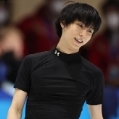
Recommended Posts
Create an account or sign in to comment
You need to be a member in order to leave a comment
Create an account
Sign up for a new account in our community. It's easy!
Register a new accountSign in
Already have an account? Sign in here.
Sign In Now